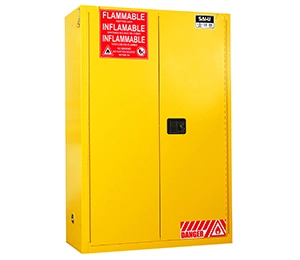
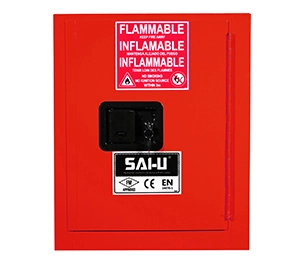
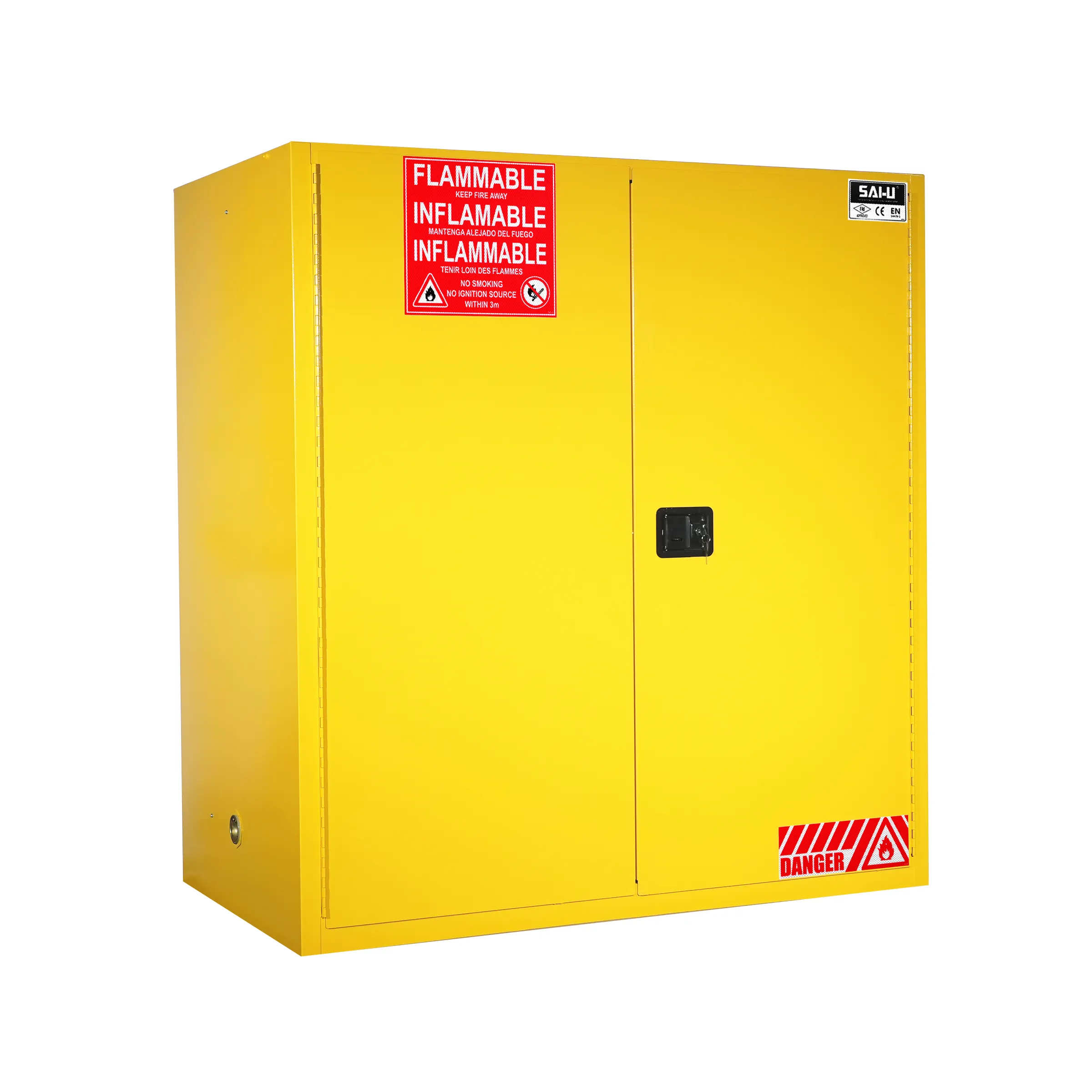
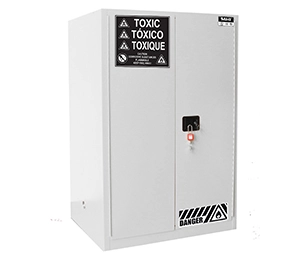
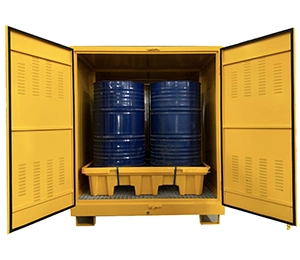
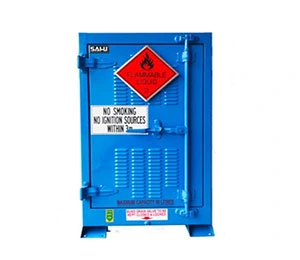
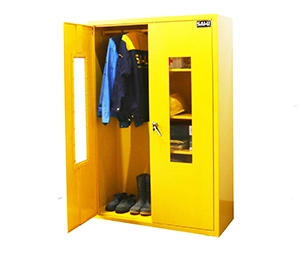
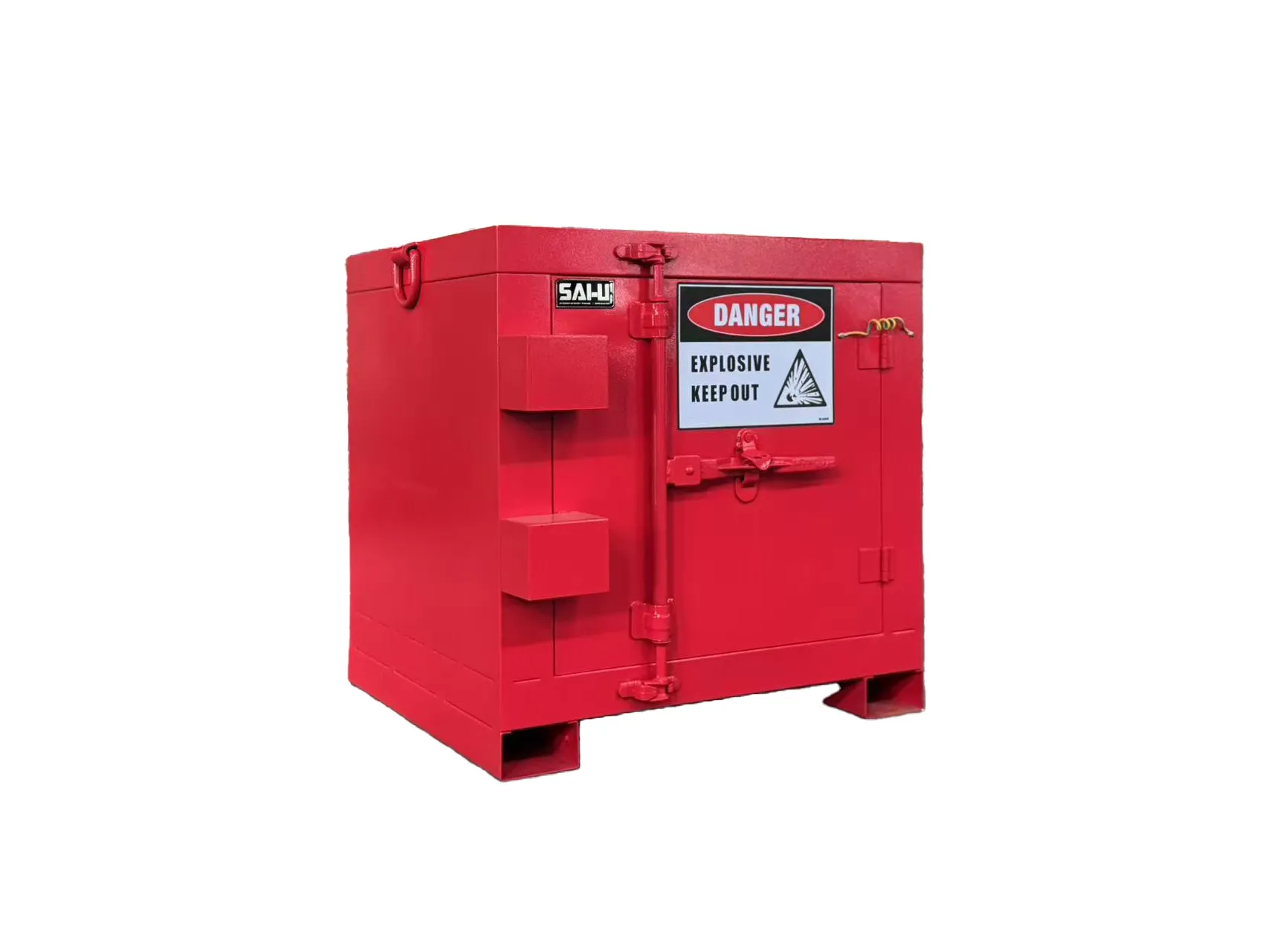
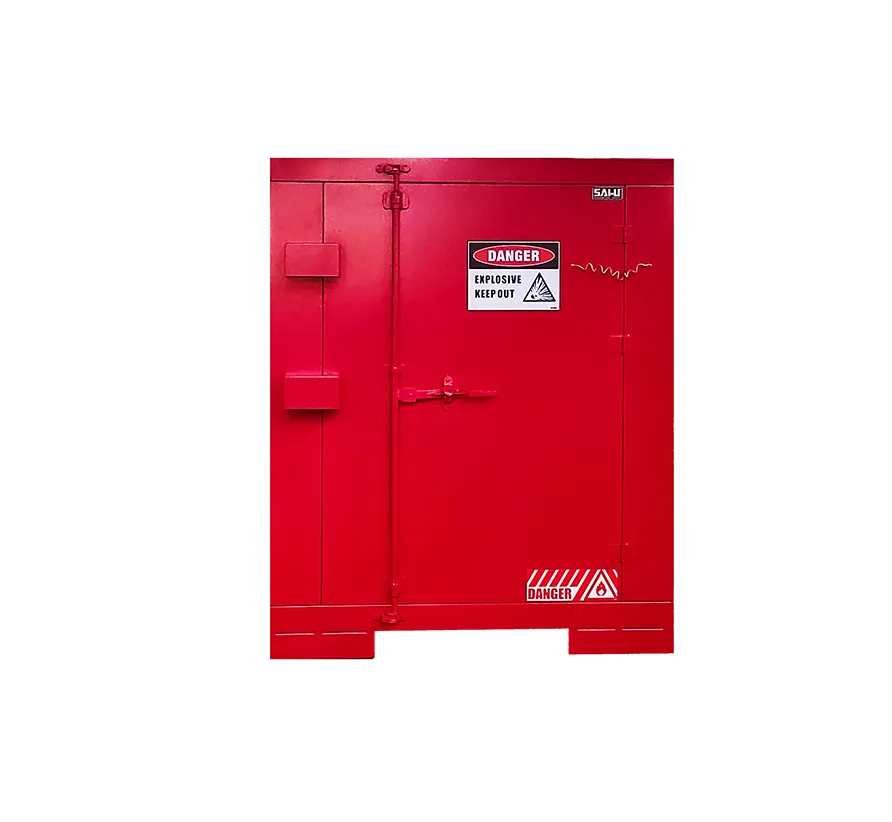
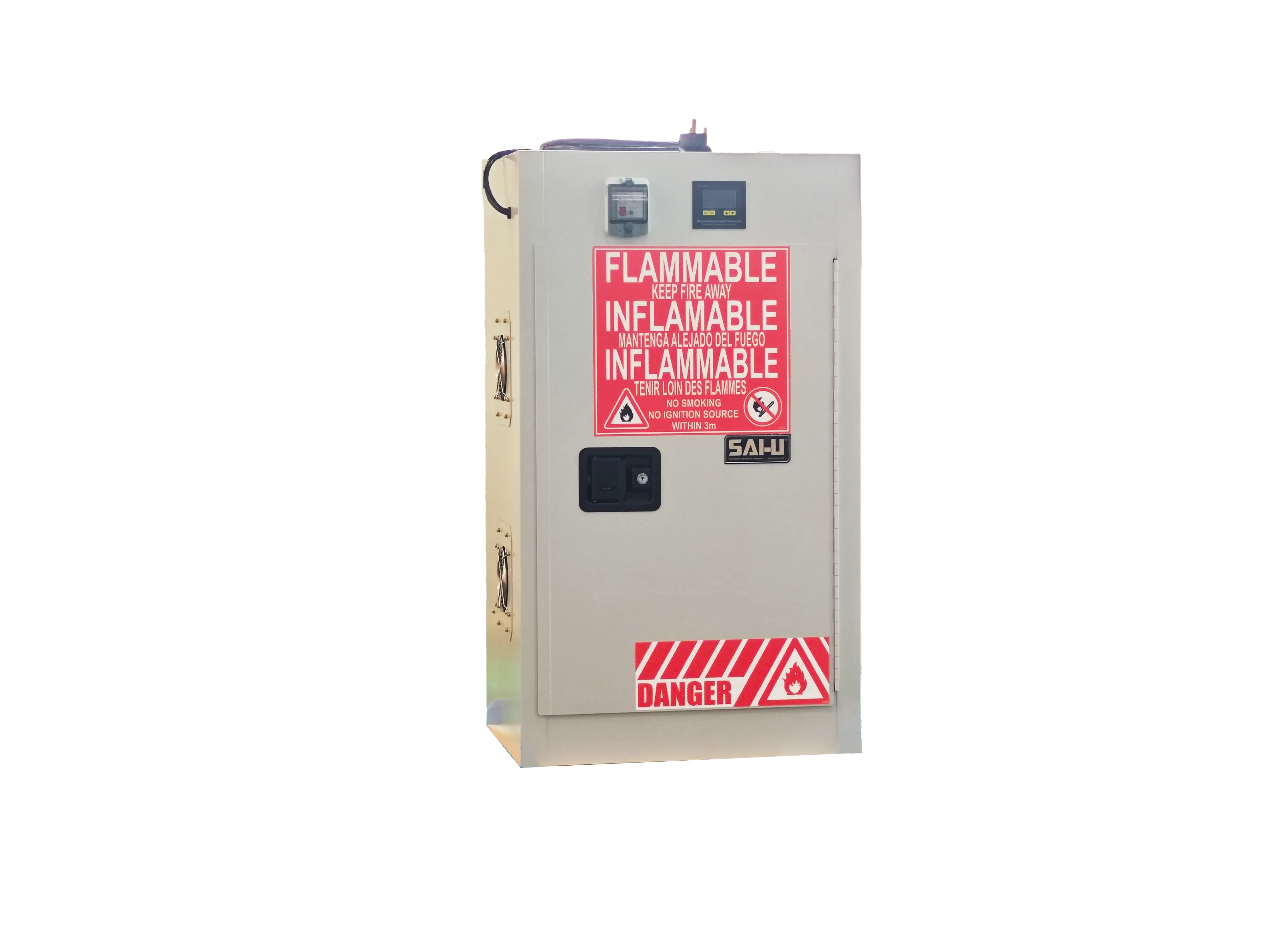
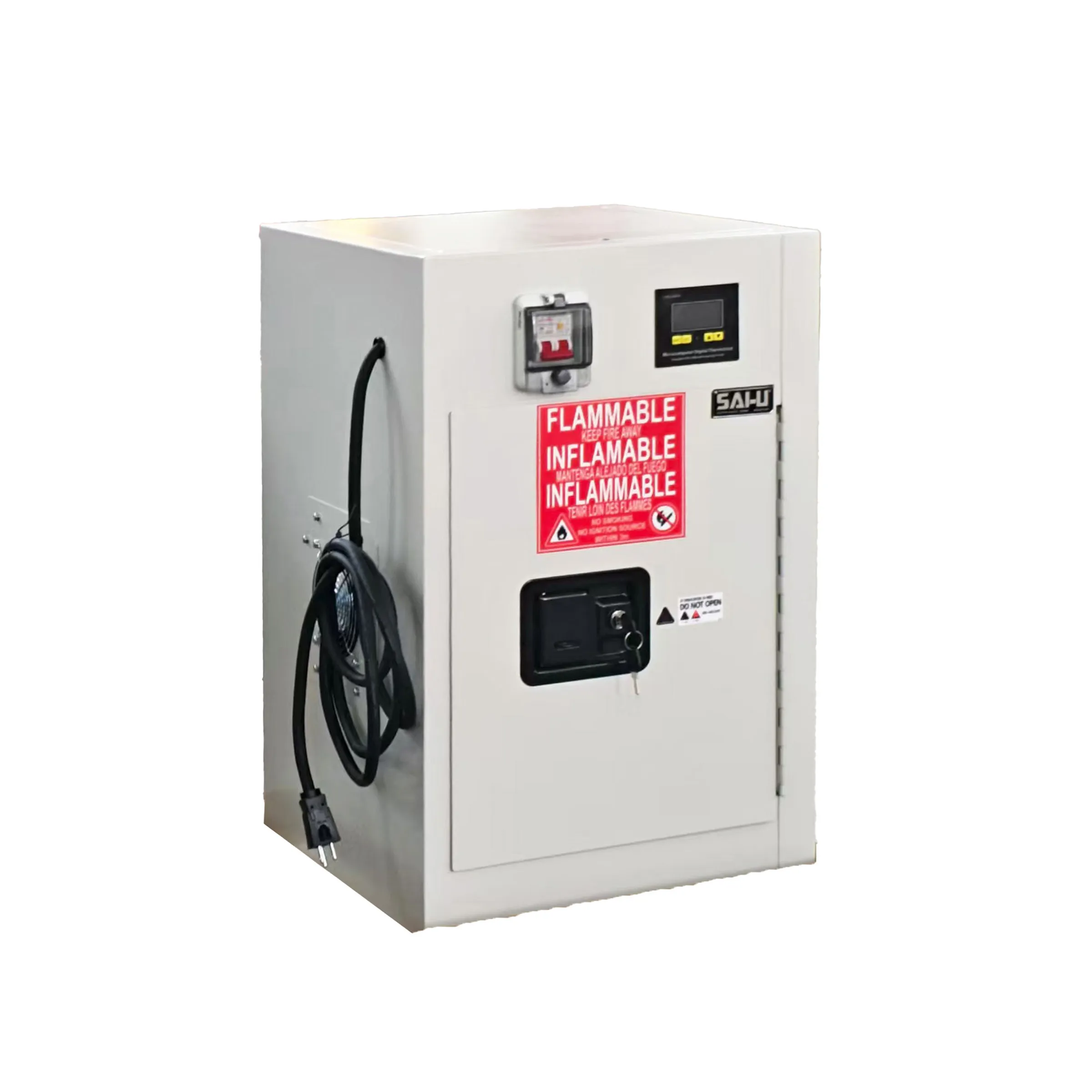
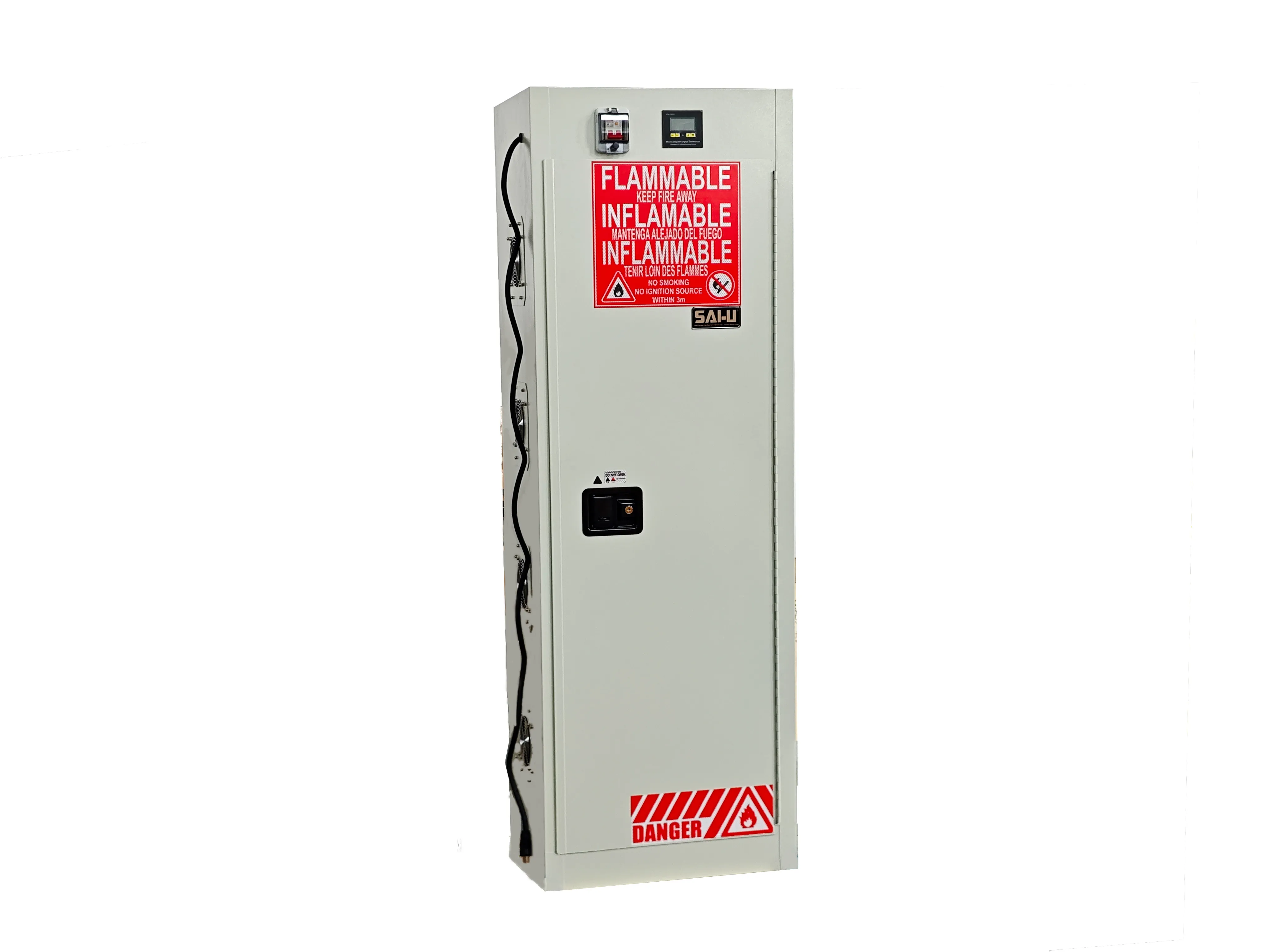
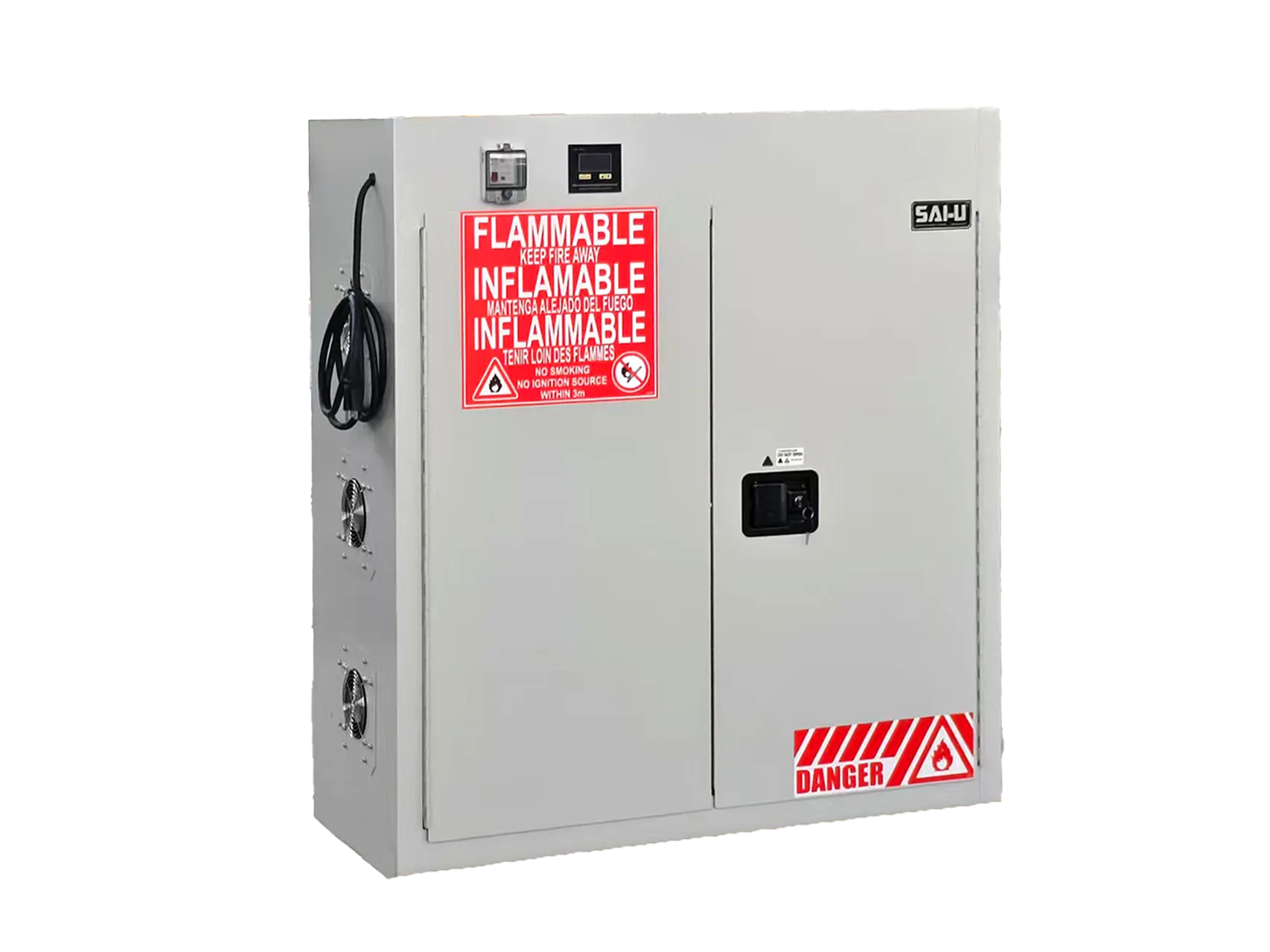
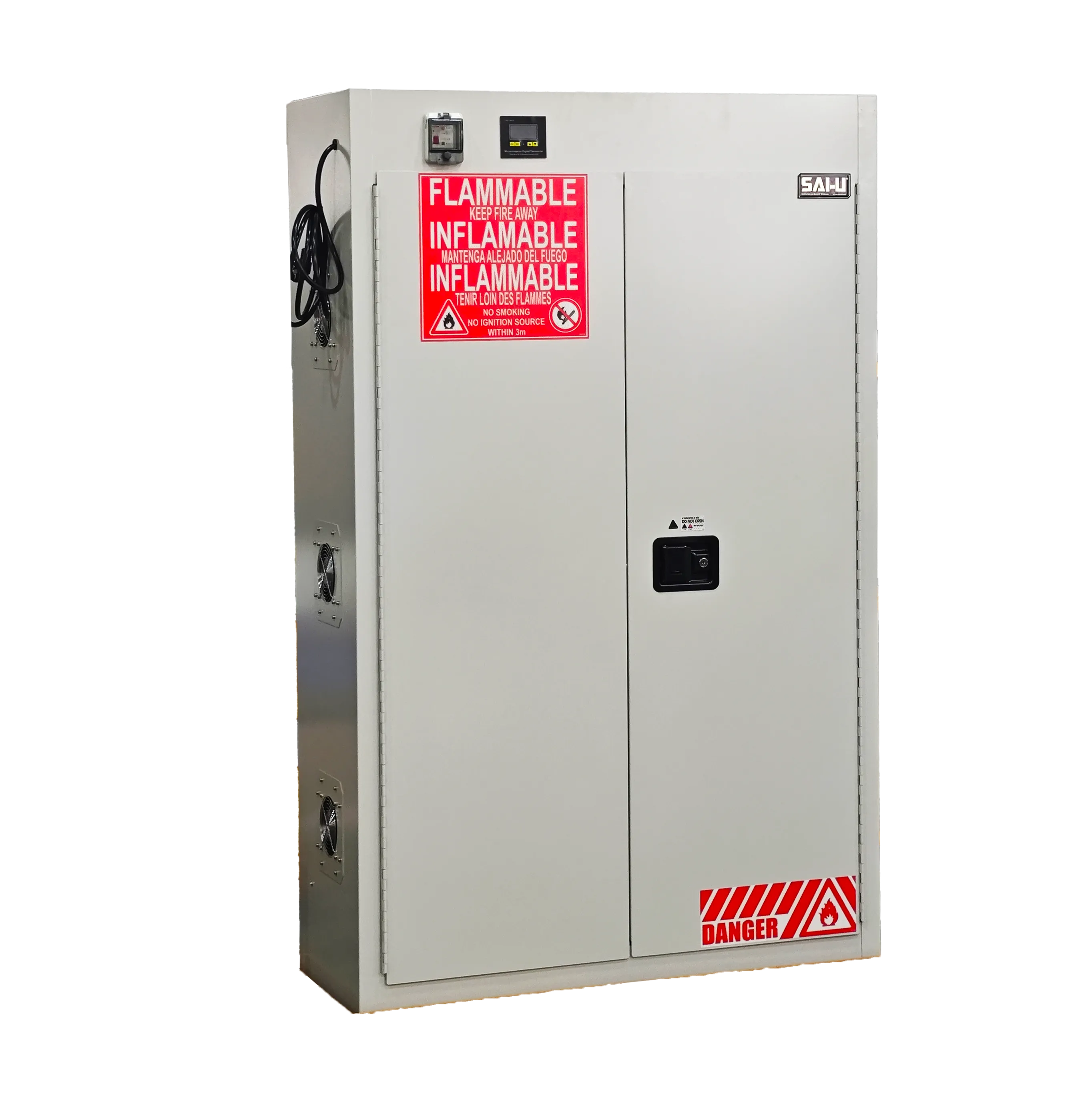
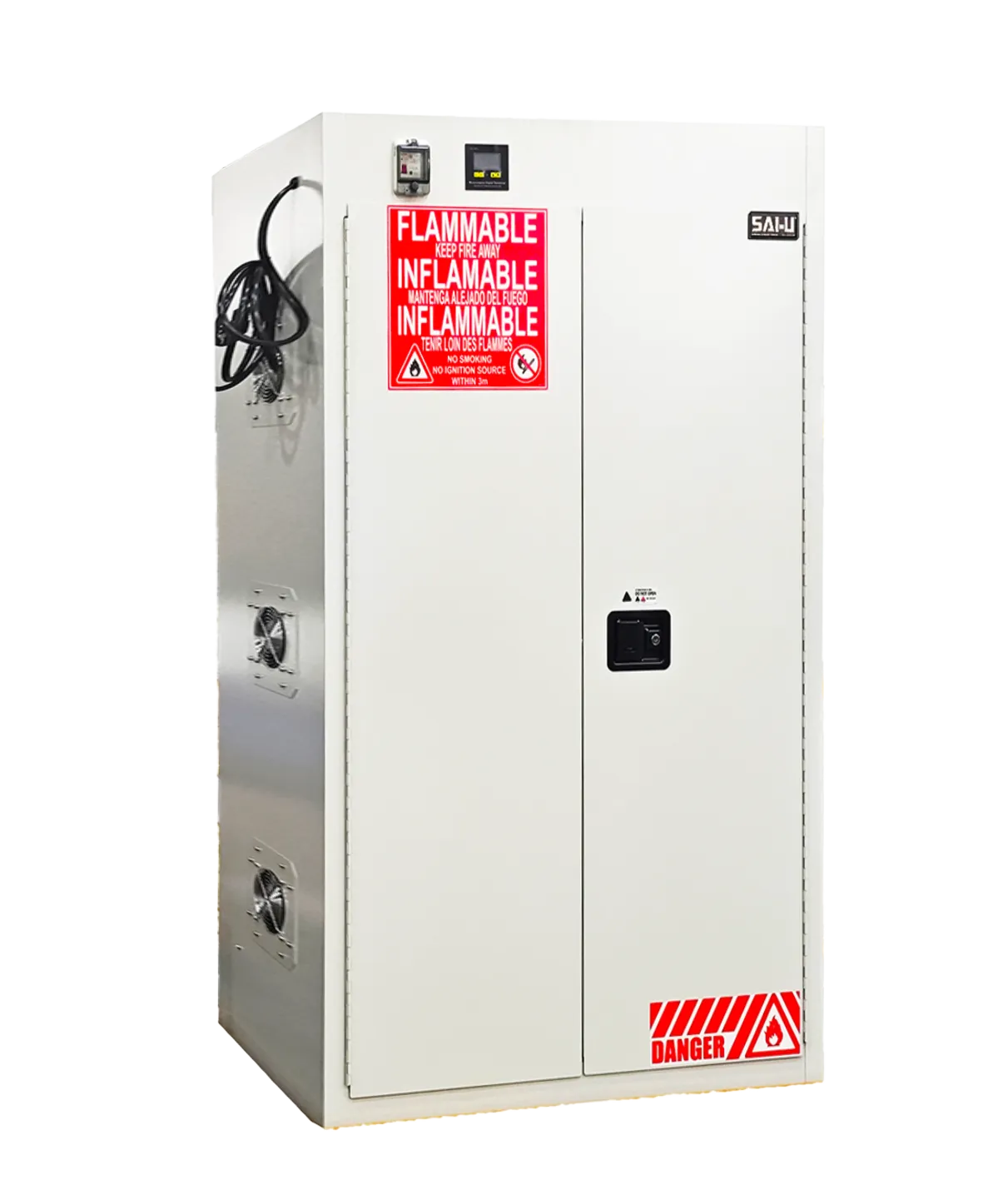
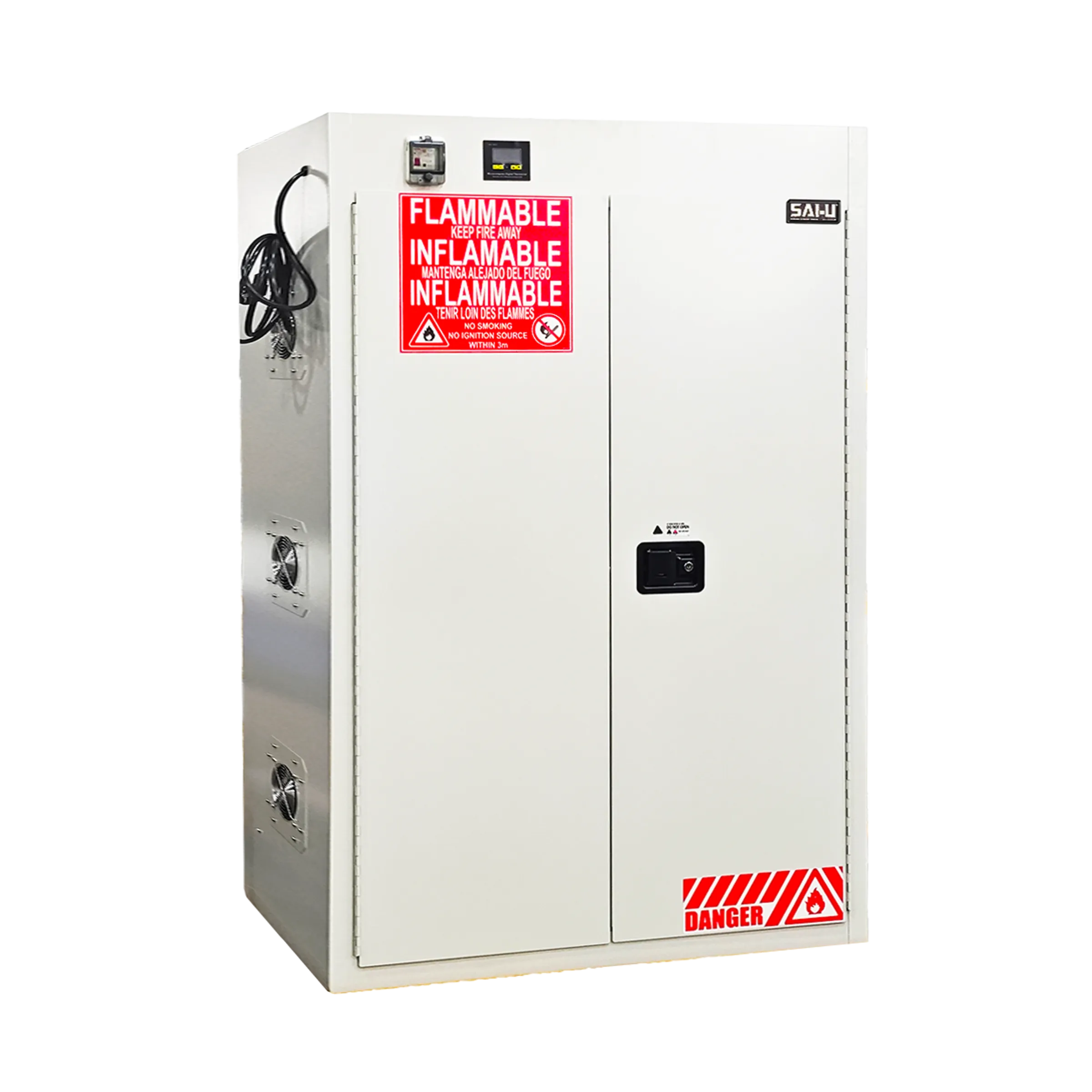
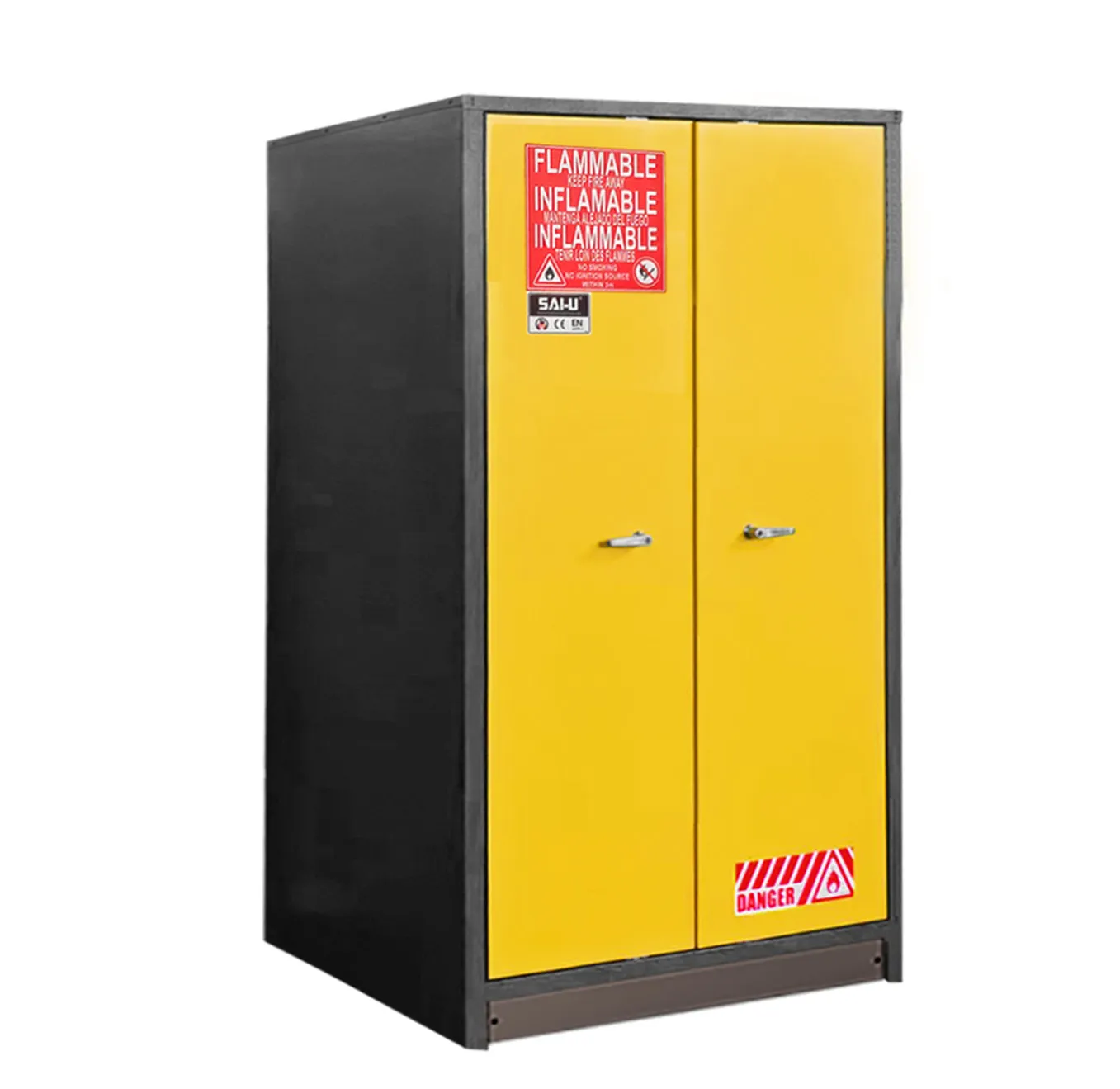
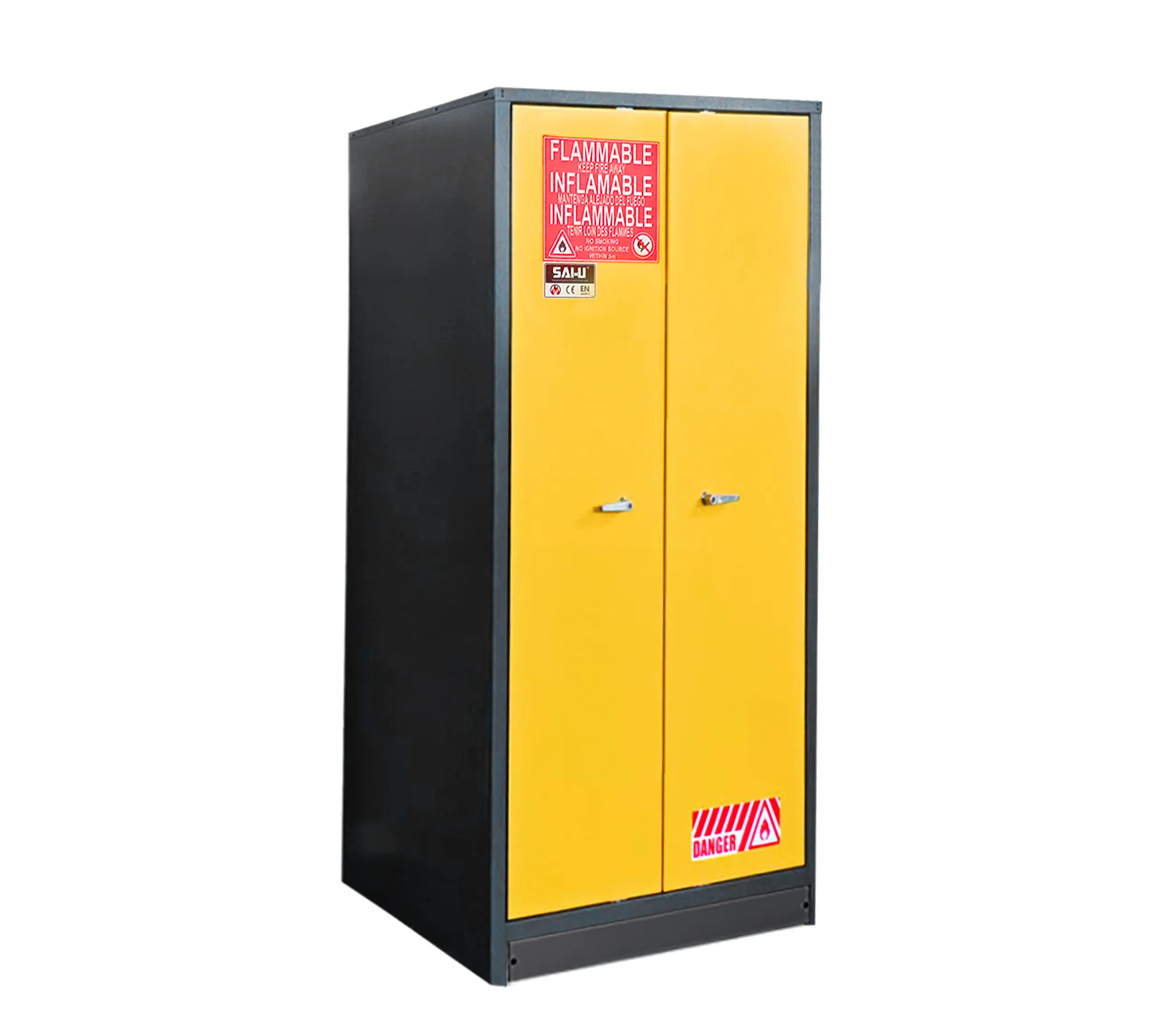
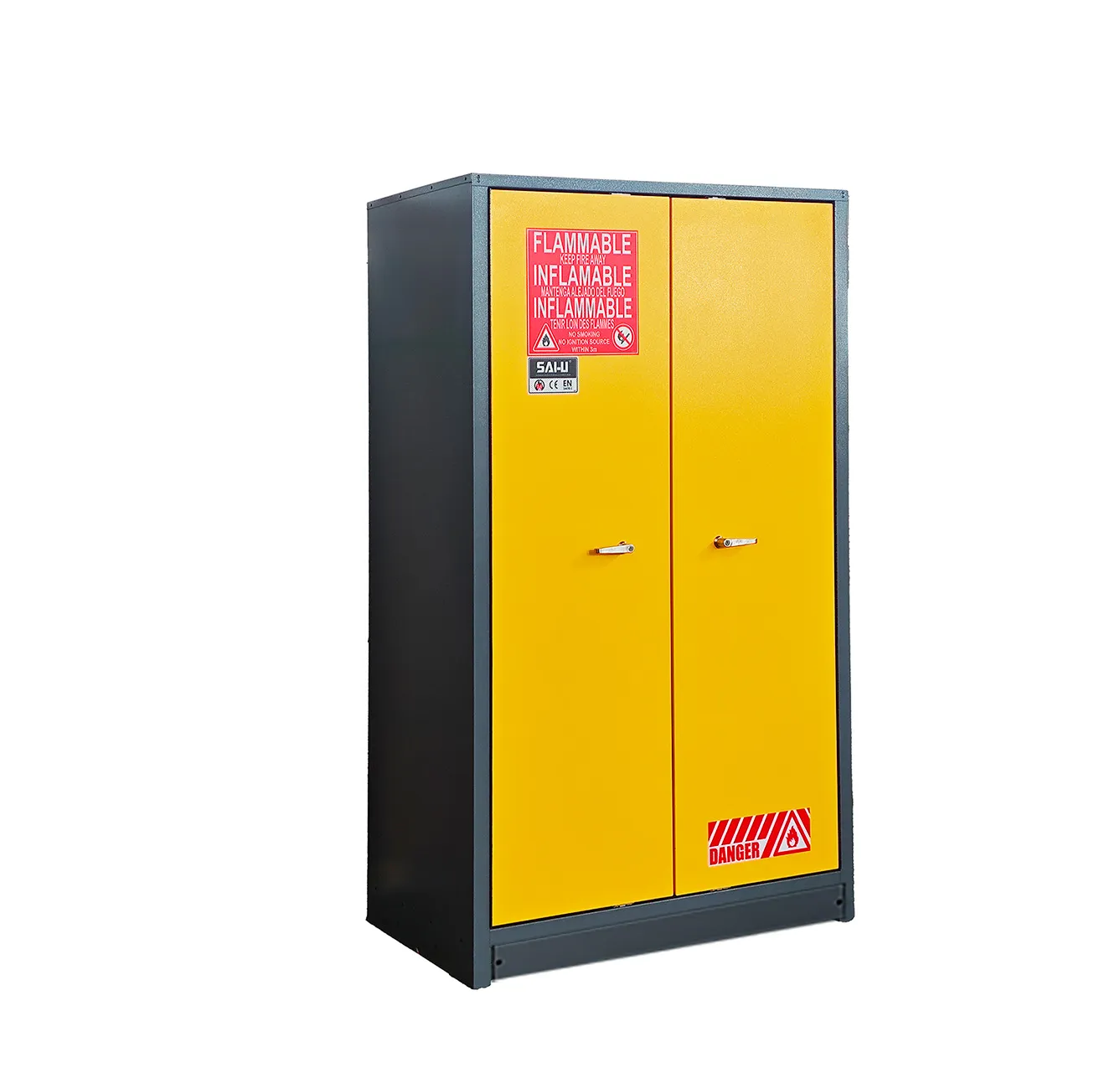
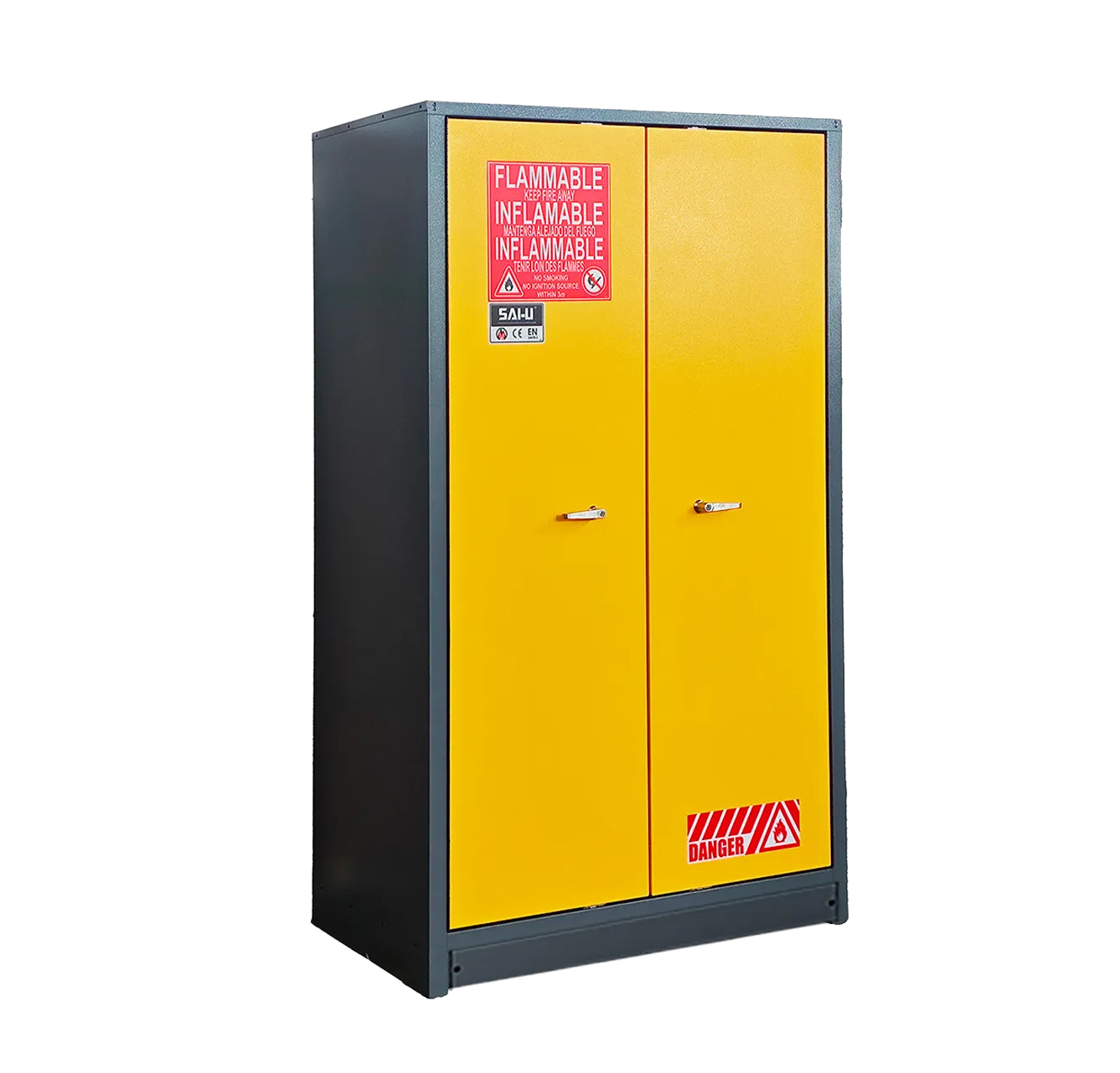
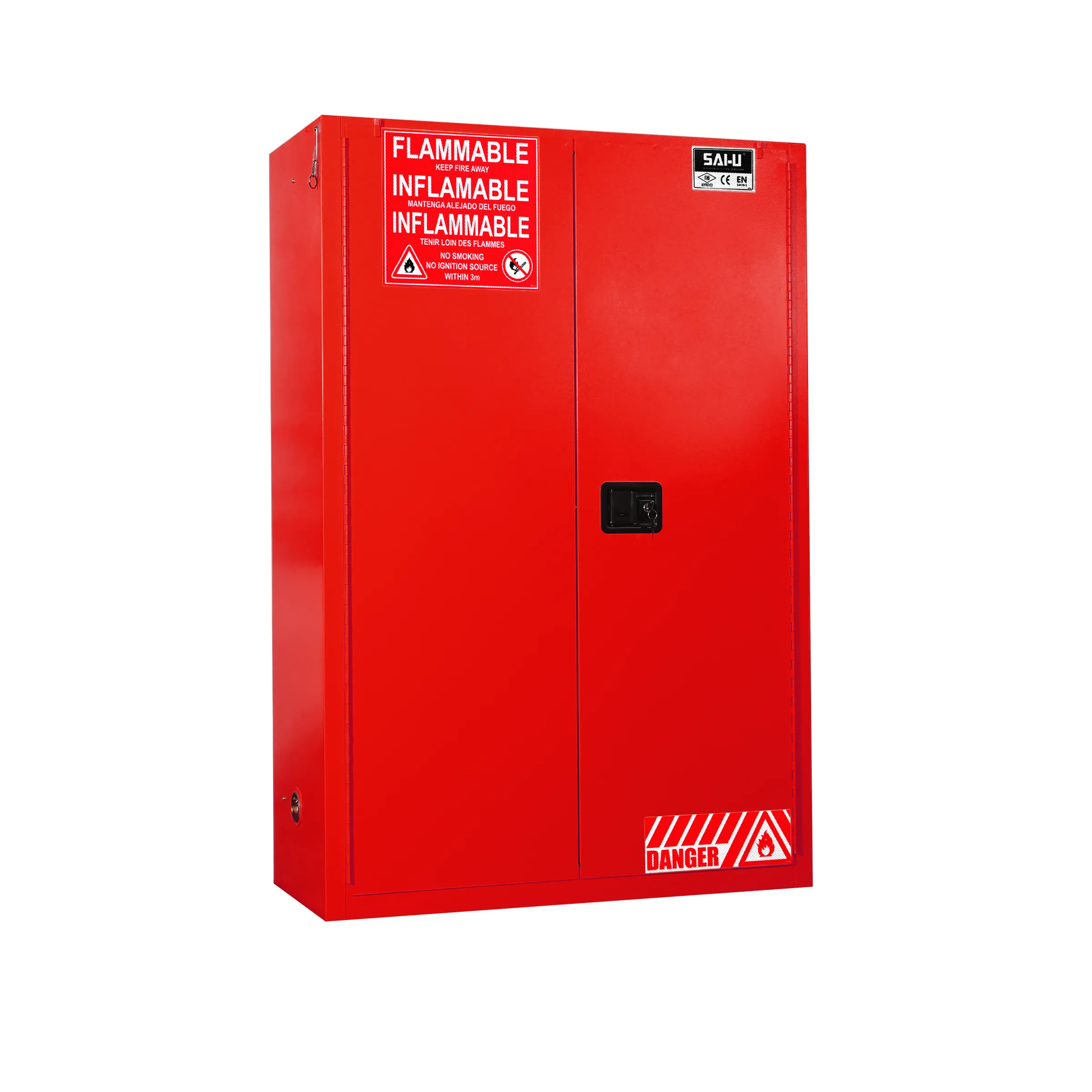
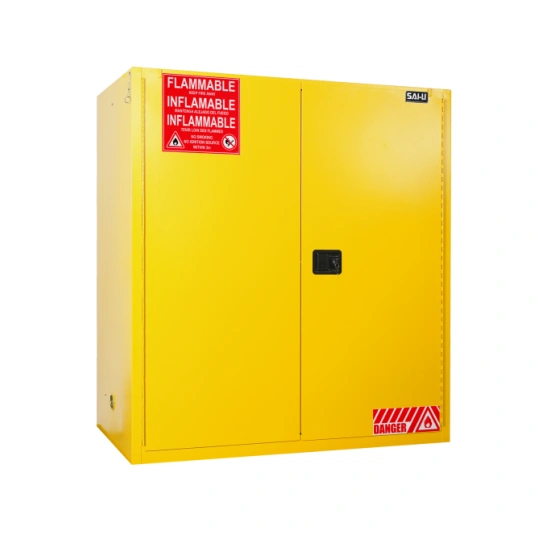
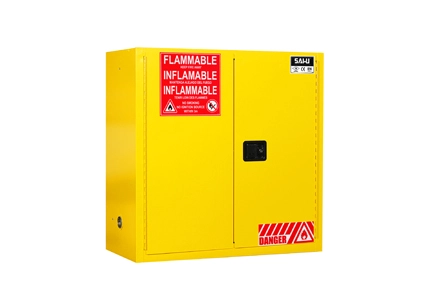
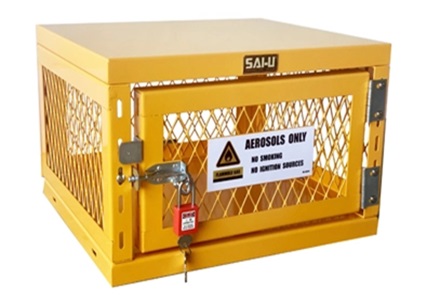
Flammable storage cabinets are engineered to safely contain liquids that can easily ignite at relatively low temperatures. Their purpose is not just organization but protection—preventing small lab fires from becoming catastrophic.
These cabinets feature double-walled, heavy-gauge steel construction with a 1.5-inch air gap that provides superior insulation against external heat. Doors may be manual or self-closing depending on local codes, and every cabinet is required to display clear signage such as “Flammable – Keep Fire Away.”
To ensure compliance and safety, flammable cabinets must meet the standards set by OSHA 29 CFR 1910.106 and NFPA 30 (Flammable and Combustible Liquids Code). OSHA limits the total volume of flammable materials that may be stored outside these cabinets, which is critical for labs handling large solvent inventories.

While OSHA does not require venting, some fire marshals or local regulations may mandate it to reduce vapor accumulation—especially in enclosed spaces. Typical flammable chemicals stored in these cabinets include acetone, methanol, ethanol, isopropanol, hexane, and toluene.
A useful best practice is to group similar materials—for instance, store alcohols together but separate them from reactive or oxidizing agents—to minimize chemical interaction risks.
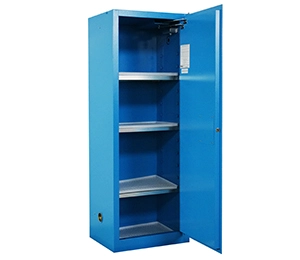
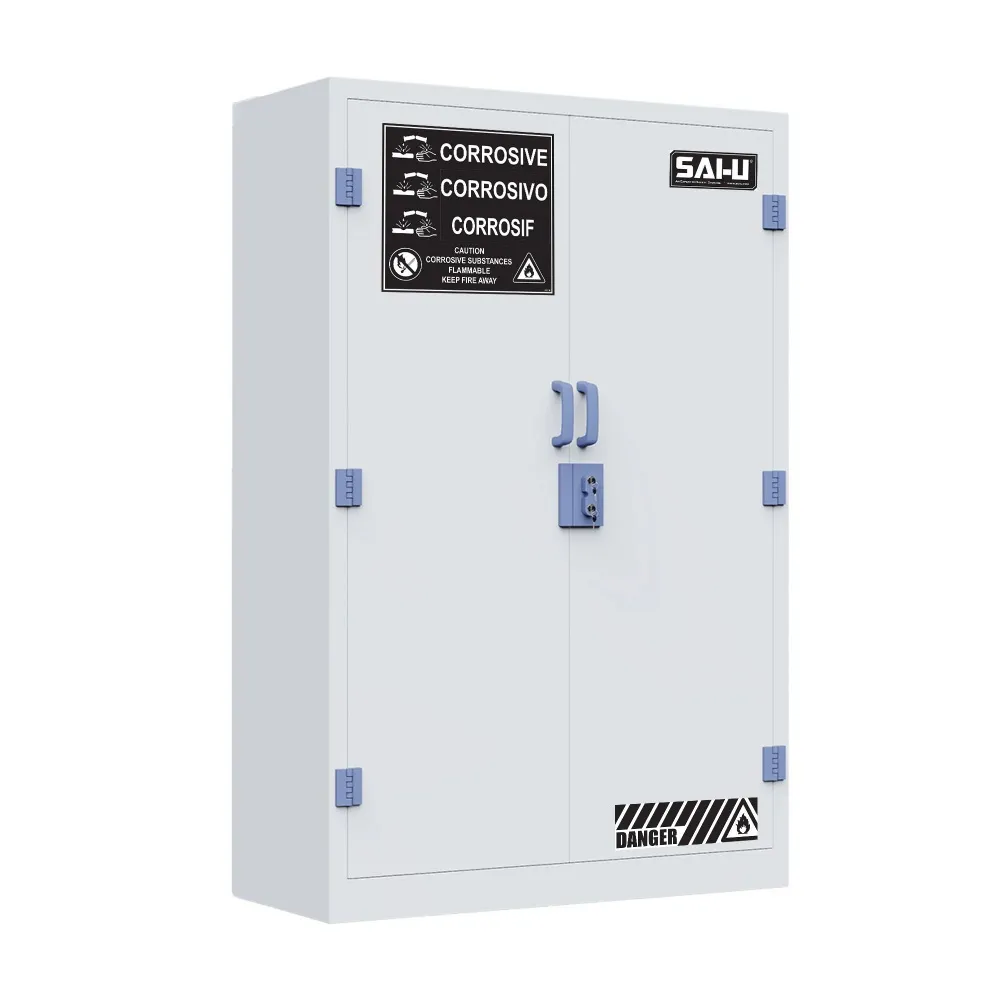
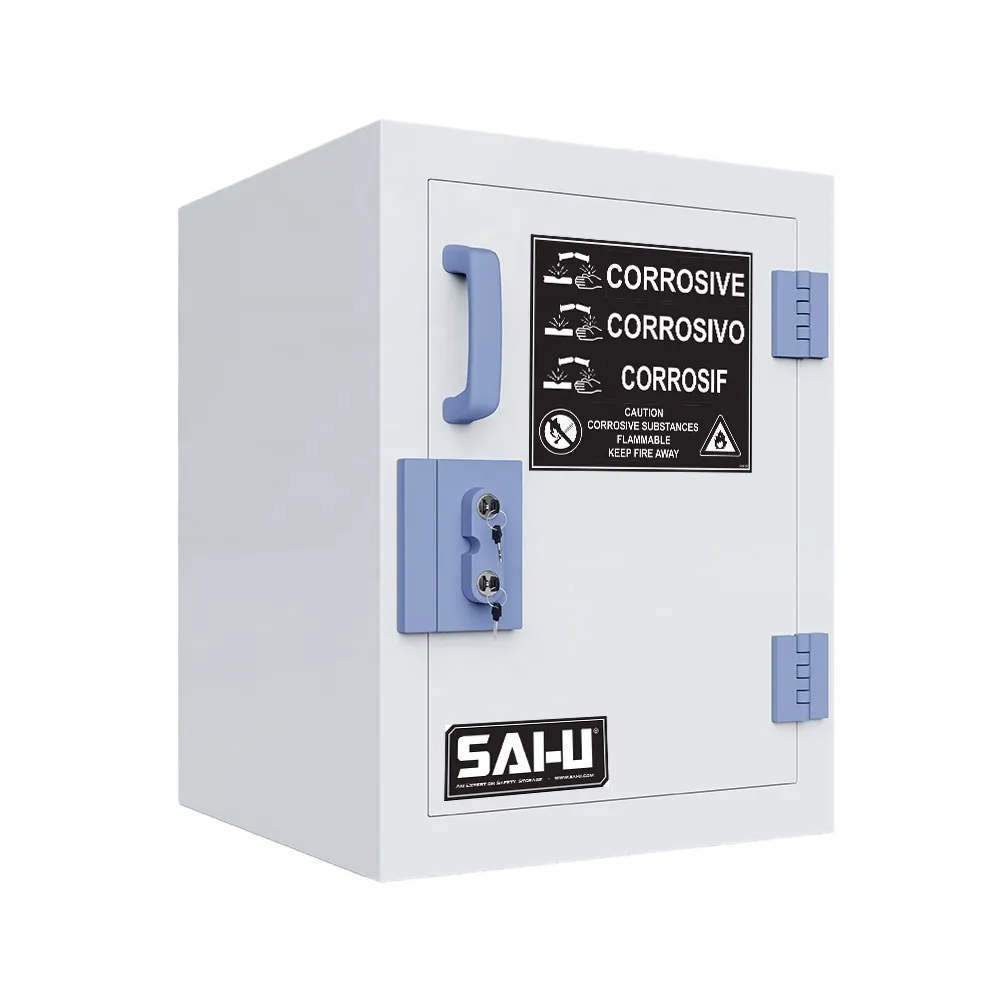
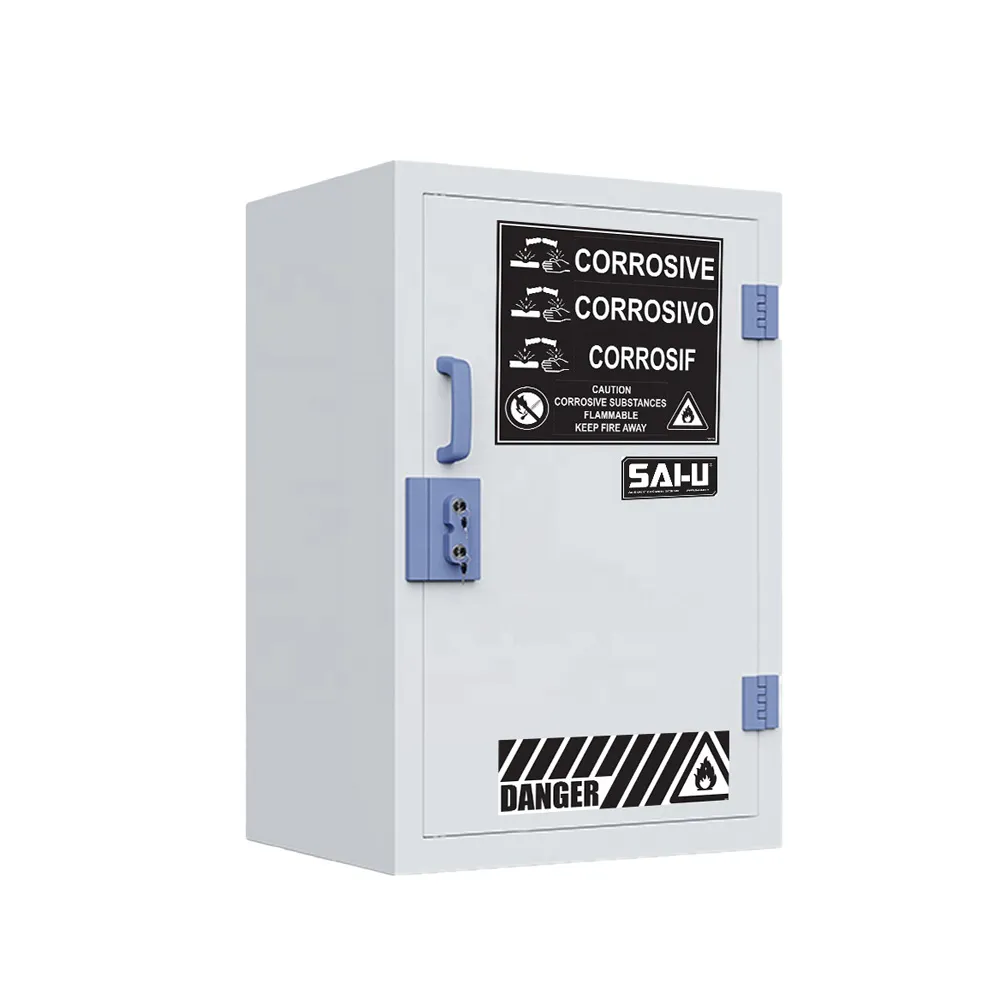
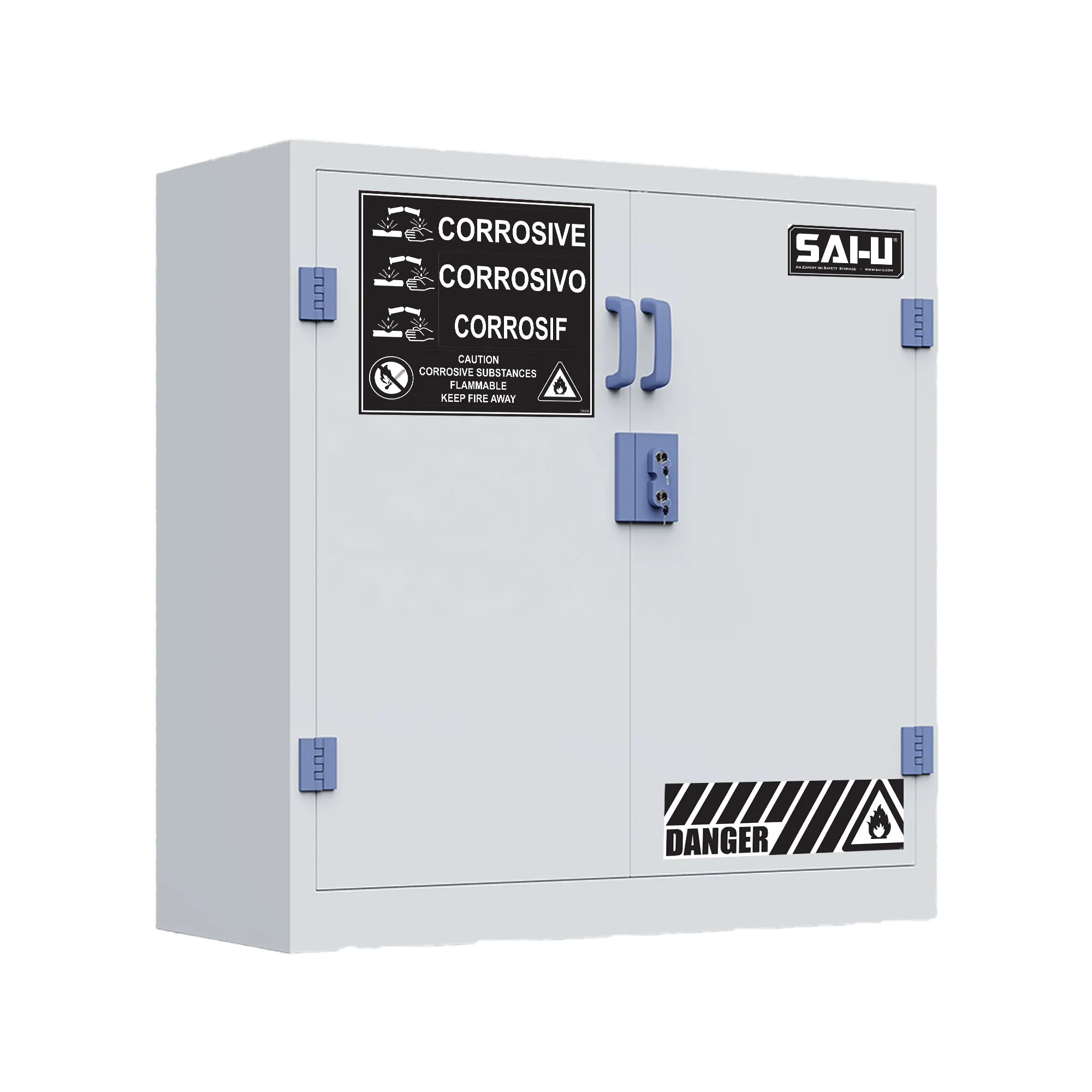
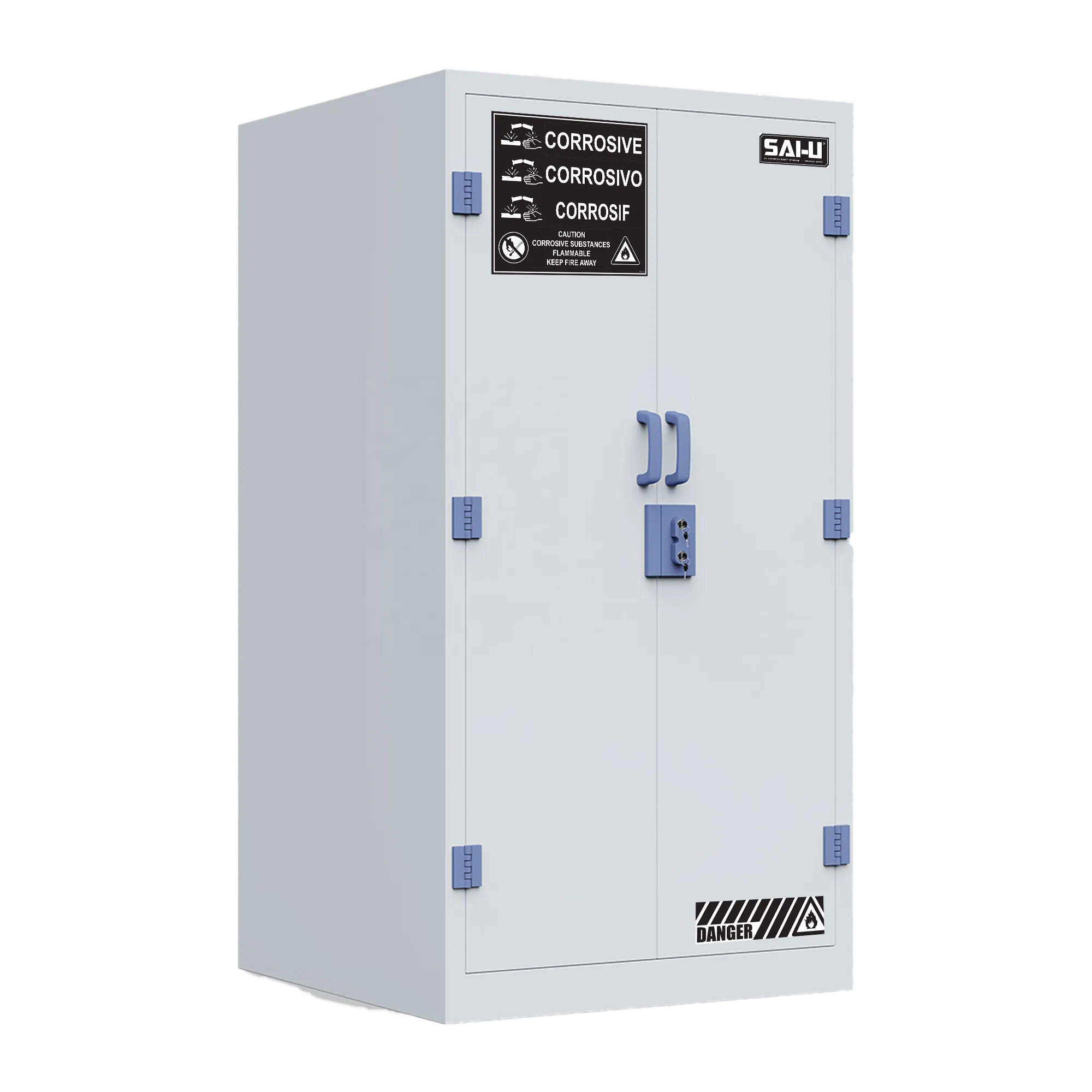
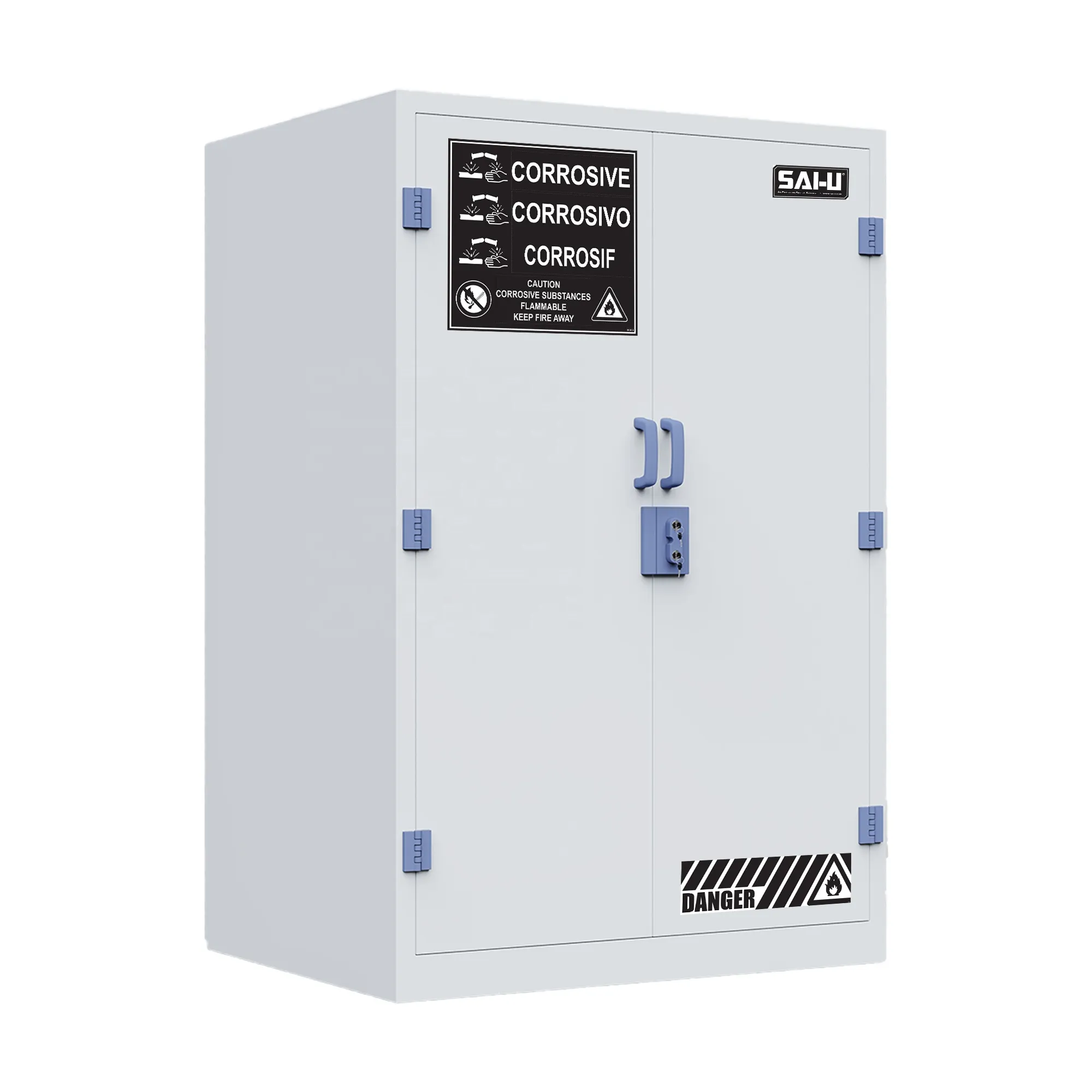
Acid—or more broadly, corrosive—storage cabinets are designed for substances that attack metal, plastic, or skin upon contact. These include strong acids, bases, and certain oxidizers. Because these chemicals degrade materials differently from flammables, acid cabinets require distinct design features.
Manufacturers build these cabinets using nonreactive, corrosion-resistant materials such as polyethylene, epoxy-coated steel, or phenolic resin. Interior fittings and shelves are often removable or lined with acid-resistant trays to contain spills. Unlike flammable cabinets, these units may incorporate ventilation or vapor scrubbing systems to prevent hazardous fume buildup.
While OSHA doesn't explicitly require dedicated acid cabinets, ANSI, NFPA, and local safety codes strongly recommend them as part of safe lab practices. Clear labeling—usually “Corrosive” or “Acid”—is essential for quick hazard identification.
Chemical segregation is especially critical. Never store acids and bases in the same enclosure, as their reactions can release heat and toxic gas. Common corrosives requiring separate storage include hydrochloric acid, sulfuric acid, nitric acid, sodium hydroxide, potassium hydroxide, and acetic acid.
For labs managing mixed corrosives (like both acids and bases), polyethylene interior cabinets or plastic secondary containers can ensure compatibility while keeping costs manageable.
Flammable and acid storage cabinets are not interchangeable. Each is designed for a completely different hazard category:
Flammable cabinets prioritize fire protection—built to resist heat and contain combustibles.
Acid cabinets focus on chemical corrosion resistance—built to neutralize and contain leaks.
Mixing these functions introduces severe safety and compliance risks. For example, placing corrosives in a flammable cabinet can corrode the steel body, undermining fire integrity and producing toxic vapors. Conversely, storing flammables in an acid cabinet sacrifices crucial fire protection, heightening the risk of ignition.
Beyond safety hazards, misuse can result in regulatory violations under OSHA, NFPA, or institutional policies—potentially leading to fines or lab shutdowns.
Any laboratory handling both solvent-based reagents and corrosive chemicals must use two separate cabinets. This ensures compliance with safety codes and prevents cross-contamination.
In practice, many labs arrange storage strategically:
Standalone cabinets near workstations for frequent use.
Integrated base cabinets beneath fume hoods or workbenches for compact, compliant design.
This dual-cabinet approach improves workflow while keeping incompatible materials safely apart.
Modern laboratories often adopt integrated fume hood systems that incorporate dedicated flammable and acid storage cabinets beneath the work surface. These systems offer several key advantages:
Efficient workspace design: Chemicals are stored close to where they're used.
Code compliance: Proper segregation is built into the layout.
Simplified safety management: Clear labeling and isolation reduce human error.
Enhanced containment: Built-in ventilation ports can connect to lab exhausts for vapor management.
Such systems are ideal for both new construction and laboratory renovations seeking to blend efficiency, safety, and compliance.
Flammable and acid storage cabinets form the backbone of chemical safety in modern laboratories. Each cabinet type addresses a unique hazard—fire or corrosion—through specialized design, materials, and regulatory compliance.
Choosing the right cabinet depends on the chemicals used, the lab's layout, and local safety codes. For the most efficient and compliant setup, consider integrated workstation systems that include both types of cabinets. Doing so not only enhances safety but also supports smooth daily operations—a fundamental goal of every laboratory safety program.