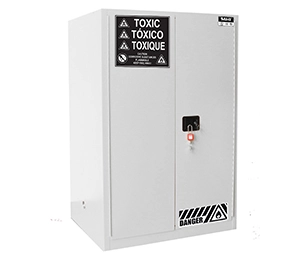
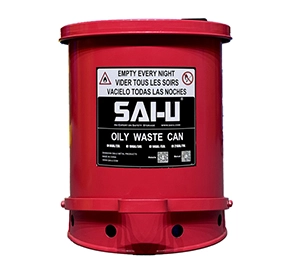
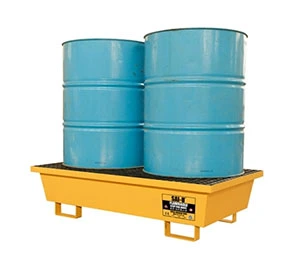
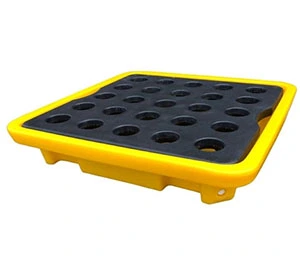
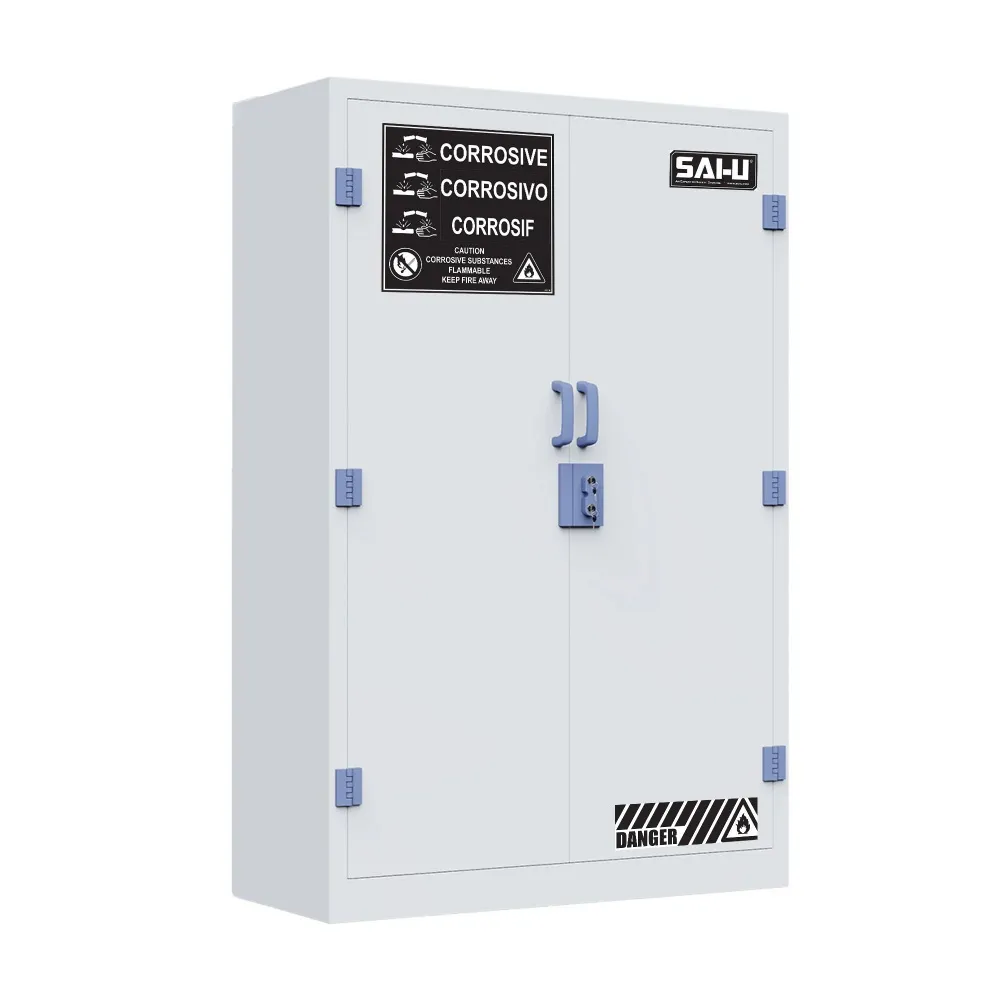
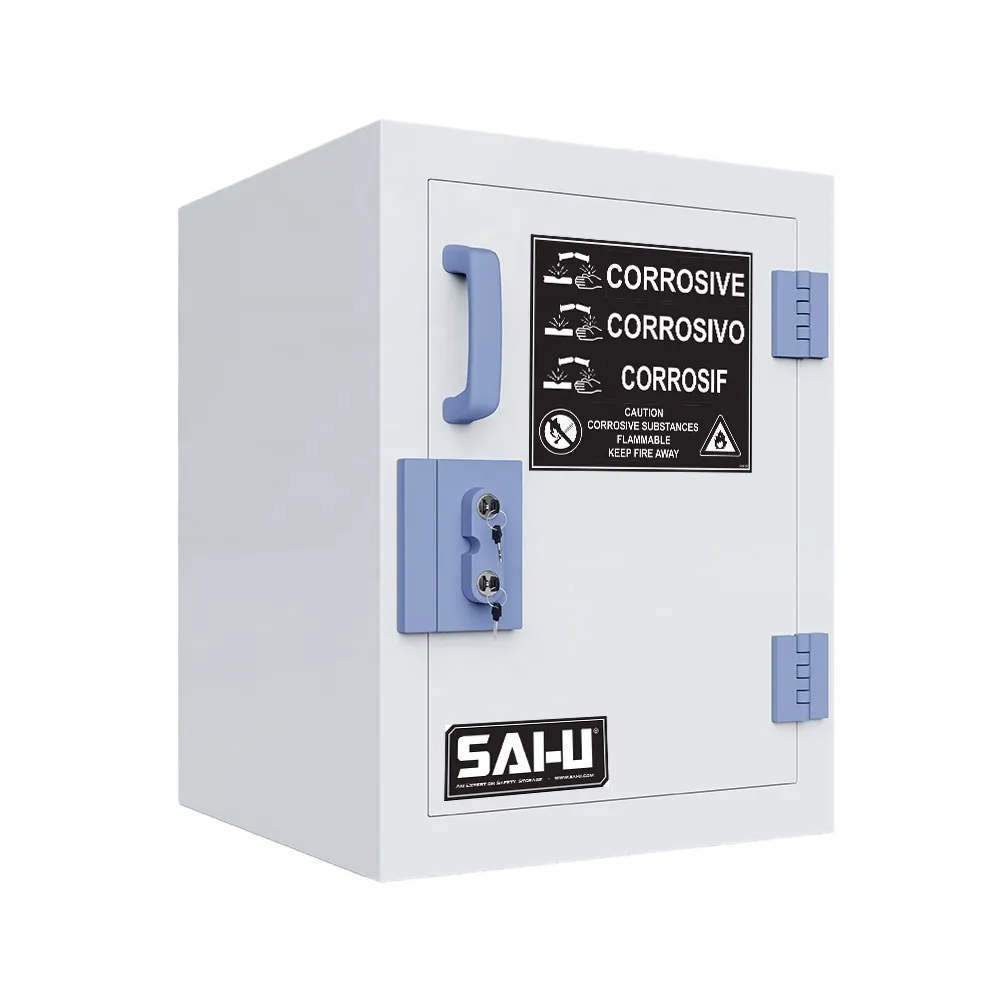
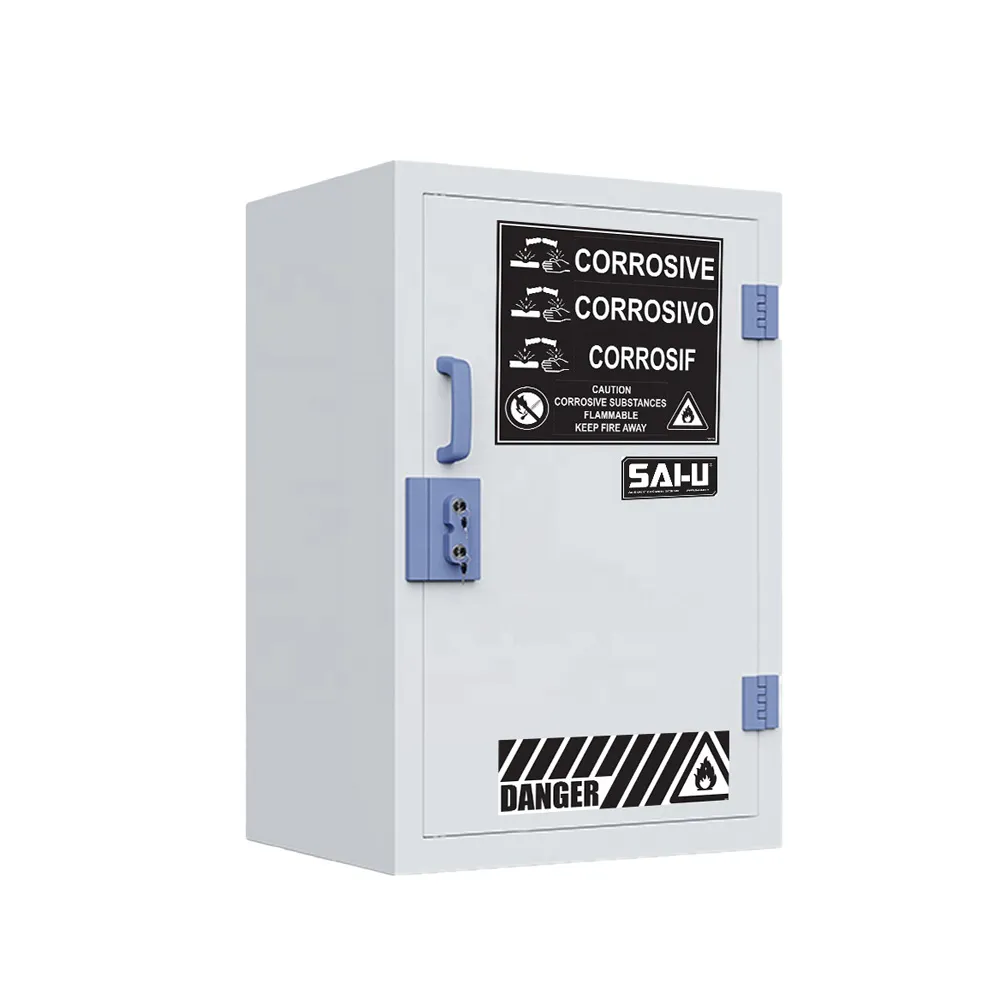
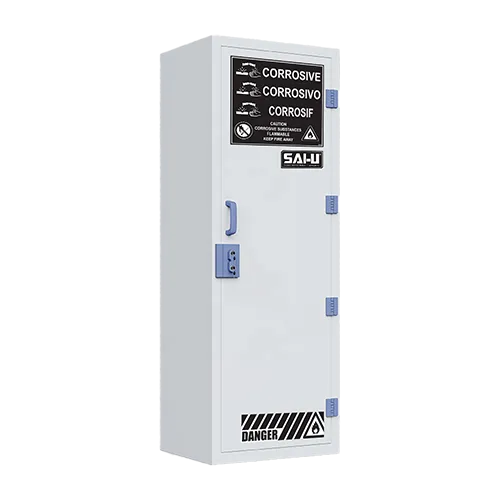
The global expansion of battery gigafactories and semiconductor fabrication plants is reshaping the demand for industrial chemical storage.
Lithium-ion battery production depends on a wide range of chemicals, including electrolyte components, solvents, acids, and process chemicals. Semiconductor manufacturing is equally chemical-intensive, with wet processes requiring acids, bases, solvents, photoresists, developers, and specialized cleaning agents.
As production capacity increases, the challenge is no longer simply how to store a few containers of hazardous chemicals.
Manufacturers must determine how to safely store, transfer, segregate, and manage large volumes of chemicals with different physical and chemical hazards—sometimes including both flammability and corrosivity within the same production environment.
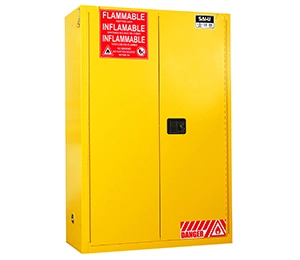
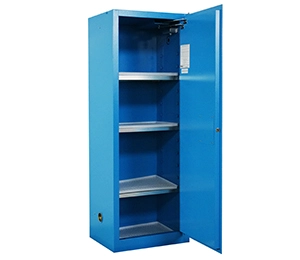
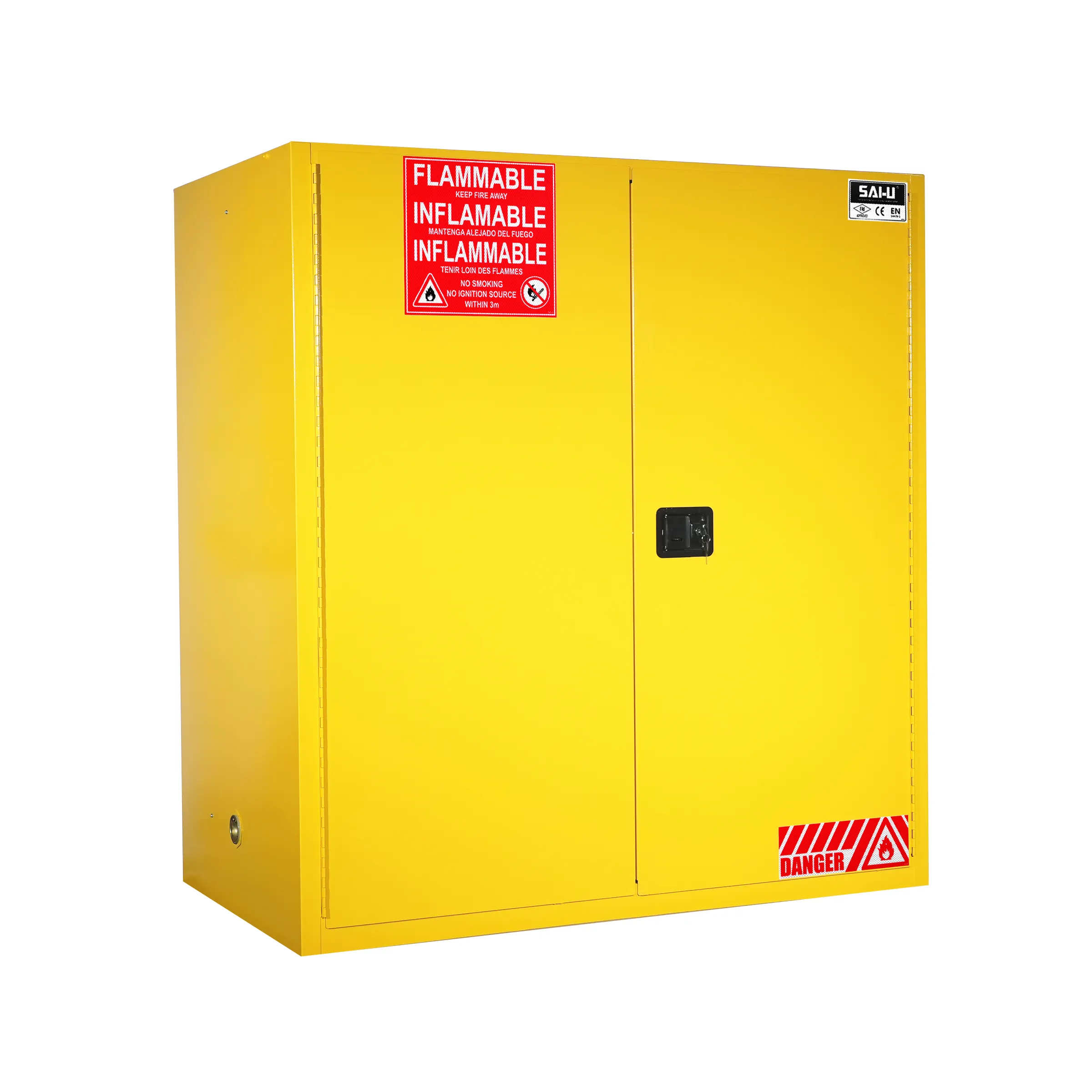
This is where properly engineered corrosive and flammable storage becomes an important part of the facility's overall chemical safety strategy.
For battery and semiconductor manufacturers, effective storage is not simply about choosing a cabinet with sufficient capacity. It requires a coordinated approach to chemical compatibility, hazard classification, ventilation, ignition-source control, secondary containment, fire protection, operational workflow, and regulatory compliance.
Why Battery and Semiconductor Manufacturing Creates Greater Chemical Storage Demands
Lithium-Ion Battery Manufacturing: High Chemical Throughput
The rapid growth of electric vehicles, energy storage systems, and portable electronics has driven significant investment in lithium-ion battery manufacturing.
A modern battery production facility may handle substantial quantities of organic solvents and electrolyte-related chemicals. Electrolyte formulations commonly contain lithium salts dissolved in organic solvents, many of which can present significant flammability hazards.
The risk profile becomes particularly important during:
· Chemical receiving and unloading
· Drum and container storage
· Electrolyte preparation
· Chemical dispensing
· Mixing and filling
· Container-to-container transfer
· Waste chemical handling
· Maintenance and process changeovers
During these activities, chemical exposure can occur through spills, leaks, damaged containers, or vapor release.
Flammable liquids also introduce the possibility of fire or flash-fire hazards when vapors encounter an ignition source.
For this reason, flammable chemical storage should be considered as part of the broader process safety strategy rather than an isolated storage requirement.
Semiconductor Manufacturing: A Complex Chemical Environment
Semiconductor fabs face a different but equally demanding chemical storage challenge.
The semiconductor manufacturing process involves hundreds of individual process steps, many of which rely on wet chemicals and specialized solvents.
Depending on the process, facilities may handle chemicals such as:
· Hydrofluoric acid
· Hydrochloric acid
· Sulfuric acid
· Nitric acid
· Phosphoric acid
· Hydrogen peroxide
· Ammonium hydroxide
· Isopropyl alcohol (IPA)
· Acetone
· Photoresists
· Developers
· Specialty cleaning chemicals
These chemicals do not share the same hazard characteristics.
Some are strongly corrosive. Others are flammable. Some may be toxic, reactive, oxidizing, or incompatible with particular storage materials.
Consequently, semiconductor fabs need a storage strategy based on hazard classification and chemical compatibility, rather than treating all process chemicals as one category.
The Core Risks Behind Corrosive and Flammable Chemical Storage
1. Vapor Release and Flammability
Many solvents used in battery and semiconductor manufacturing are volatile.
If a flammable liquid leaks or is transferred incorrectly, vapors can accumulate in areas where an ignition source is present.
Potential ignition sources can include:
· Electrical equipment
· Hot surfaces
· Sparks
· Static electricity
· Open flames
· Incompatible equipment or processes
The exact controls required depend on the chemical, quantity, container type, room classification, and facility design.
A properly designed corrosive and flammable storage strategy therefore needs to address both the chemical itself and the surrounding environment.
2. Corrosion and Material Compatibility
Corrosive chemicals introduce another layer of complexity.
A storage system exposed to aggressive acids or bases must be constructed from materials that are appropriate for the chemicals being stored.
Material compatibility should be evaluated based on factors such as:
· Chemical concentration
· Temperature
· Exposure duration
· Chemical formulation
· Container configuration
· Potential spill scenarios
A material that performs well with one chemical may not be suitable for another.
This is why simply specifying a generic "chemical-resistant" cabinet may not be sufficient for a high-hazard manufacturing environment.
Manufacturers should verify material compatibility using chemical-specific data and supplier recommendations before selecting storage equipment.
3. Spills, Leaks, and Secondary Containment
A damaged container can turn a routine storage event into a facility-wide incident.
Secondary containment is therefore an important component of hazardous chemical storage.
A well-designed storage system can help contain leaked material before it reaches:
· Production equipment
· Electrical systems
· Floors and drains
· Adjacent chemical containers
· Personnel access areas
For high-volume operations, containment capacity and configuration should be determined according to applicable codes, standards, chemical characteristics, and facility-specific risk assessments.
Cleanroom Requirements Make Chemical Storage Even More Complex
Battery and semiconductor production facilities are highly controlled environments.
In semiconductor fabs especially, maintaining contamination control is critical. At the same time, hazardous chemical storage requires controls for fire, exposure, corrosion, and vapor management.
This creates an engineering challenge:
How can a facility control hazardous chemical risks without compromising its controlled manufacturing environment?
Several factors need to be considered.
Antistatic and Ignition-Source Control
Where flammable liquids or vapors are present, controlling ignition sources is essential.
Static electricity can become a concern during the movement and transfer of certain flammable liquids.
Depending on the application, facilities may need to evaluate:
· Grounding and bonding
· Equipment electrical classification
· Static-dissipative materials
· Transfer procedures
· Container handling
· Personnel practices
· Potential ignition sources
These measures should be designed according to the specific chemical and process rather than applied as a generic checklist.
Corrosion Resistance
Storage equipment for corrosive chemicals must withstand the expected chemical exposure.
For battery and semiconductor applications, this may mean selecting specialized construction materials, coatings, liners, shelving, spill trays, or containment components.
The appropriate solution depends on the chemicals being stored.
For example, the requirements for storing a flammable solvent can be fundamentally different from those for storing concentrated hydrofluoric acid or sulfuric acid.
Chemical compatibility must therefore come before cabinet selection.
Ventilation and Vapor Management
Ventilation is another critical consideration.
Some chemicals can release hazardous or flammable vapors even when they are stored inside closed containers.
Depending on the chemical and storage configuration, engineering controls may include:
· Mechanical ventilation
· Local exhaust ventilation
· Dedicated exhaust systems
· Vapor monitoring
· Appropriate airflow management
However, ventilation design should not be treated as a universal solution.
For flammable materials, ventilation must be evaluated together with electrical equipment, ignition-source control, and applicable fire and building requirements.
For toxic or corrosive chemicals, exposure-control requirements may be different.
The final design should therefore be based on the chemical's Safety Data Sheet (SDS), applicable regulations, and facility-specific engineering assessment.
Corrosive and Flammable Storage Is More Than "A Chemical Cabinet"
One of the most important considerations for modern fabs is that chemical storage cannot be separated from the manufacturing workflow.
A storage system needs to support the way chemicals actually move through the facility.
Consider a typical process:
Receiving → Storage → Dispensing → Transfer → Production → Waste Collection
Each stage introduces different risks.
For example, a facility may need one storage solution for incoming drums, another for point-of-use chemicals, and separate containment for incompatible or waste chemicals.
This is particularly important when a manufacturing facility scales from pilot production to mass production.
A storage system designed for a small laboratory may not be suitable for a gigafactory or semiconductor fab handling significantly larger chemical volumes.
Designing Scalable Chemical Storage for Gigafactories and Semiconductor Fabs
As production capacity expands, chemical storage requirements can increase faster than expected.
A scalable storage strategy should consider several dimensions.
1. Storage Capacity
Higher production volumes require greater chemical throughput.
Instead of focusing only on the number of containers that fit inside a cabinet, facility planners should evaluate:
· Daily chemical consumption
· Maximum inventory
· Container sizes
· Delivery frequency
· Production buffer requirements
· Emergency storage needs
· Waste accumulation
This helps prevent a common problem: production expansion outgrowing the original chemical storage infrastructure.
2. Chemical Segregation
Different hazard classes may require separation.
Examples can include:
· Flammable liquids
· Corrosive acids
· Corrosive bases
· Oxidizers
· Reactive chemicals
· Toxic chemicals
· Incompatible substances
The exact segregation requirements depend on the chemicals, quantities, applicable regulations, and facility design.
A high-quality corrosive and flammable storage solution should therefore be configurable around the facility's chemical inventory rather than forcing every application into the same configuration.
3. Secondary Containment
For high-volume chemical handling, secondary containment becomes increasingly important.
Storage systems may incorporate spill trays, sumps, containment floors, or other engineered features depending on the application.
The objective is straightforward:
If the primary container fails, the released chemical should be controlled rather than immediately spreading into the surrounding production environment.
How Safer Storage Supports Production Continuity
Chemical safety is often viewed primarily as an EHS responsibility.
But in a modern gigafactory or semiconductor fab, it is also a production-continuity issue.
An uncontrolled chemical leak can potentially result in:
· Production interruption
· Equipment contamination
· Facility damage
· Employee exposure
· Environmental incidents
· Emergency shutdowns
· Costly cleanup
· Regulatory consequences
The financial impact of a chemical incident can therefore extend far beyond the value of the chemical itself.
Well-engineered chemical storage helps facilities create a more predictable operating environment while supporting safer chemical handling procedures.
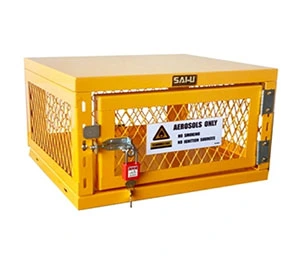
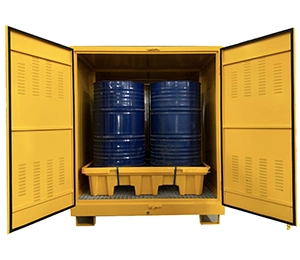
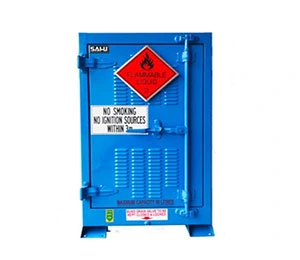
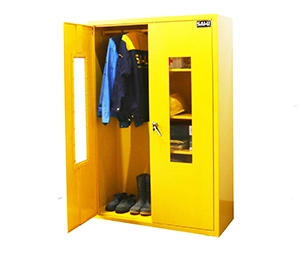
Customized Corrosive and Flammable Storage Solutions from SAI-U
For battery manufacturers and semiconductor fabs, off-the-shelf storage equipment may not always match the facility's chemical inventory, available space, workflow, or production scale.
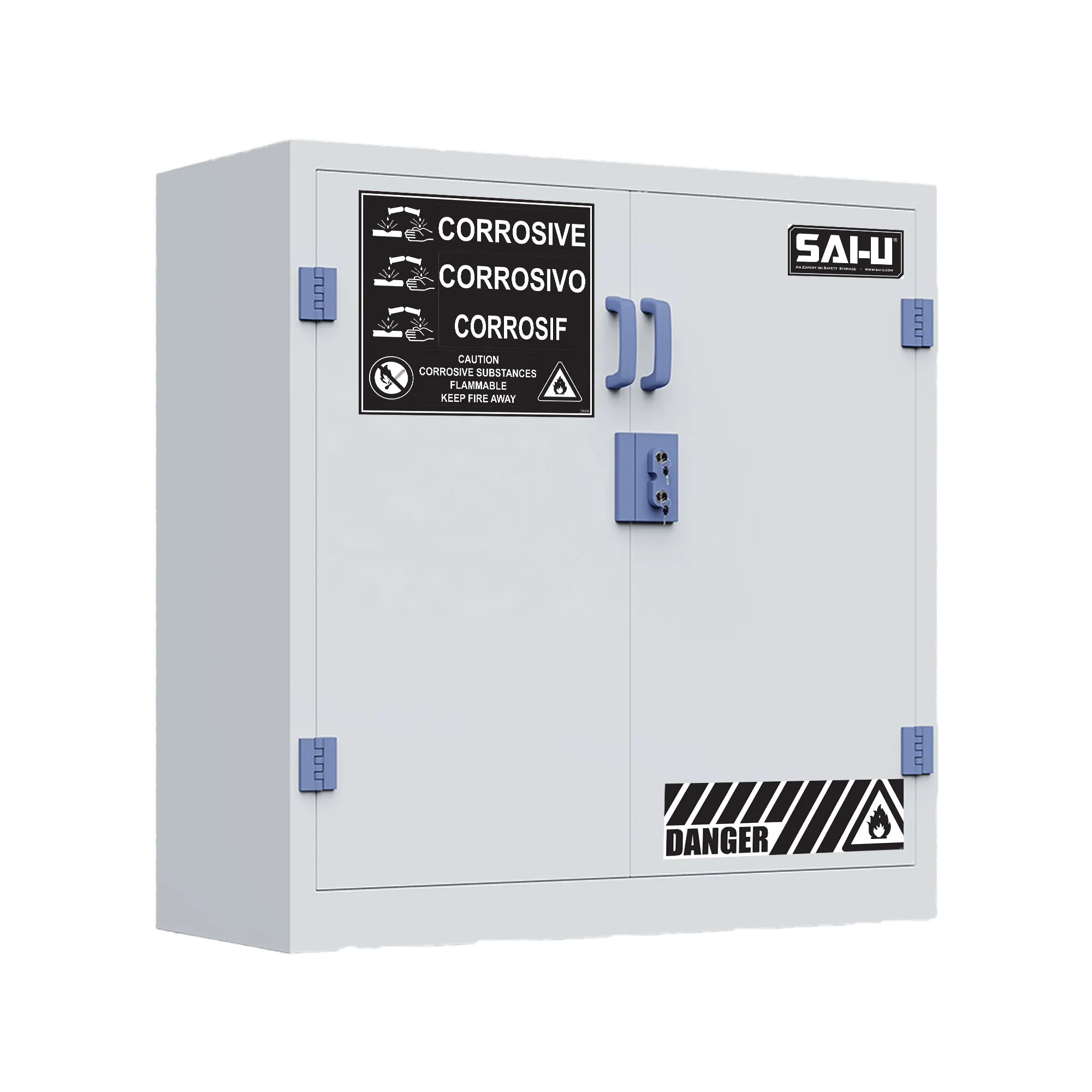
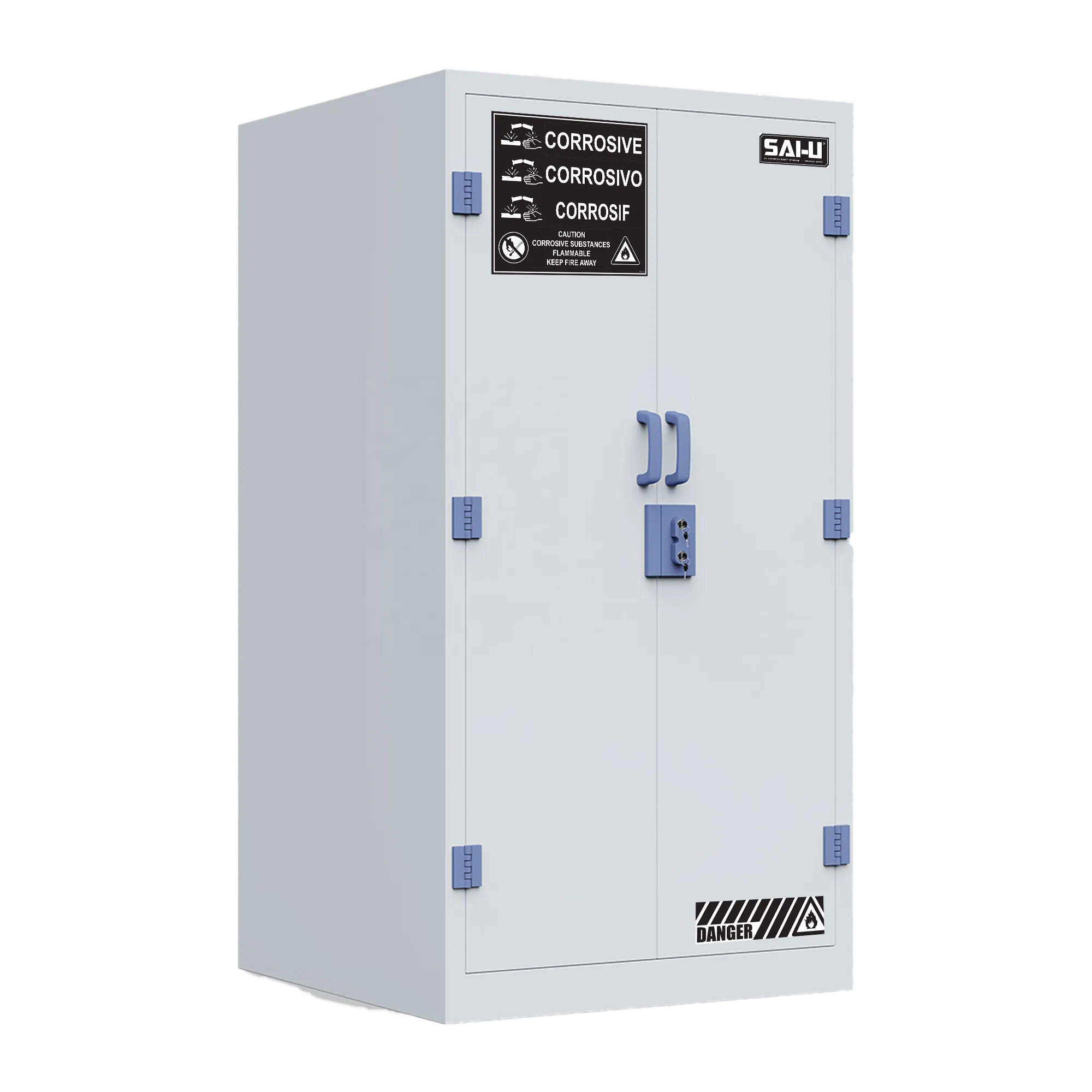
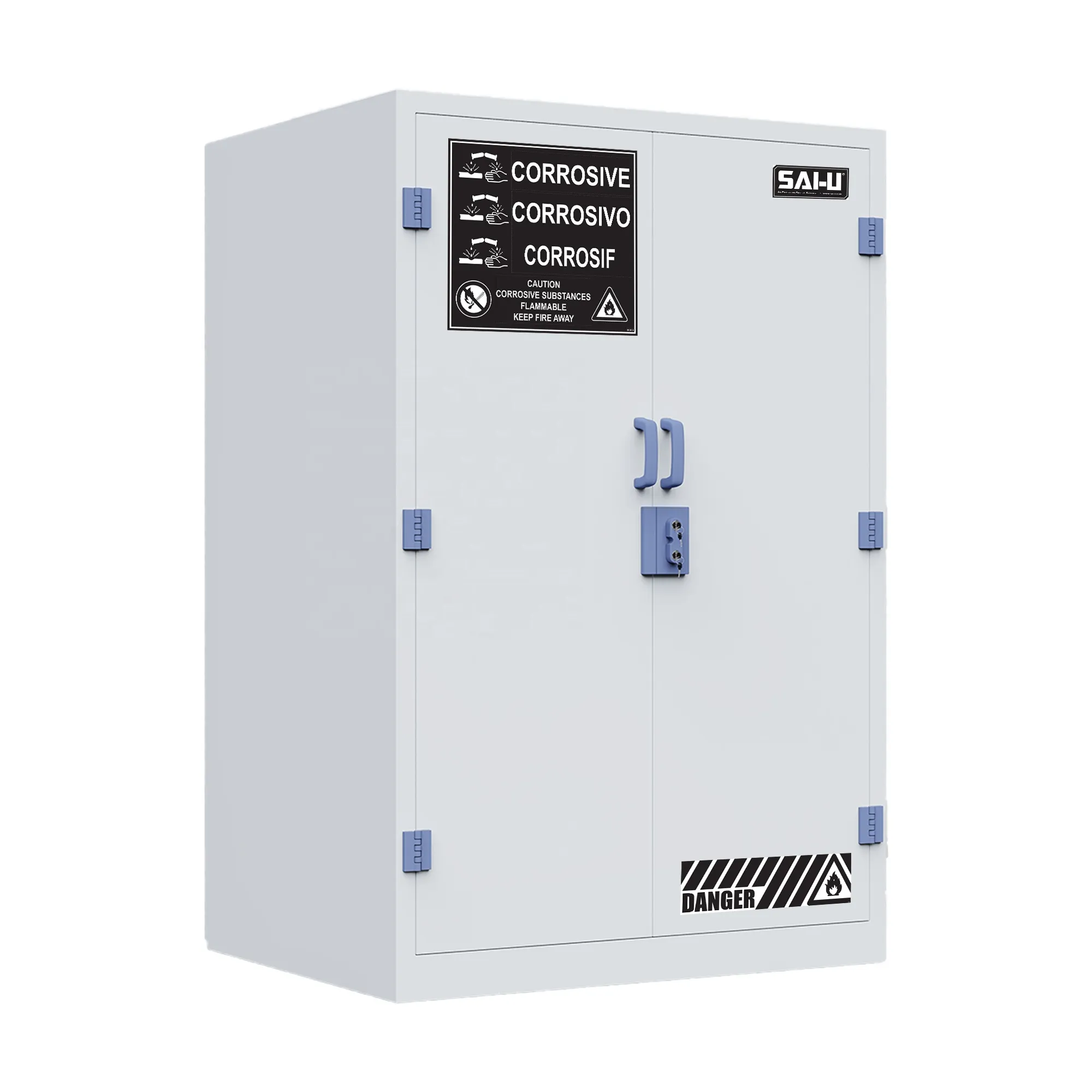
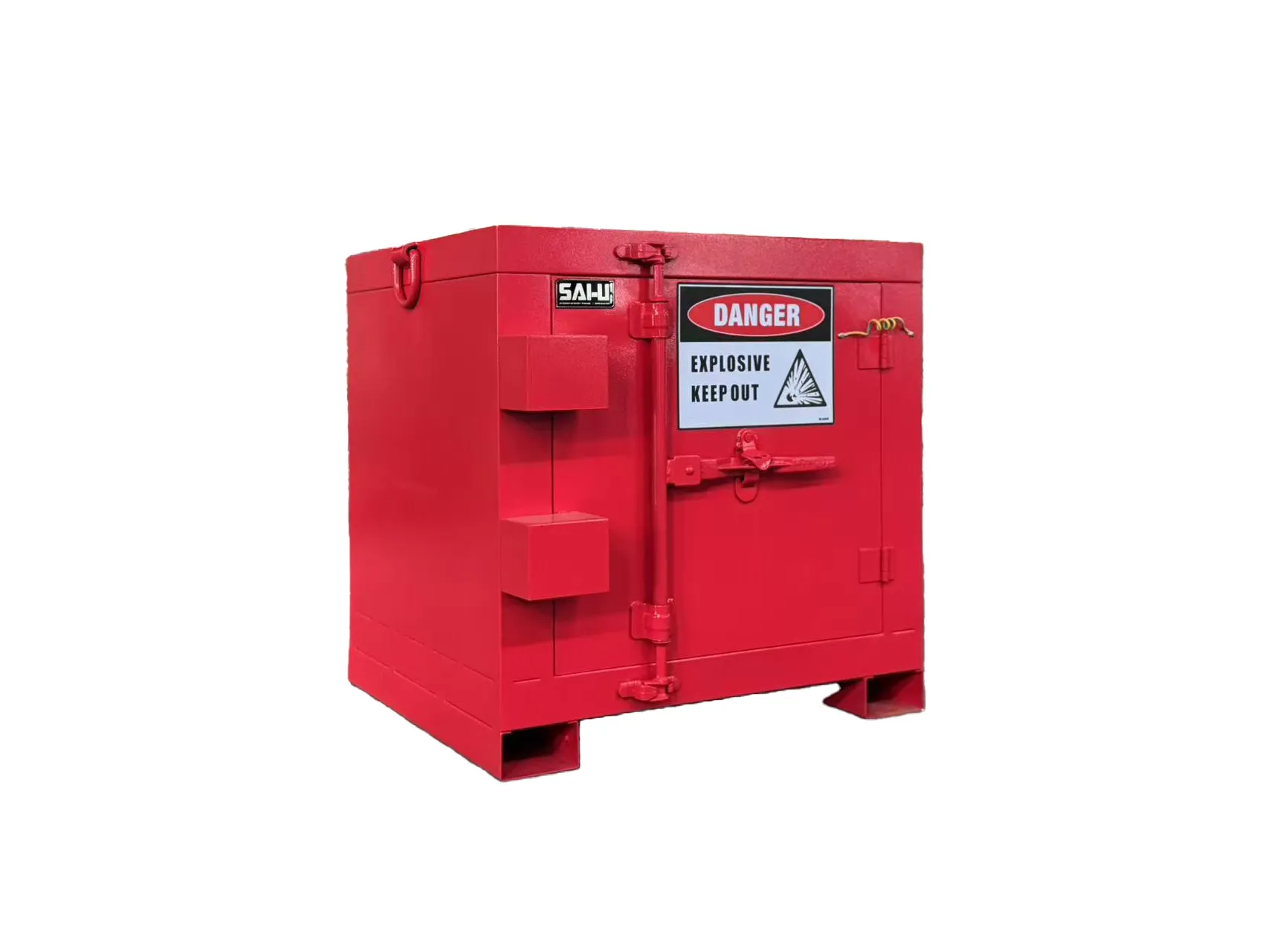
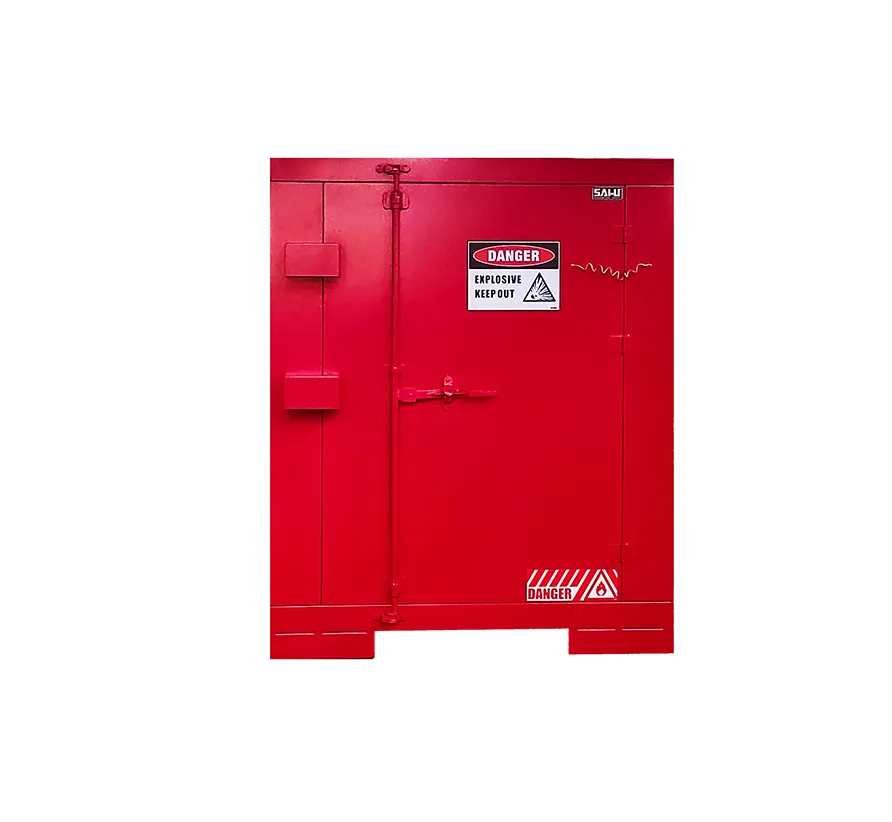
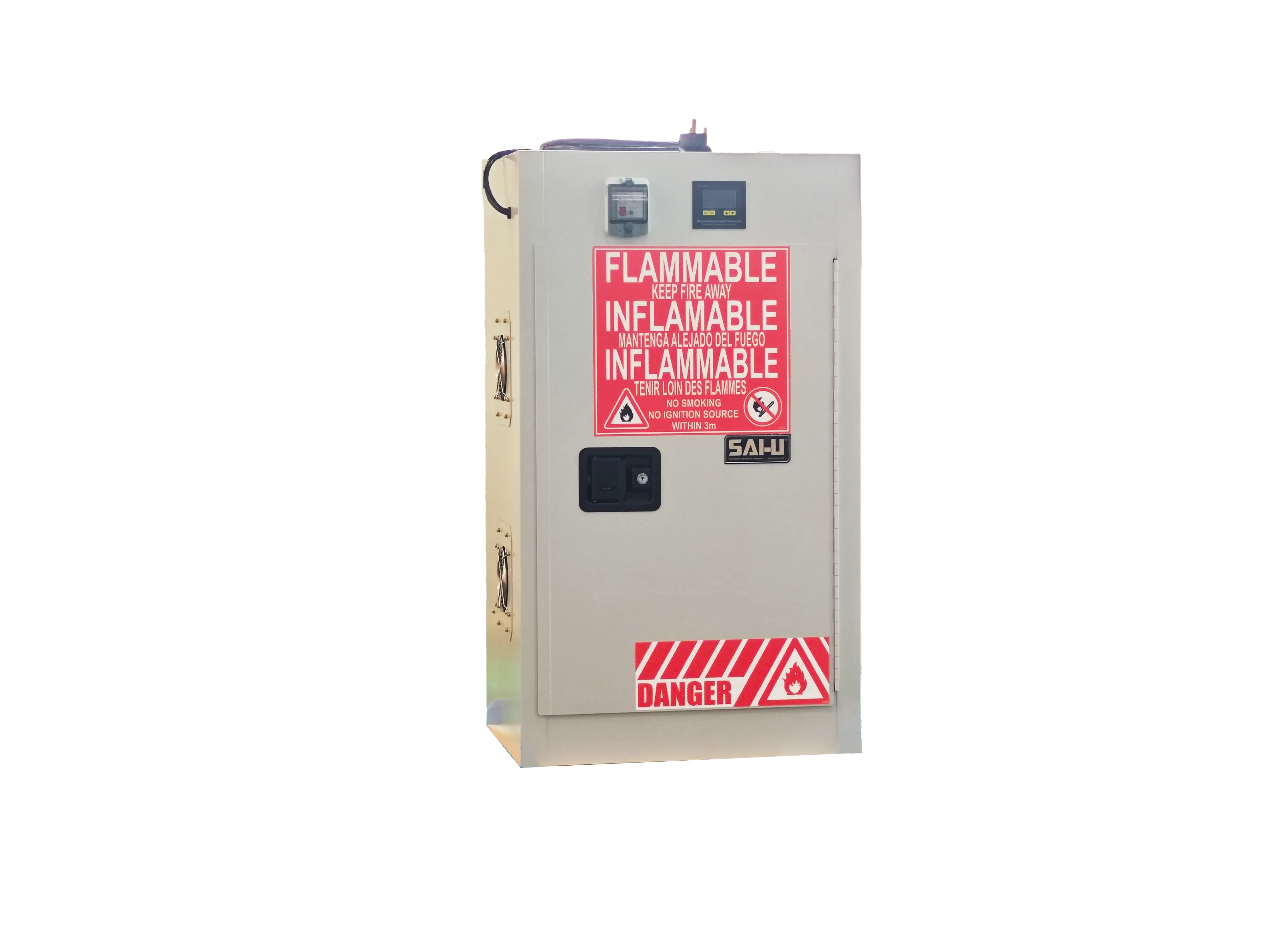
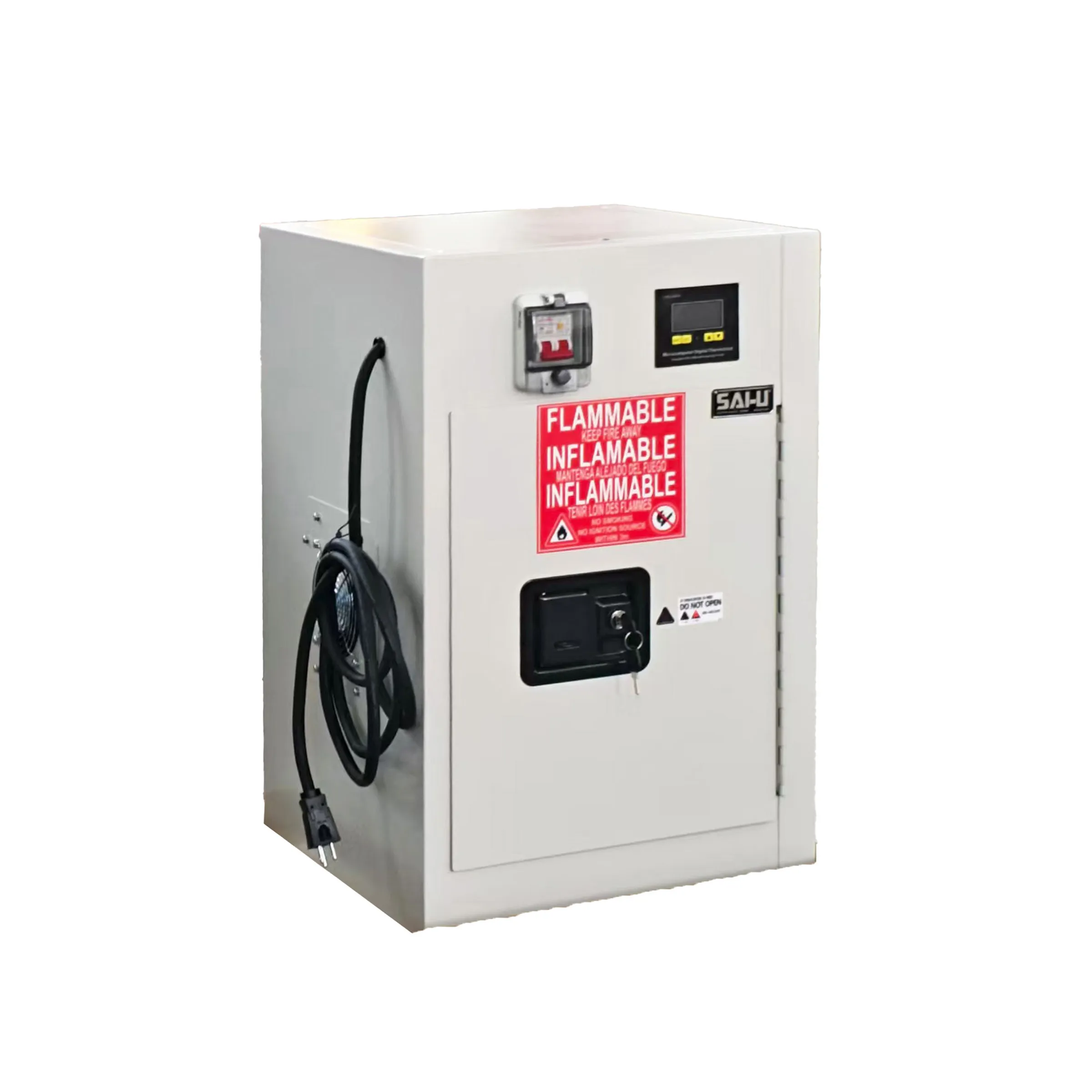
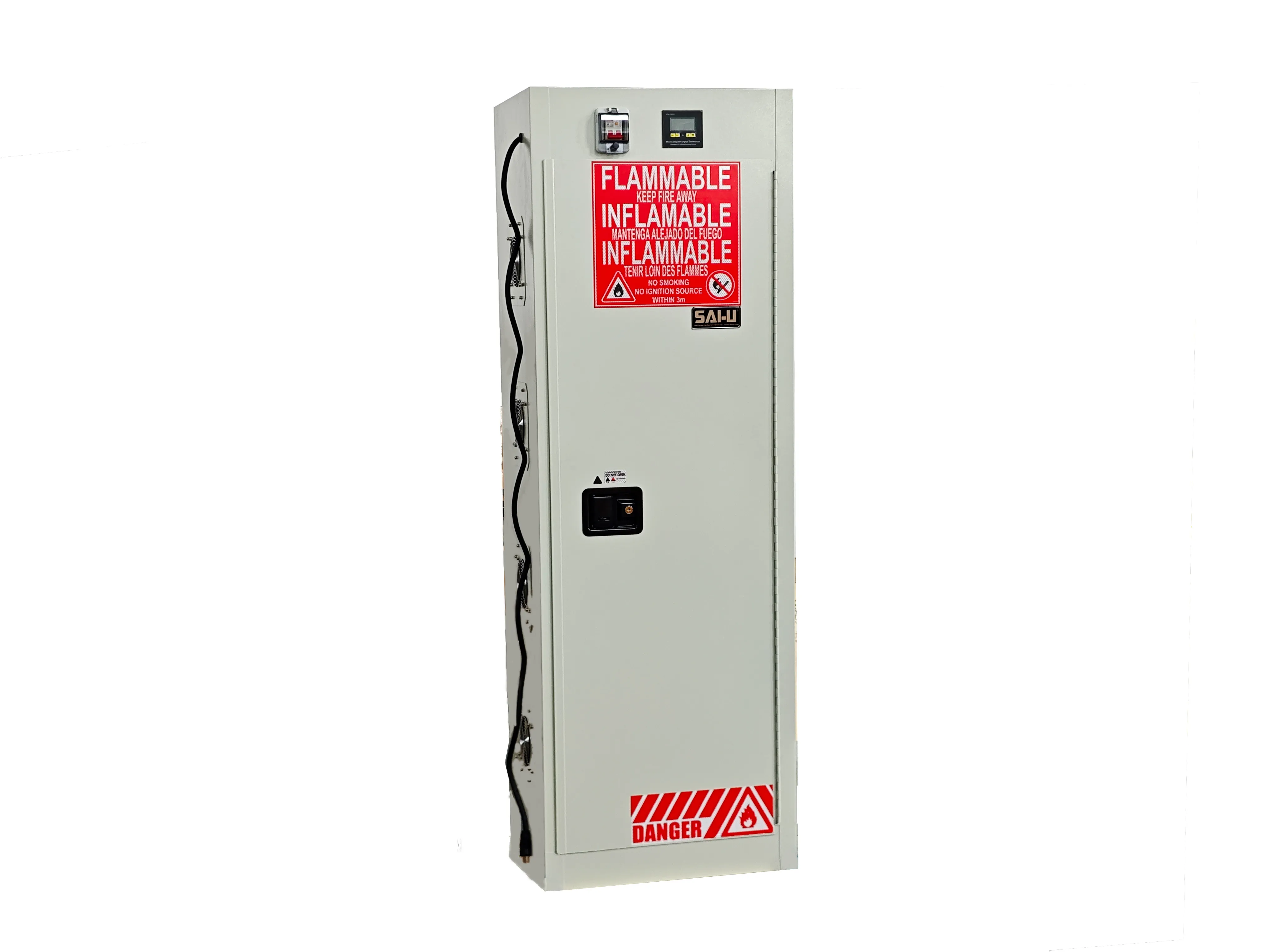
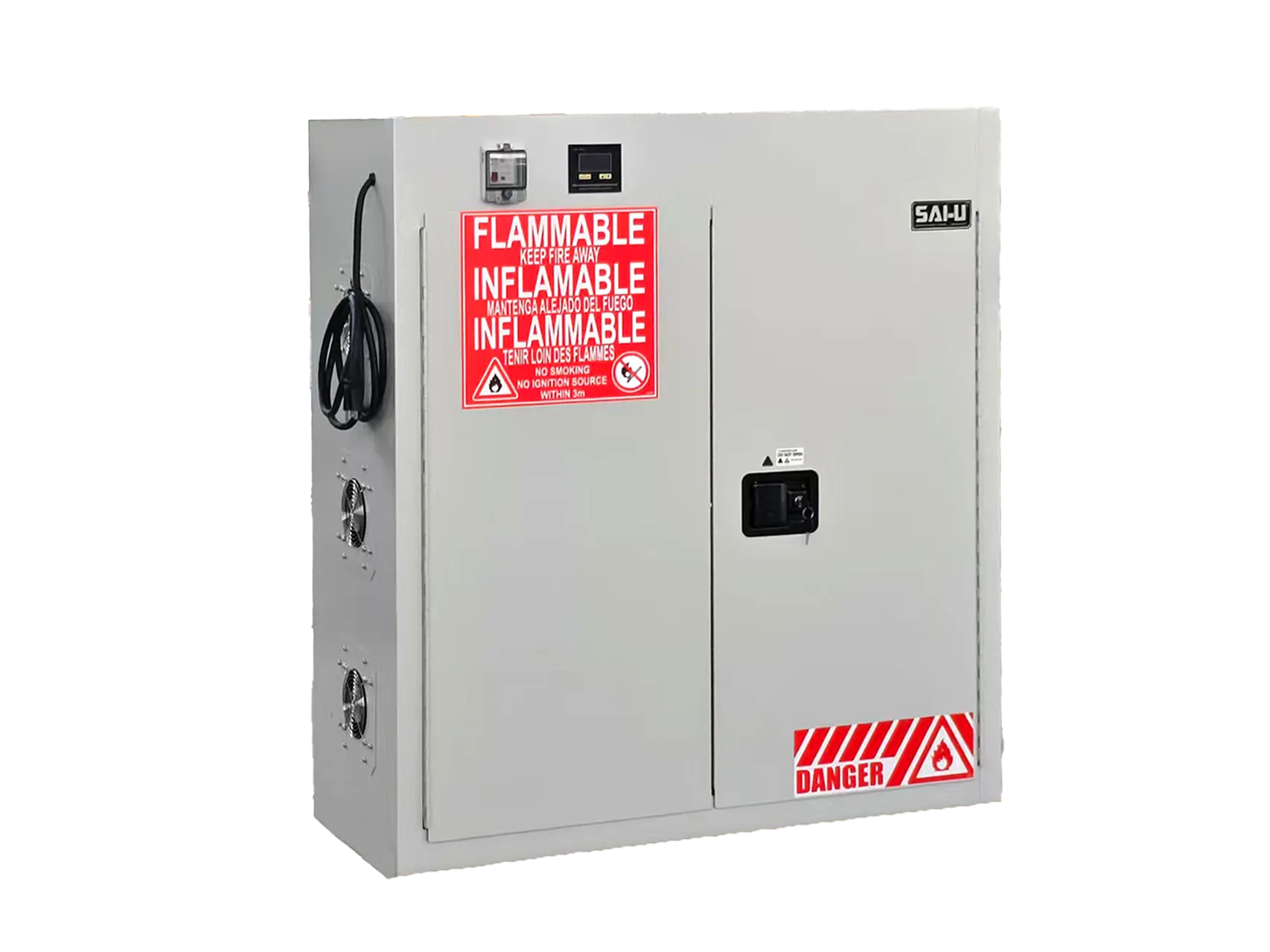
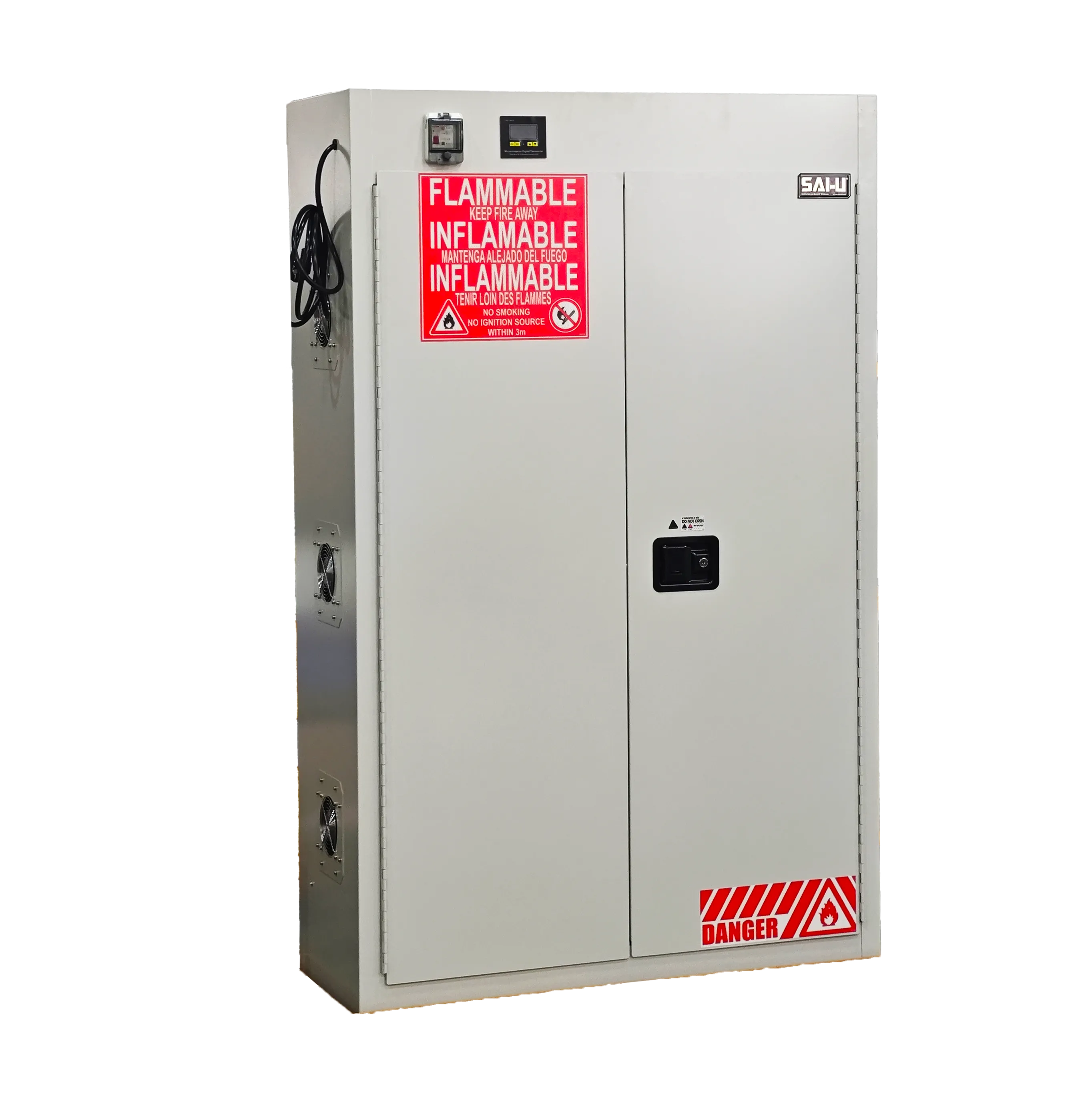
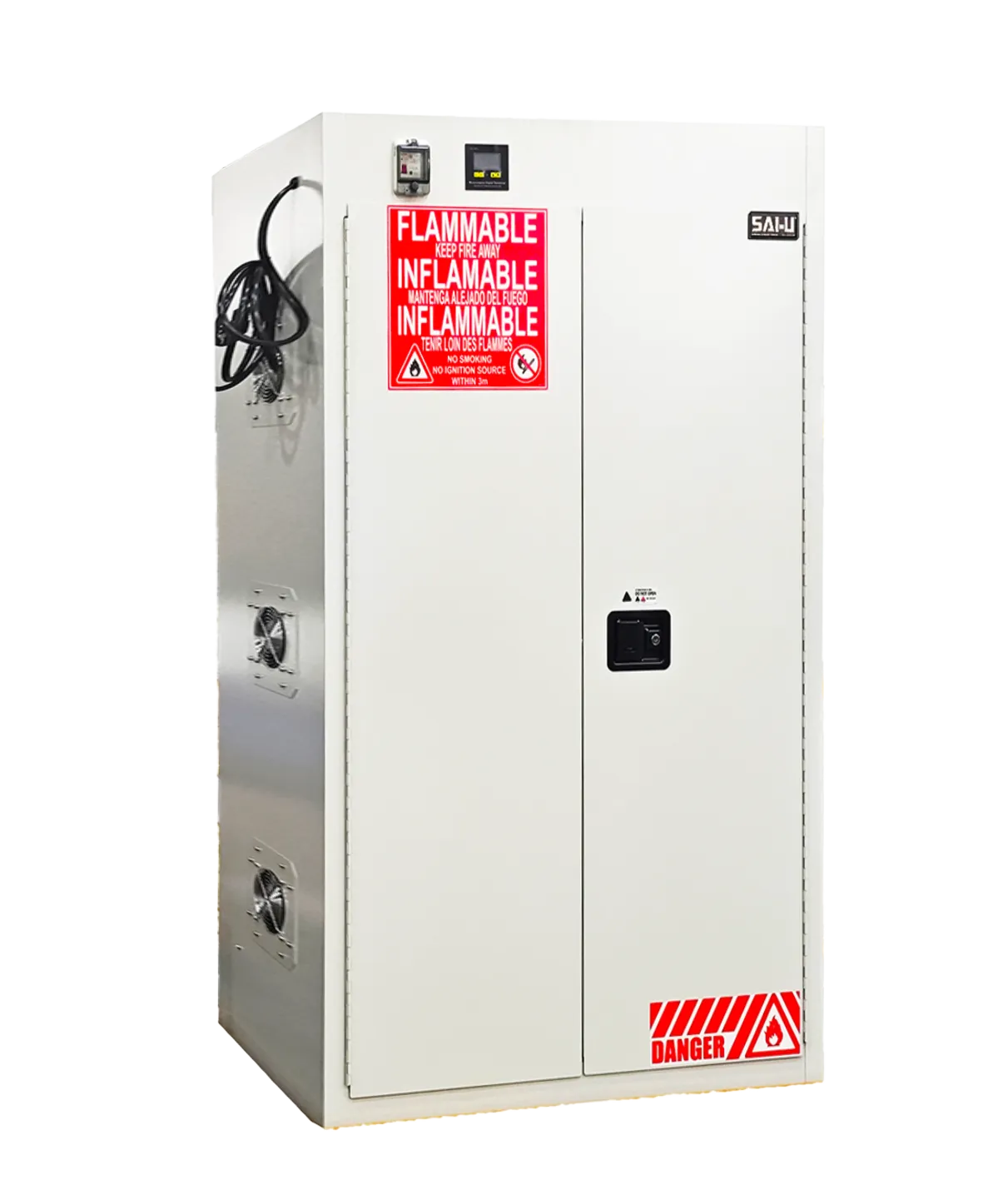
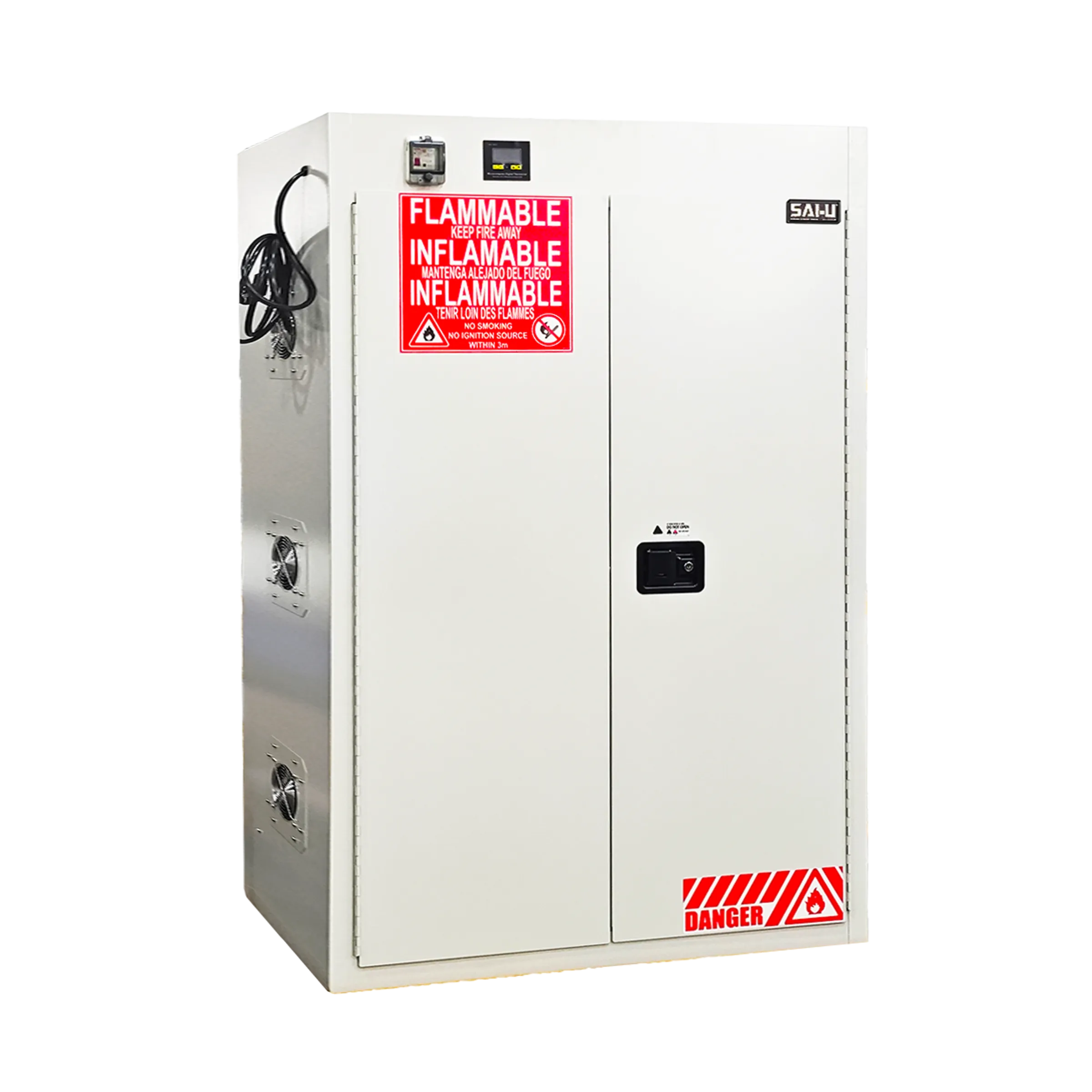
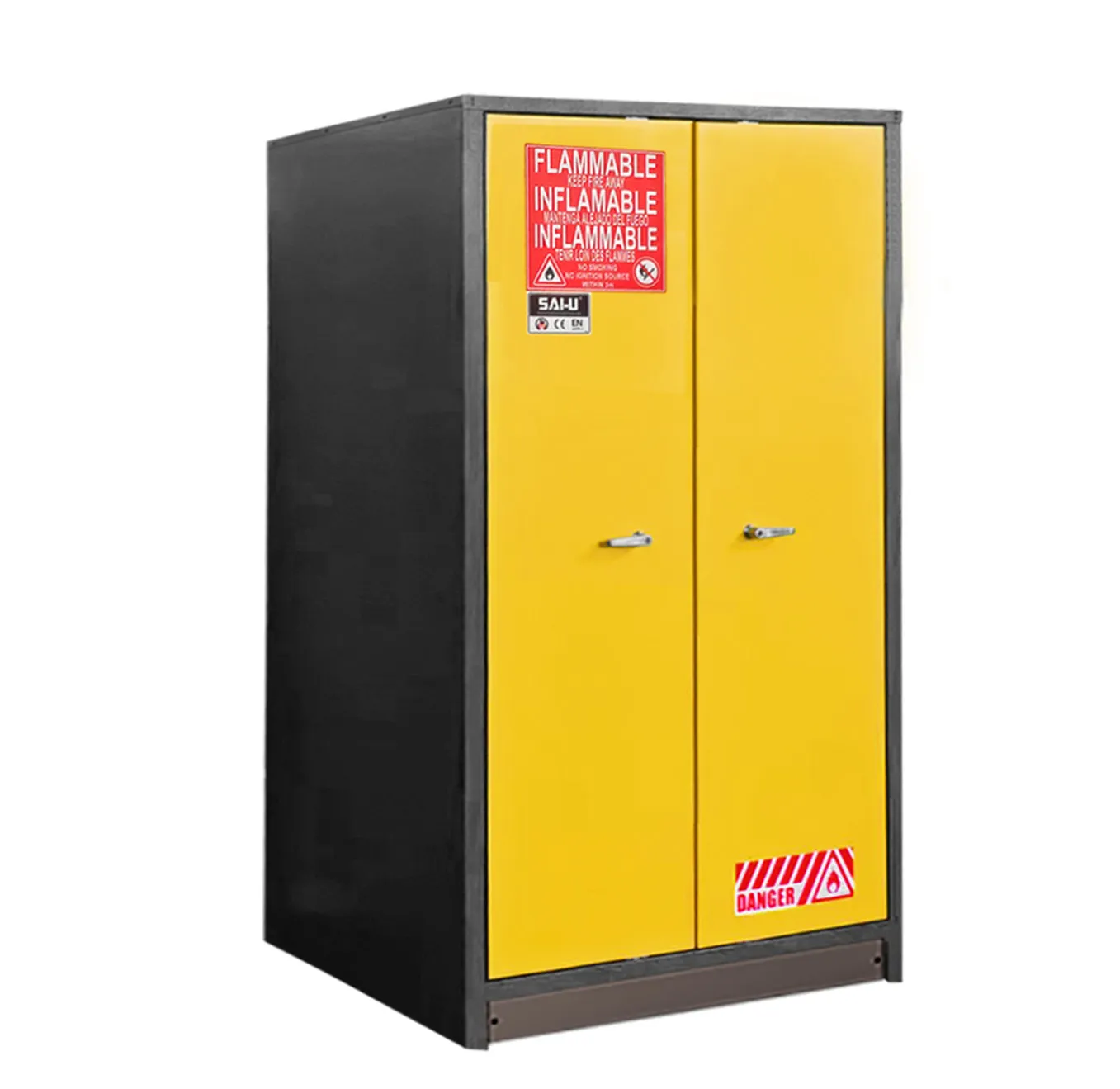
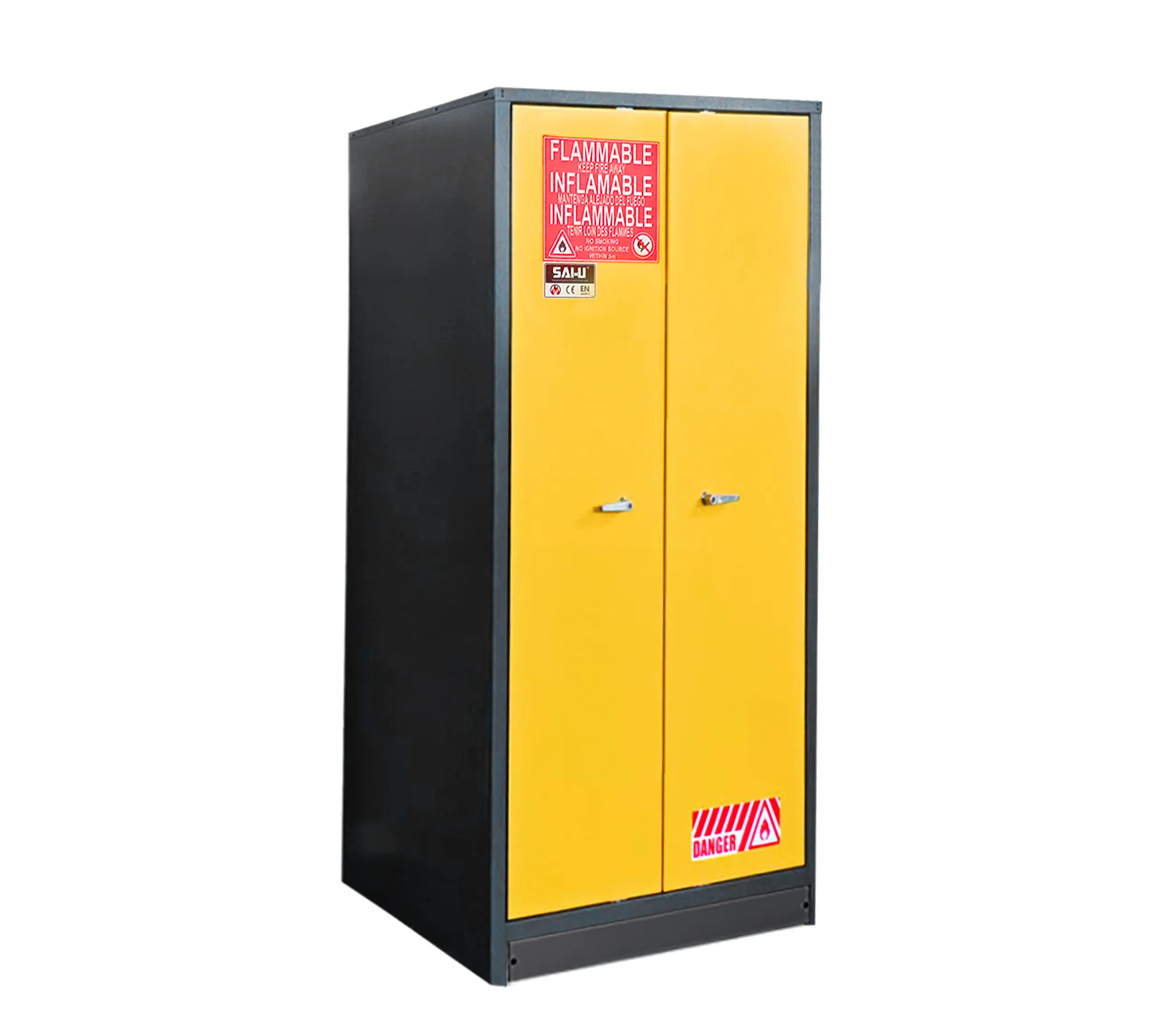
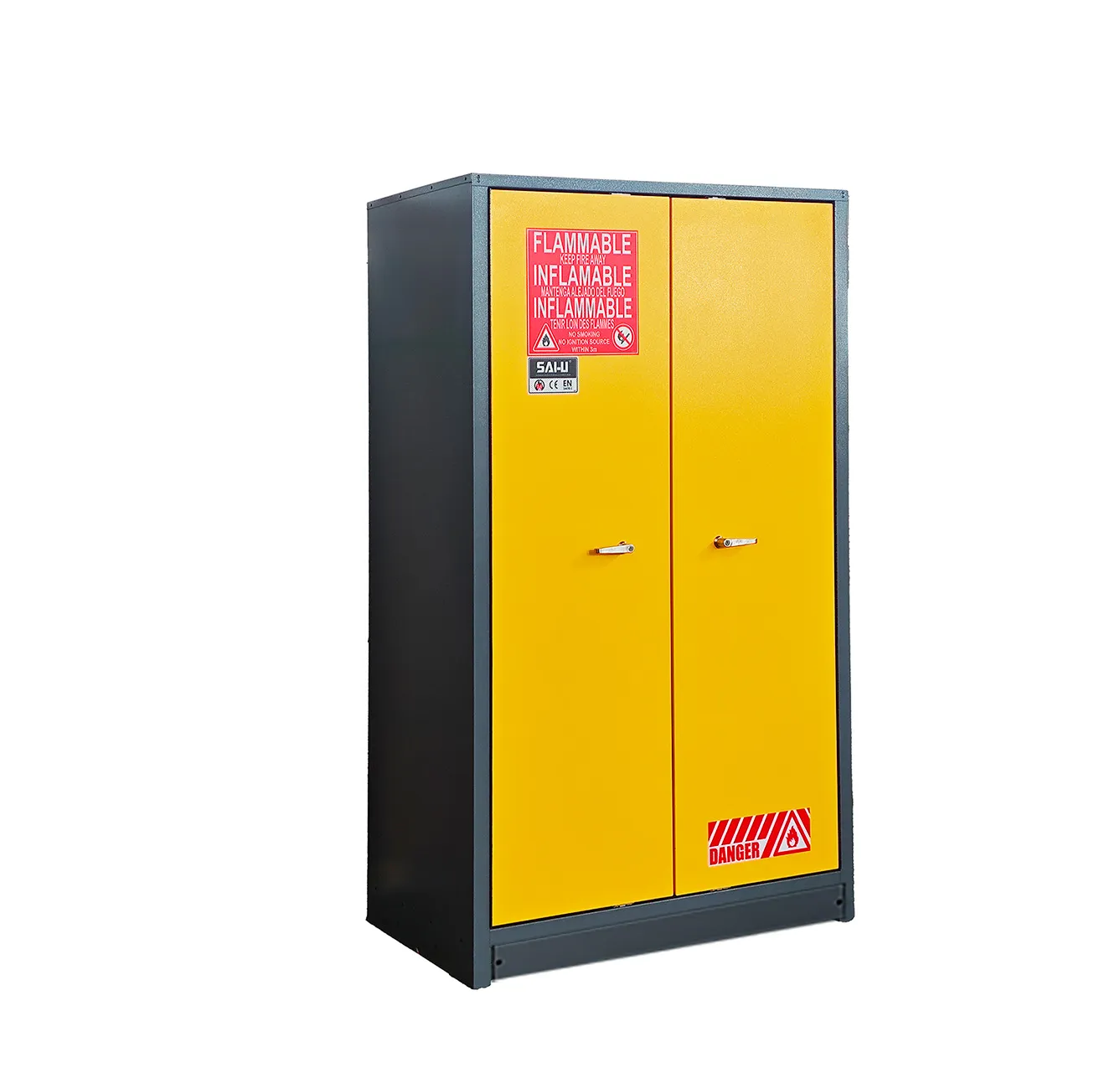
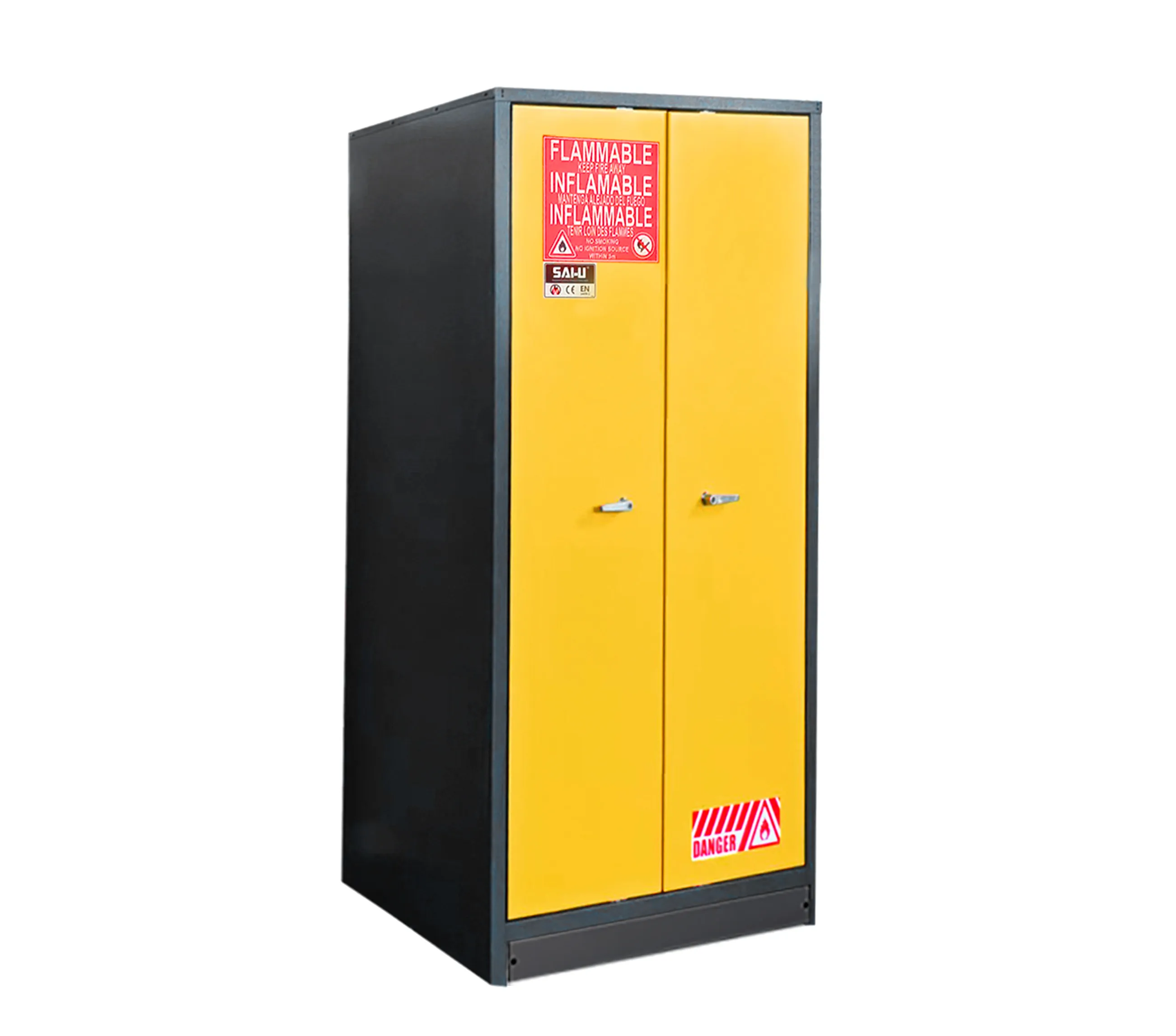
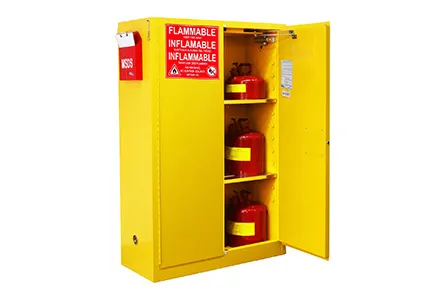
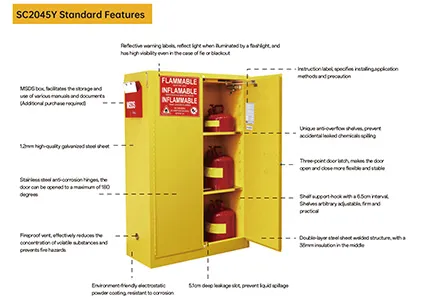
SAI-U provides customized corrosive and flammable storage solutions designed around the specific requirements of industrial chemical-handling environments.
Rather than treating chemical storage as a standard cabinet purchase, SAI-U can work with customers to consider factors such as:
· Required storage capacity
· Chemical categories
· Container dimensions
· Available installation space
· Storage and dispensing workflow
· Corrosion-resistance requirements
· Ventilation requirements
· Secondary containment
· Facility layout
· Custom configuration requirements
For large-scale battery and semiconductor manufacturing, this customized approach can be particularly valuable when chemical storage needs to integrate with a larger production and EHS strategy.
Built for High-Volume Manufacturing Environments
Gigafactories and semiconductor fabs can require substantially greater chemical storage capacity than conventional laboratories or small manufacturing facilities.
Customized, high-capacity storage configurations can help facilities organize chemical inventories while maintaining appropriate segregation and containment.
The exact construction materials, dimensions, capacity, ventilation configuration, fire-protection features, and certifications should be confirmed with SAI-U based on the specific project and applicable local requirements.
This project-specific approach is important because there is no universal storage cabinet suitable for every corrosive or flammable chemical.
A Practical Checklist for Battery and Semiconductor Chemical Storage
Before selecting a corrosive and flammable storage solution, facility managers should consider the following questions:
Chemical Inventory
· What chemicals will be stored?
· What are their physical and chemical hazards?
· What are the maximum quantities?
· What container sizes will be used?
Compatibility
· Are the storage materials compatible with the chemicals?
· Which chemicals require segregation?
· Are oxidizers and incompatible materials appropriately separated?
Fire and Ignition Control
· Are flammable liquids stored according to applicable requirements?
· Are ignition sources adequately controlled?
· Are grounding and bonding required for the intended transfer operations?
Ventilation
· Do the chemicals require dedicated or local exhaust?
· Where will vapors be directed?
· Does the ventilation design interact with fire or electrical requirements?
Containment
· What happens if the largest container leaks?
· Is secondary containment adequate?
· Can spilled chemicals reach drains, equipment, or occupied areas?
Workflow
· How frequently are chemicals moved?
· Can operators safely access containers?
· Does the storage layout minimize unnecessary chemical transfers?
Compliance
· Have applicable OSHA, NFPA, EPA, fire code, building code, environmental, and local requirements been evaluated?
· Are site-specific EHS and process-safety requirements incorporated into the design?
This checklist can help turn chemical storage from an afterthought into an integrated part of facility safety planning.
The Future of Chemical Storage Is Scalable and Application-Specific
The expansion of battery manufacturing and semiconductor production is creating a new generation of industrial chemical storage challenges.
These facilities need to manage larger chemical inventories while maintaining strict control over fire, corrosion, vapor exposure, contamination, and compatibility risks.
The answer is not simply to install more cabinets.
The more effective approach is to design a chemical storage system around the actual risk profile of the facility.
For battery plants, this may mean prioritizing flammable solvent and electrolyte handling, ignition control, ventilation, and spill containment.
For semiconductor fabs, the challenge may involve managing multiple chemical hazard classes—including corrosive acids, bases, solvents, oxidizers, and specialty process chemicals—within a highly controlled manufacturing environment.
In both cases, the principles remain similar:
Classify the hazards. Verify chemical compatibility. Separate incompatible materials. Control vapors and ignition sources. Provide appropriate containment. Design for the actual workflow. And ensure compliance with applicable requirements.
Conclusion
As global battery gigafactory and semiconductor fab capacity continues to expand, chemical storage infrastructure will become an increasingly important component of manufacturing safety and operational resilience.
The combination of high chemical consumption, frequent material transfer, strict environmental controls, and complex hazard profiles makes corrosive and flammable storage a specialized engineering challenge.
For manufacturers planning a new facility, expanding production, or upgrading an existing chemical storage area, the right solution should be based on the facility's chemical inventory, quantities, workflow, environmental conditions, and applicable regulatory requirements.
SAI-U's customized and high-capacity chemical storage solutions can provide a starting point for manufacturers looking to develop storage systems aligned with their specific production environments.
Looking for a customized corrosive and flammable storage solution for your battery plant or semiconductor facility? Contact SAI-U to discuss your chemical inventory, storage capacity, installation requirements, and project specifications.
Frequently Asked Questions
What is corrosive and flammable storage?
Corrosive and flammable storage refers to engineered storage solutions used to manage hazardous chemicals that present corrosive, flammable, or related risks. The appropriate design depends on the chemical classification, compatibility, quantity, container type, ventilation, fire protection, and applicable regulations.
Can corrosive and flammable chemicals be stored in the same cabinet?
Not necessarily. Chemicals must be evaluated individually based on their hazard classification and compatibility. Flammable liquids, corrosive acids, bases, oxidizers, and reactive chemicals may require different storage arrangements or physical segregation.
Why is chemical storage important in battery manufacturing?
Battery manufacturing can involve significant quantities of flammable solvents and electrolyte-related chemicals. Safe storage helps control risks associated with leaks, vapor release, ignition sources, chemical exposure, and material transfer.
What chemicals require special storage in semiconductor fabs?
Semiconductor fabs may handle acids, bases, oxidizers, solvents, photoresists, developers, and other specialty chemicals. Each chemical has its own storage, compatibility, handling, and engineering-control requirements.
Does corrosive chemical storage require ventilation?
The answer depends on the chemical and storage configuration. Some chemicals may require mechanical or local exhaust ventilation, while others may have different control requirements. The SDS, applicable codes, and a site-specific engineering assessment should be used to determine the appropriate design.
How do I choose the right corrosive and flammable storage system?
Start with the chemical inventory. Identify the hazard classification, concentration, quantity, container size, compatibility requirements, storage location, transfer frequency, ventilation needs, secondary containment requirements, and applicable local regulations. The storage system should then be designed around these parameters rather than selected solely by cabinet size.
 English
  日本語
日本語  한국어
한국어  français
  Deutsch
  Español
  italiano
  русский
  português
  ไทย
ไทย  العربية