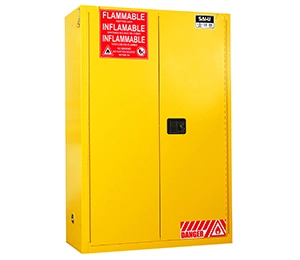
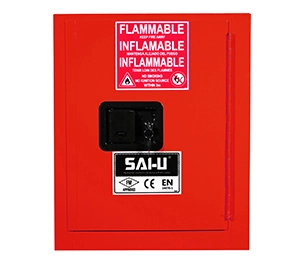
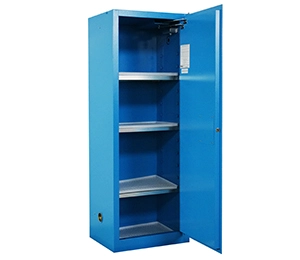
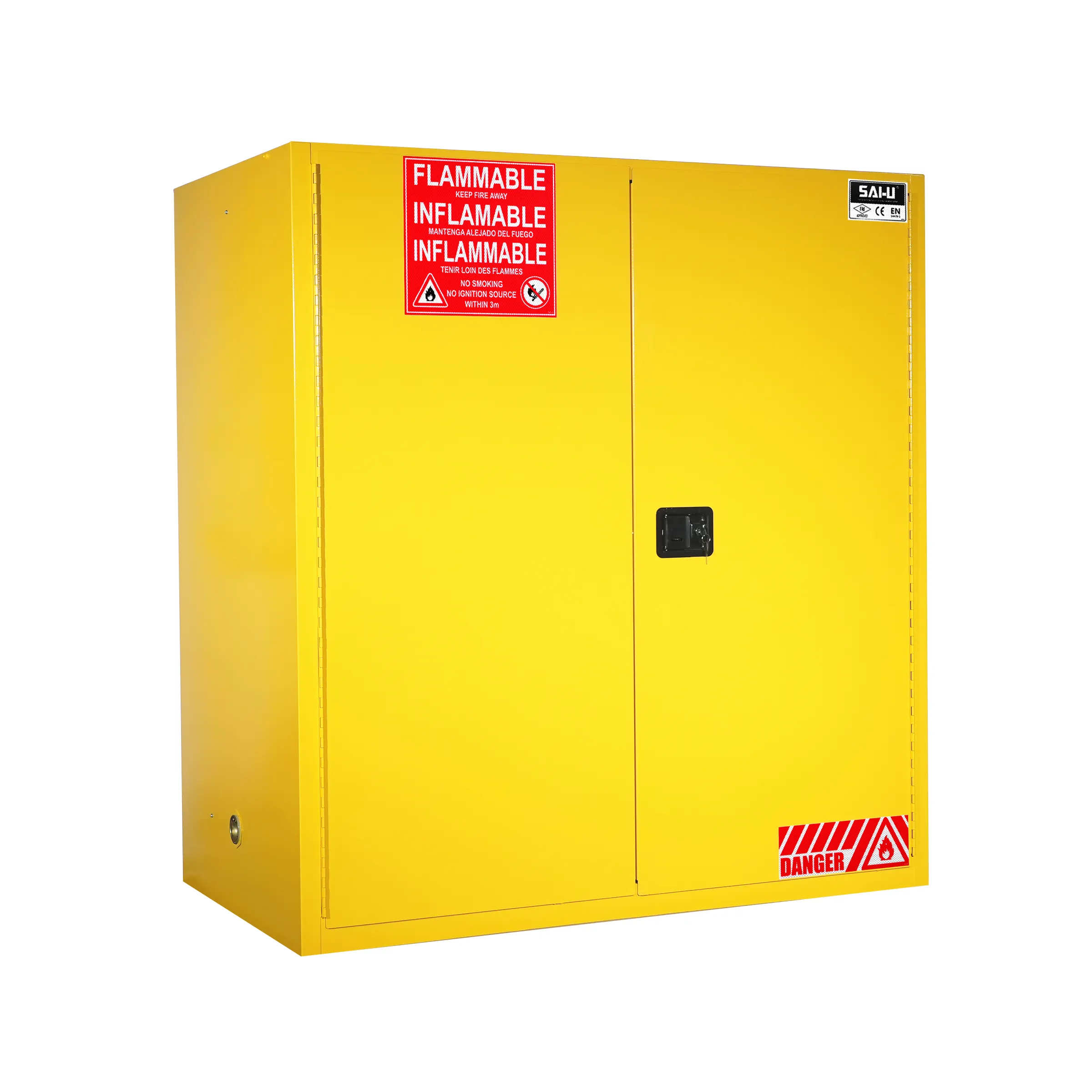
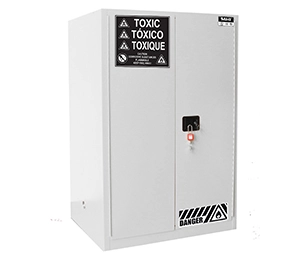
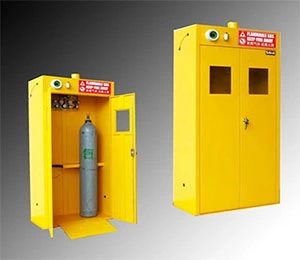
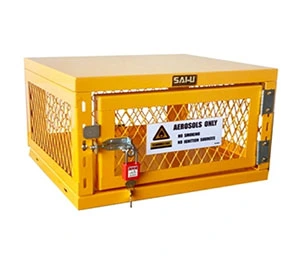
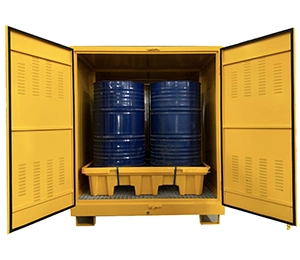
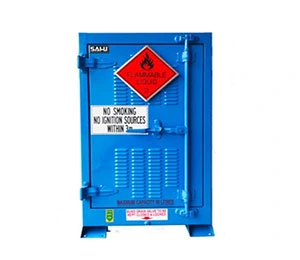
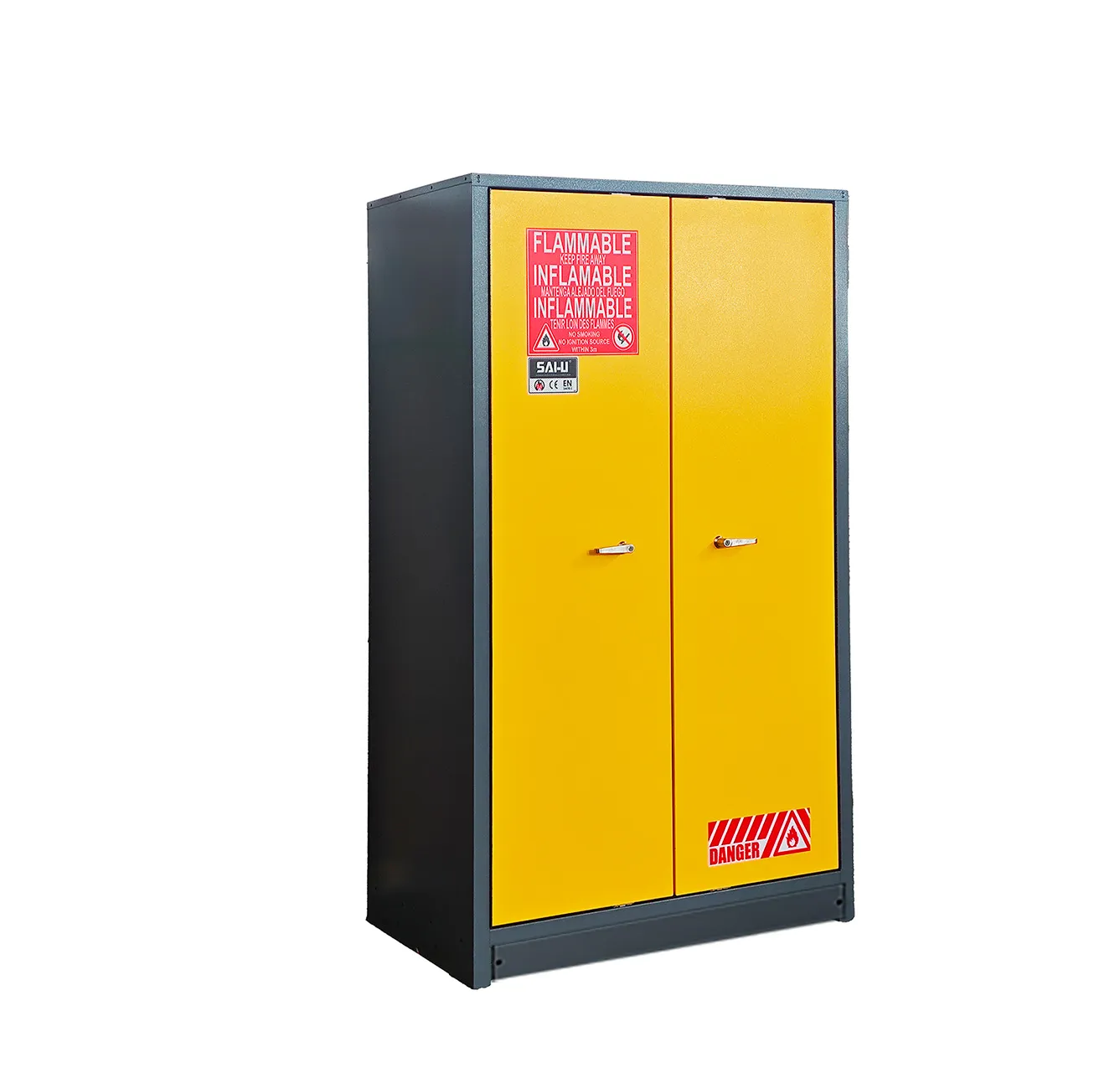
A small corrosive cabinet is usually selected when a laboratory needs controlled storage close to the point of use without dedicating floor space to a large chemical-storage unit. The correct size depends on the chemical inventory, container dimensions, compatibility groups, secondary containment and available installation space—not simply the number of bottles.
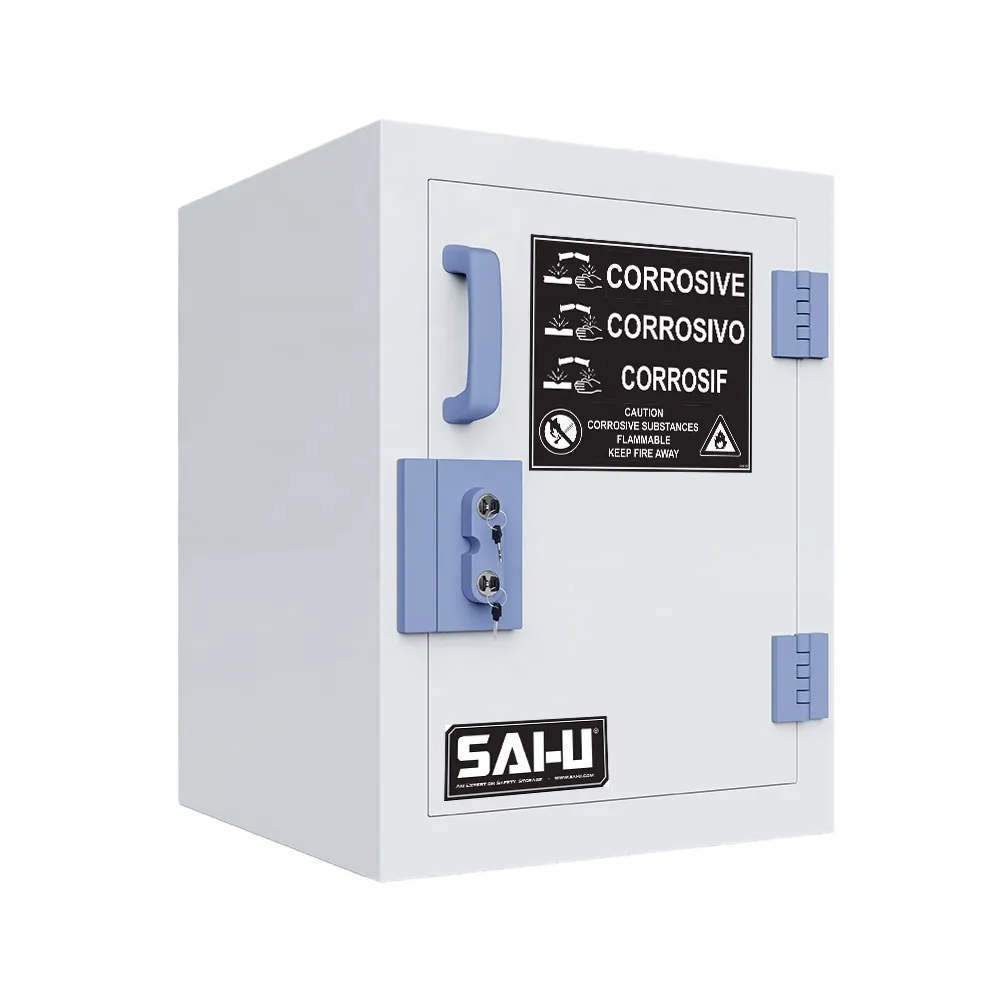
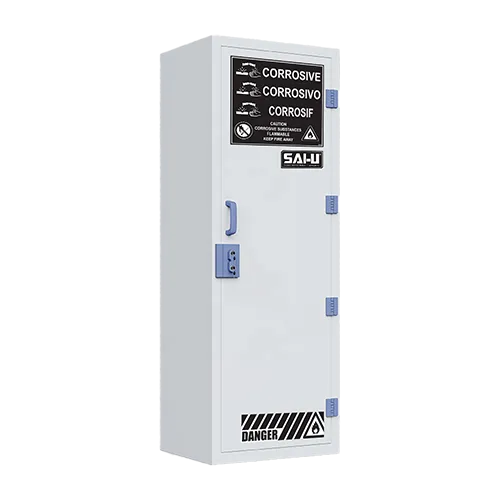
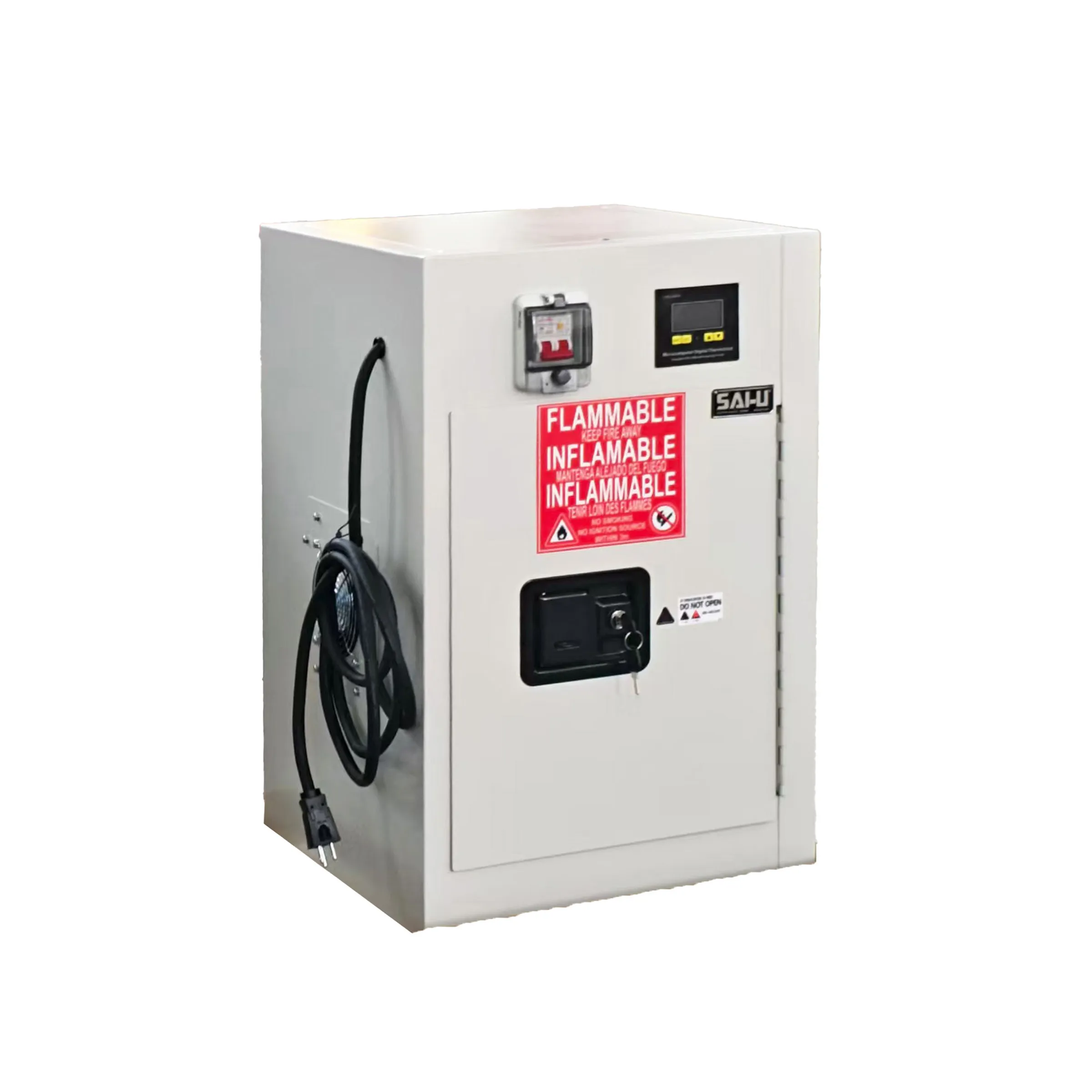
For a laboratory with a limited inventory, a compact cabinet such as SAI-U SC0004B provides a practical reference point. The model has a 4 gal / 15 L capacity, 560 × 430 × 430 mm external dimensions, 1 adjustable shelf, and a 50 kg shelf loading capacity. These are manufacturer-published specifications and should be compared with the actual container sizes and chemical-storage procedure before purchase.
When Is a Small Corrosive Cabinet the Right Choice?
Definition: A small corrosive cabinet is a compact chemical-storage cabinet intended for limited corrosive-chemical inventories where accessibility, compatibility and space efficiency are key design considerations.
Small cabinets are particularly relevant to laboratories that need storage at or near a work area but have limited floor space. A compact unit can also be useful when the chemical inventory is divided into several storage locations according to laboratory workflow.
The decision should begin with the inventory, not the cabinet.
For each chemical, record the name, concentration, container size, quantity, compatibility information and storage conditions listed by the supplier. OSHA's Hazard Communication Standard requires SDSs to include handling and storage information in Section 7 and stability/reactivity information in Section 10.
This makes the SDS an important input to cabinet selection.
Under-Counter, Bench-Side and Point-of-Use Scenarios
A compact cabinet can make sense when the laboratory needs to store a relatively small number of containers close to where they are routinely accessed.
Typical considerations include:
| Application | Primary requirement |
|---|
| Under-counter area | Compact footprint and door clearance |
| Bench-side storage | Frequent access and easy identification |
| Small teaching laboratory | Limited inventory and simple zoning |
| Research laboratory | Chemical compatibility and flexible shelf layout |
| Point-of-use storage | Short travel distance without obstructing work |
The available space should be measured in three dimensions. Do not measure only the cabinet footprint. Check door swing, nearby equipment, utilities, walkways and the clearance needed to remove containers.
A cabinet may technically fit into a 430 mm-wide space but still be impractical if the door cannot open fully.
Where a Small Cabinet Is Not Sufficient
A small cabinet may not be appropriate when the laboratory's inventory exceeds its usable capacity, contains multiple incompatible groups requiring separate storage, or includes unusually large containers.
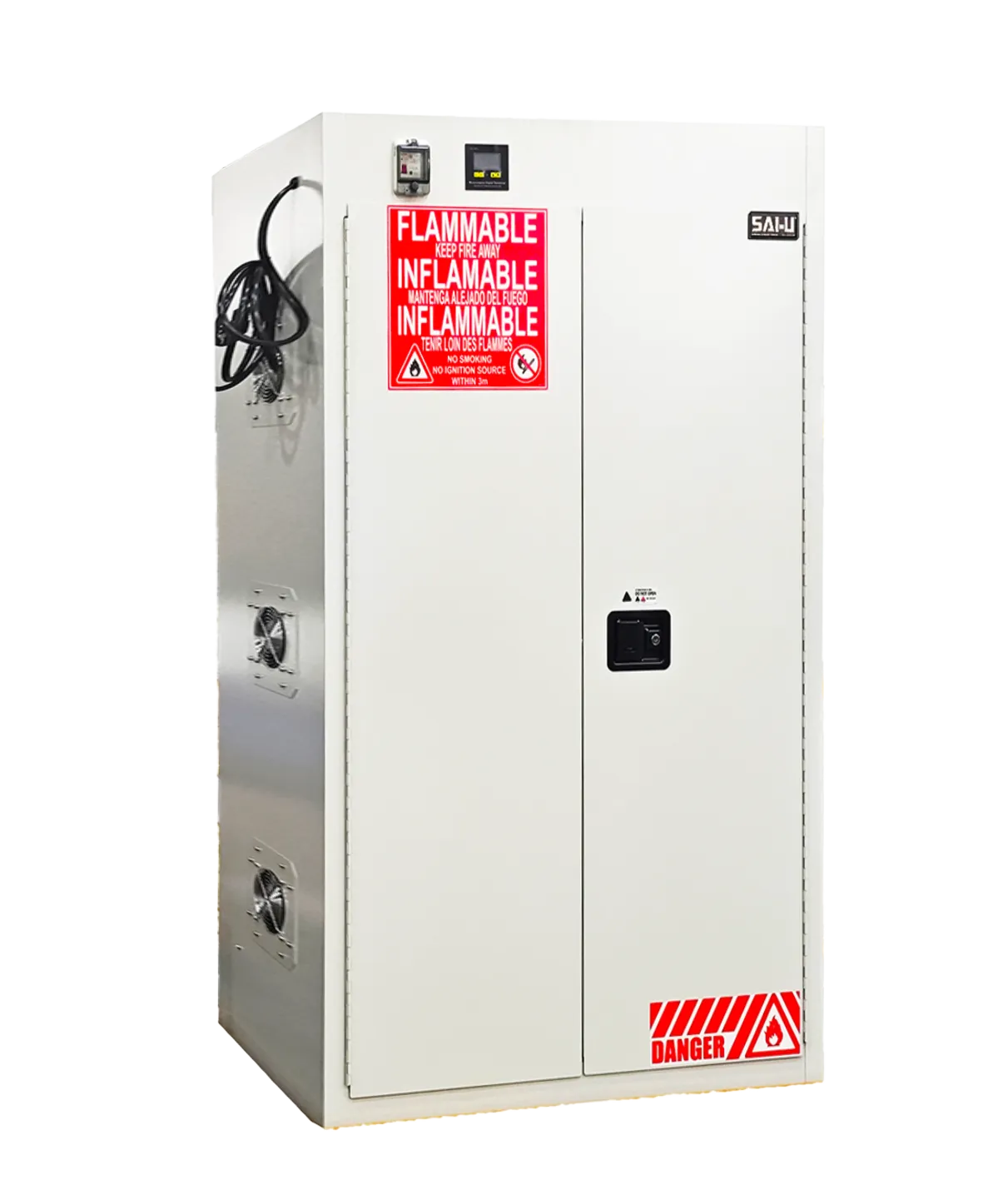
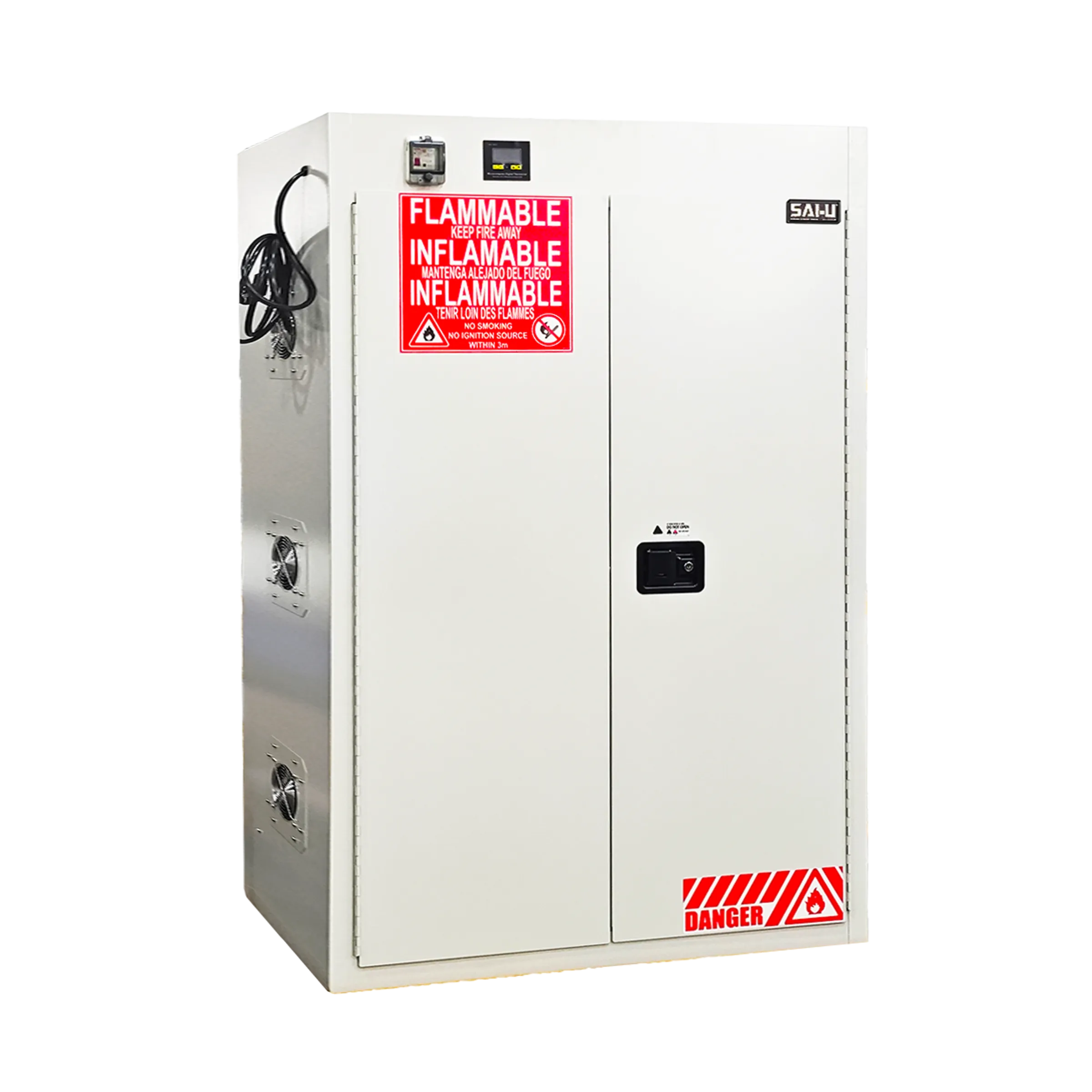
It is also important to distinguish a corrosive storage cabinet from specialized storage for other hazard classes. A cabinet intended for corrosive chemicals should not automatically be treated as providing the fire protection or specialized controls required for flammable liquids.
For chemicals that present multiple hazards, the complete hazard profile should be reviewed before selecting storage equipment.
How Should You Segment the Chemical Inventory Before Sizing the Cabinet?
Definition: Chemical inventory segmentation is the process of grouping stored chemicals according to their hazard characteristics, compatibility and site storage procedure before assigning cabinet space.
The cabinet should reflect the chemical inventory rather than forcing incompatible products into one storage arrangement.
Use SDS Information and Site Compatibility Rules
Start with the SDS and laboratory Chemical Hygiene Plan. OSHA's laboratory standard, 29 CFR 1910.1450, requires laboratories covered by the standard to develop and implement a written Chemical Hygiene Plan addressing procedures, control measures, equipment and employee protection.
The plan provides the site-specific framework for chemical handling and storage. The cabinet is then selected to support that framework.
A useful inventory worksheet includes:
| Chemical information | Example entry |
|---|
| Chemical | Hydrochloric acid |
| Concentration | Site-specific |
| Container | 500 mL bottle |
| Quantity | 4 bottles |
| Hazard classification | Corrosive |
| Compatibility notes | Check SDS |
| Required containment | Tray or shelf containment where applicable |
| Storage location | Corrosive cabinet |
The example is for inventory planning only; the actual storage decision must be based on the chemical's current SDS and site procedure.
Keep Incompatible Groups Physically Separated
“Corrosive” is not a sufficient storage category by itself.
Acids and bases can have incompatible storage requirements, while oxidizing acids may require additional separation from organic or combustible materials. NIOSH's laboratory chemical-safety guidance specifically provides examples of chemical incompatibilities and emphasizes that the list is not exhaustive; the SDS should be consulted for specific substances.
A useful laboratory layout therefore separates chemicals by compatibility group rather than simply arranging bottles alphabetically.
For example:
Acid storage zone → Base storage zone → Other compatible corrosives
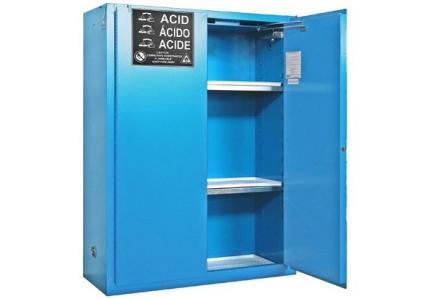
The exact zoning must be determined from the actual inventory. A cabinet label such as “ACID” does not by itself establish that all acids can safely share the same cabinet.
How Do You Calculate Usable Capacity and Secondary Containment?
Definition: Usable cabinet capacity is the storage volume that can practically accommodate the required containers while leaving sufficient clearance for access, identification and containment.
Measure Container Height, Footprint and Shelf Clearance
Cabinet capacity should be calculated from the physical inventory.
For each container, record:
Height — including the cap or closure.
Diameter or footprint — the actual occupied floor area.
Quantity — maximum simultaneous inventory.
Handling clearance — space needed to remove the container without disturbing adjacent stock.
For a small laboratory cabinet, vertical space can become the limiting factor before total cabinet volume does.
Consider a cabinet with three shelves versus one with two shelves. The nominal capacity may look similar, but the useful capacity can be very different depending on whether the laboratory stores small reagent bottles, tall containers or wide chemical packages.
Reserve Space for Trays, Labels and Safe Handling
A shelf should not be loaded simply until no empty space remains.
Secondary containment, labels and handling clearance consume usable space. A chemical container should also remain stable and easy to remove.
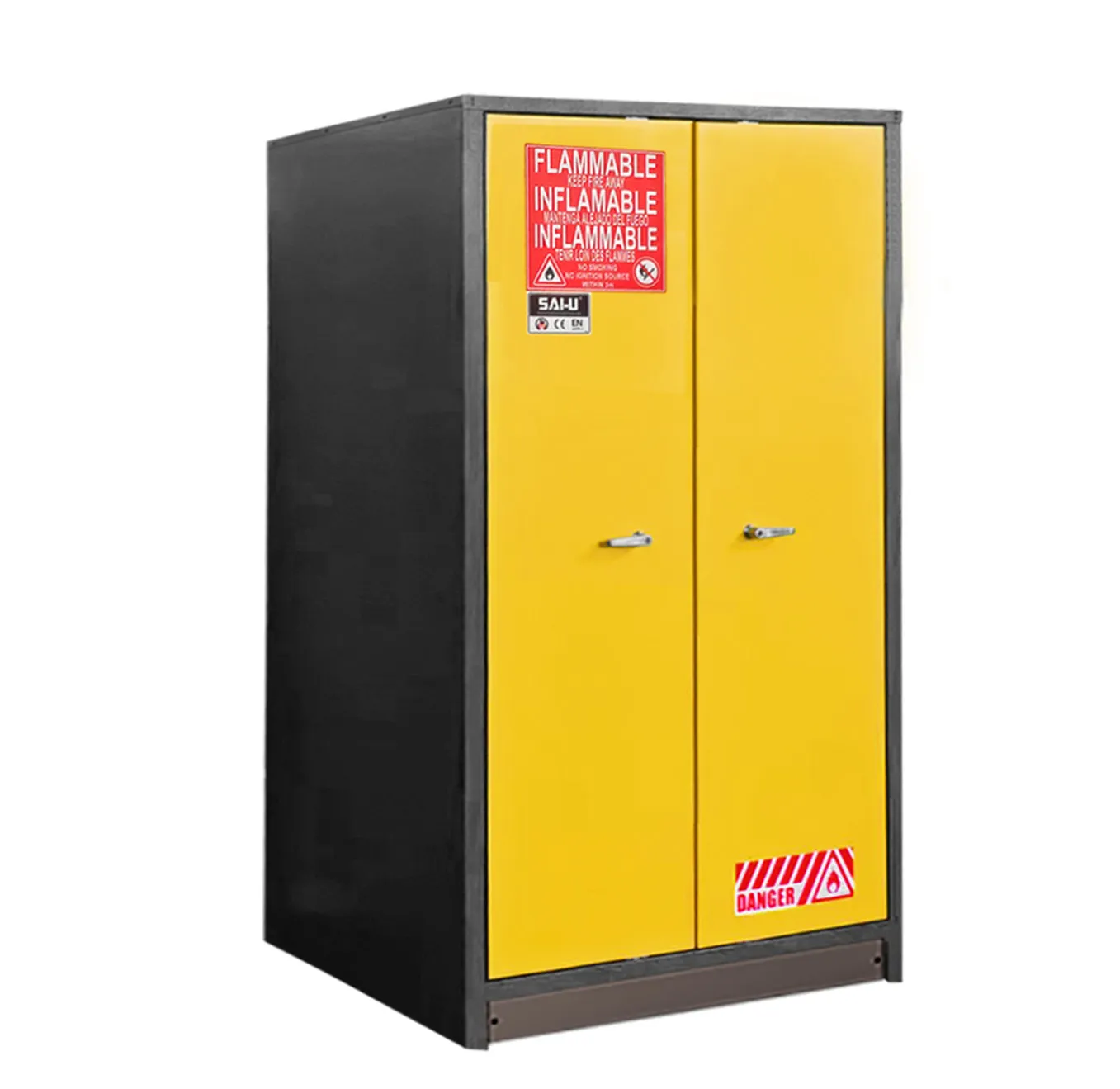
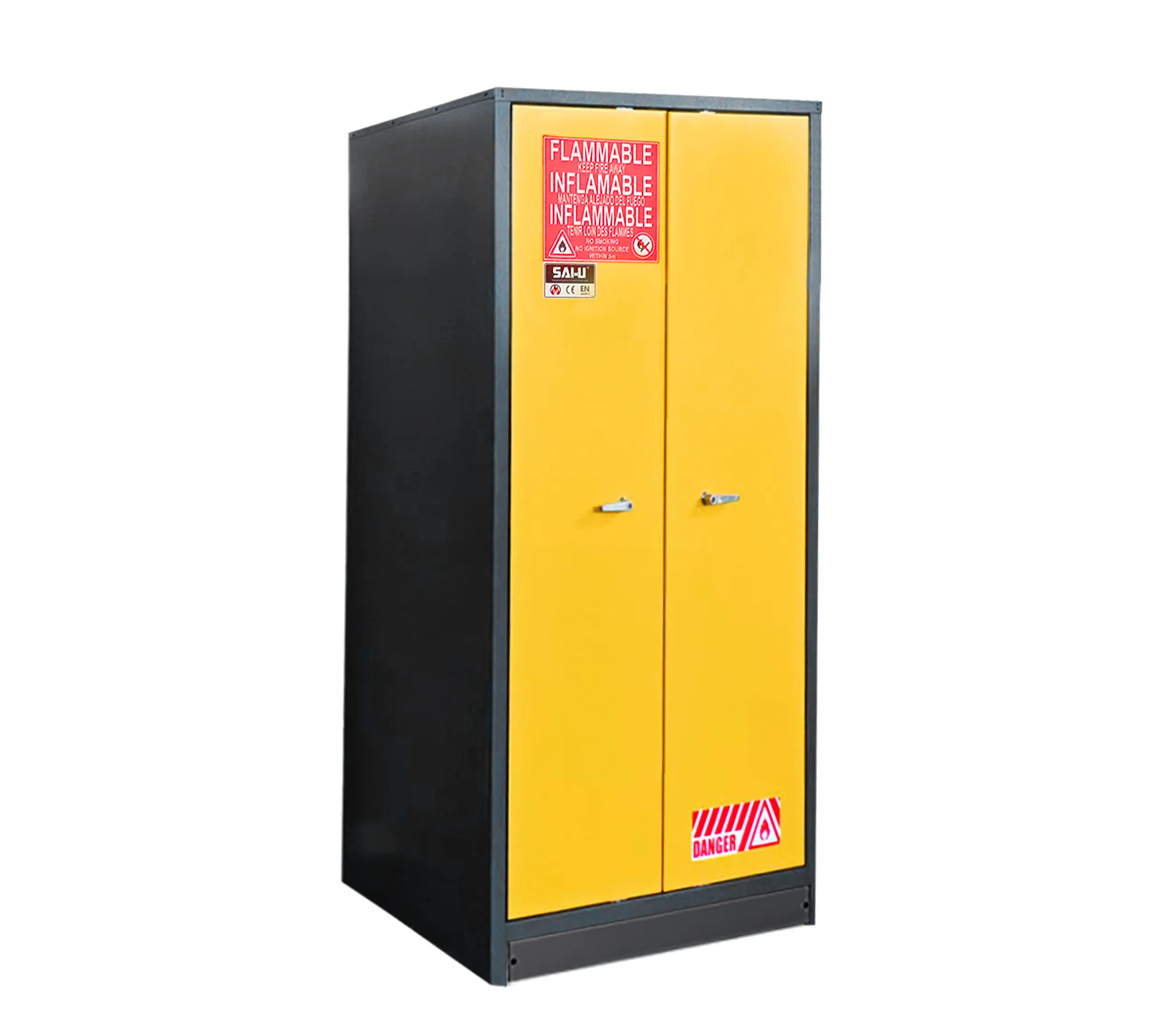
SAI-U's SC0004B provides 1 adjustable shelf with a listed 50 kg loading capacity. Its compact 560 × 430 × 430 mm external dimensions make it substantially smaller than the company's larger corrosive-cabinet configurations.
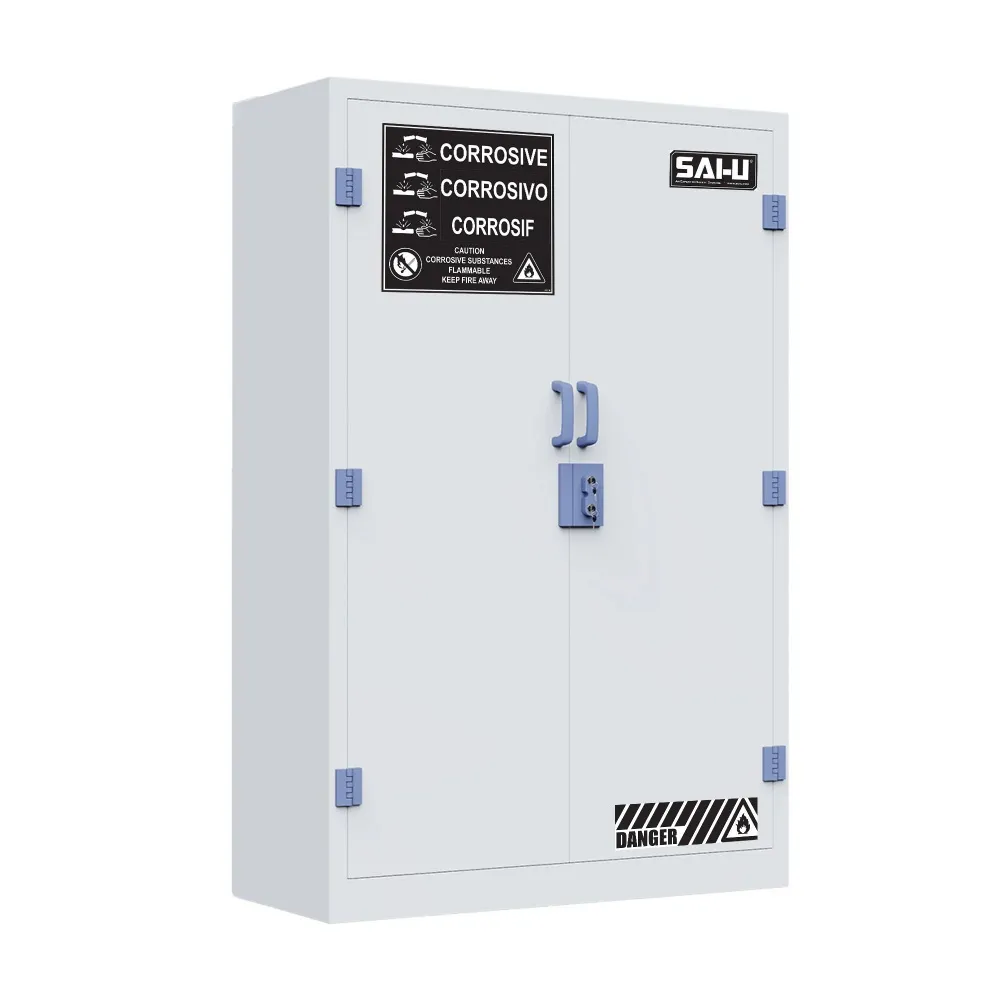
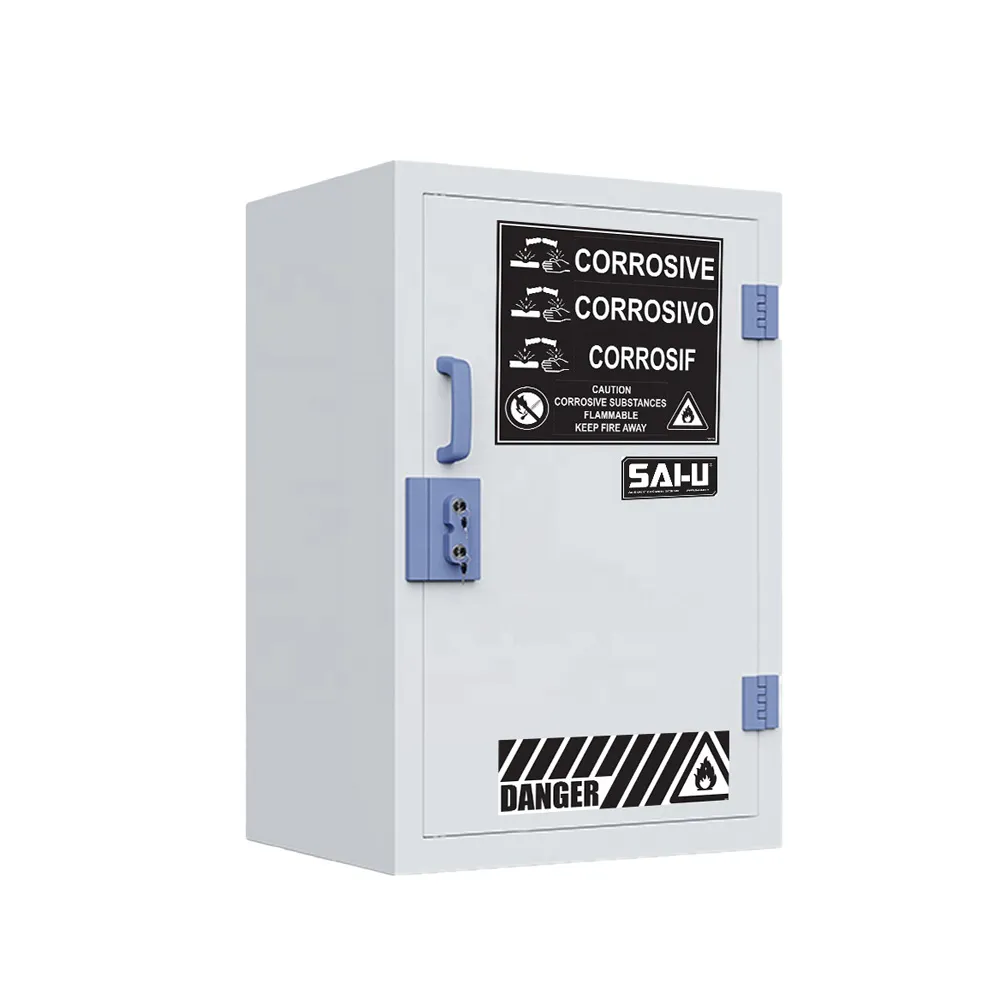
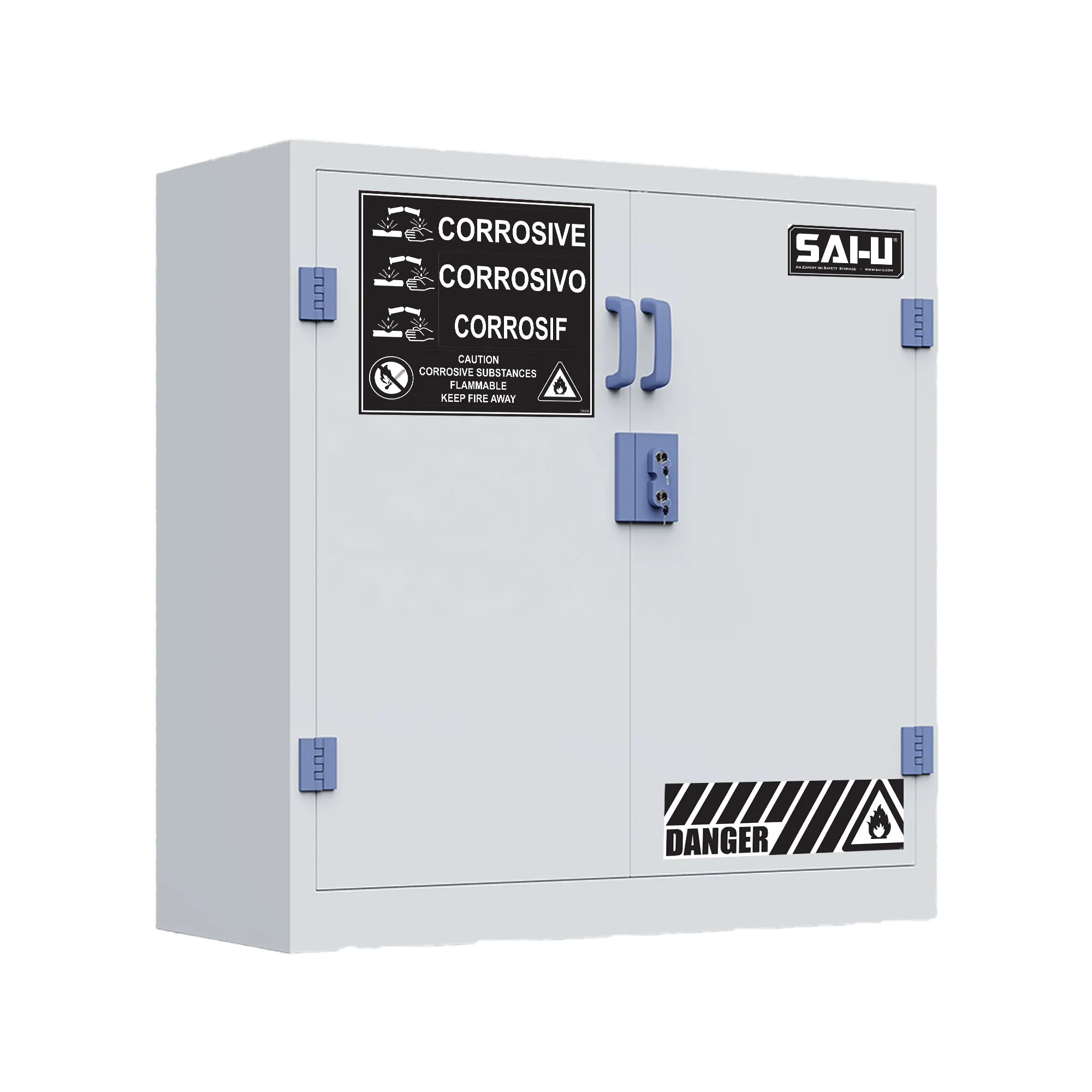
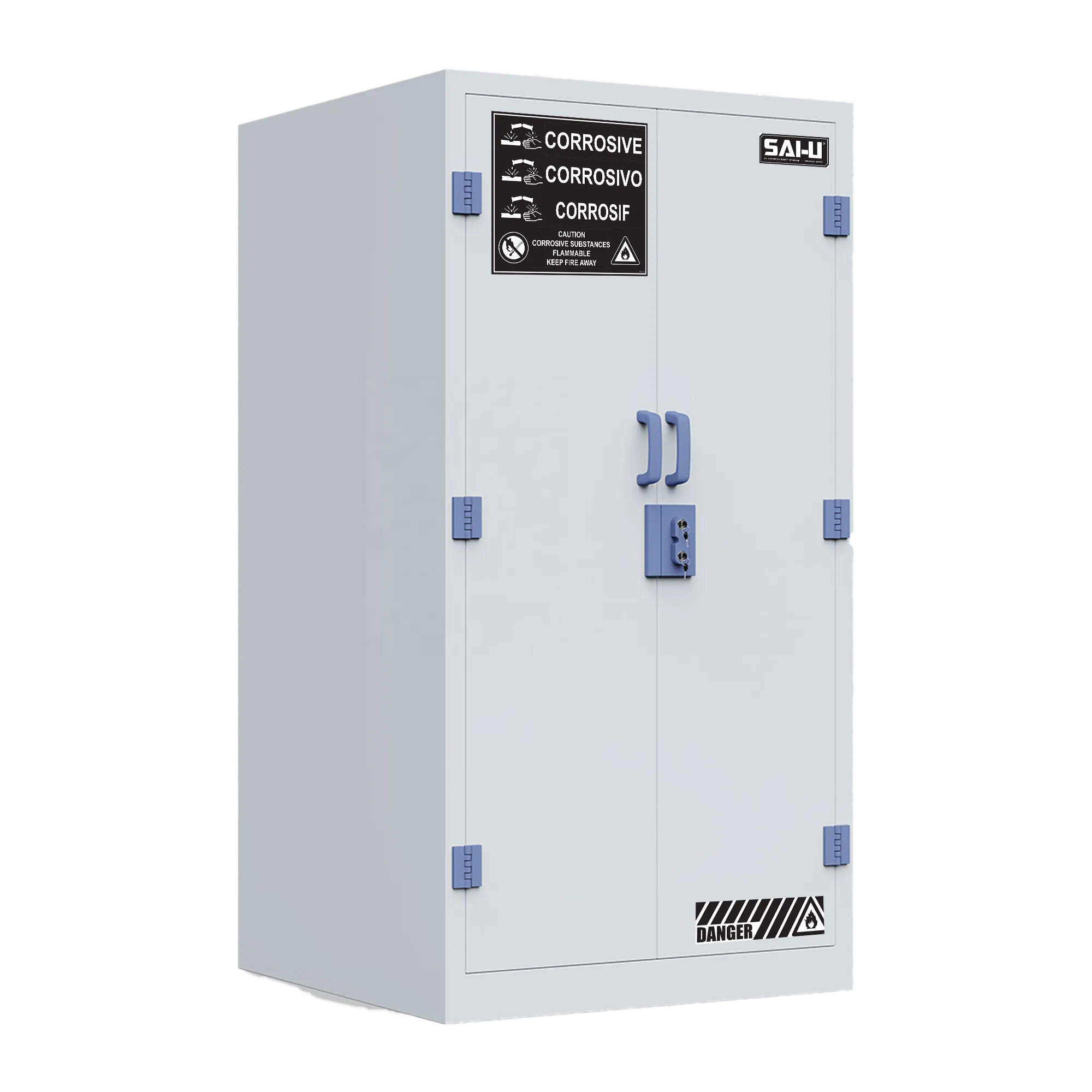
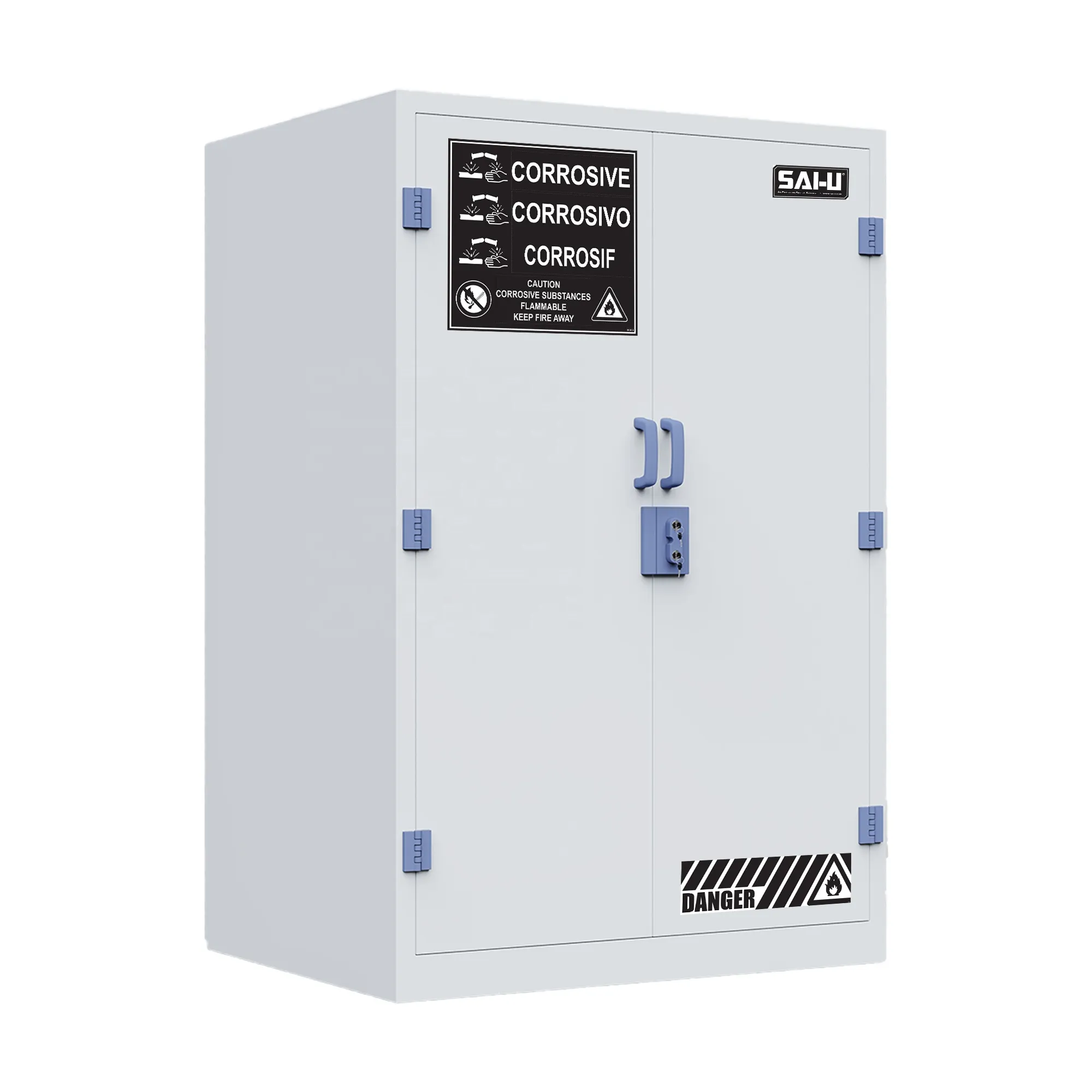
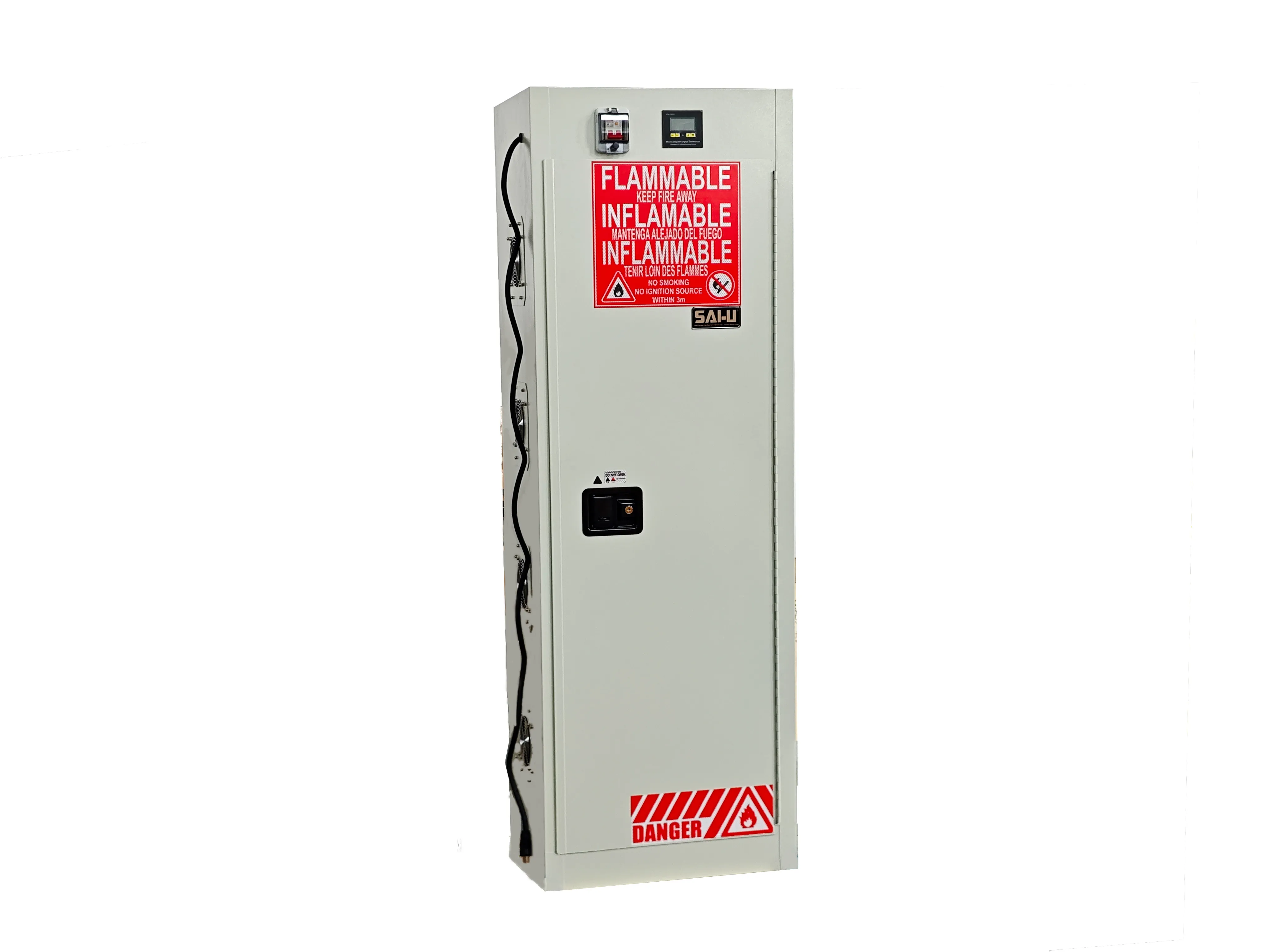
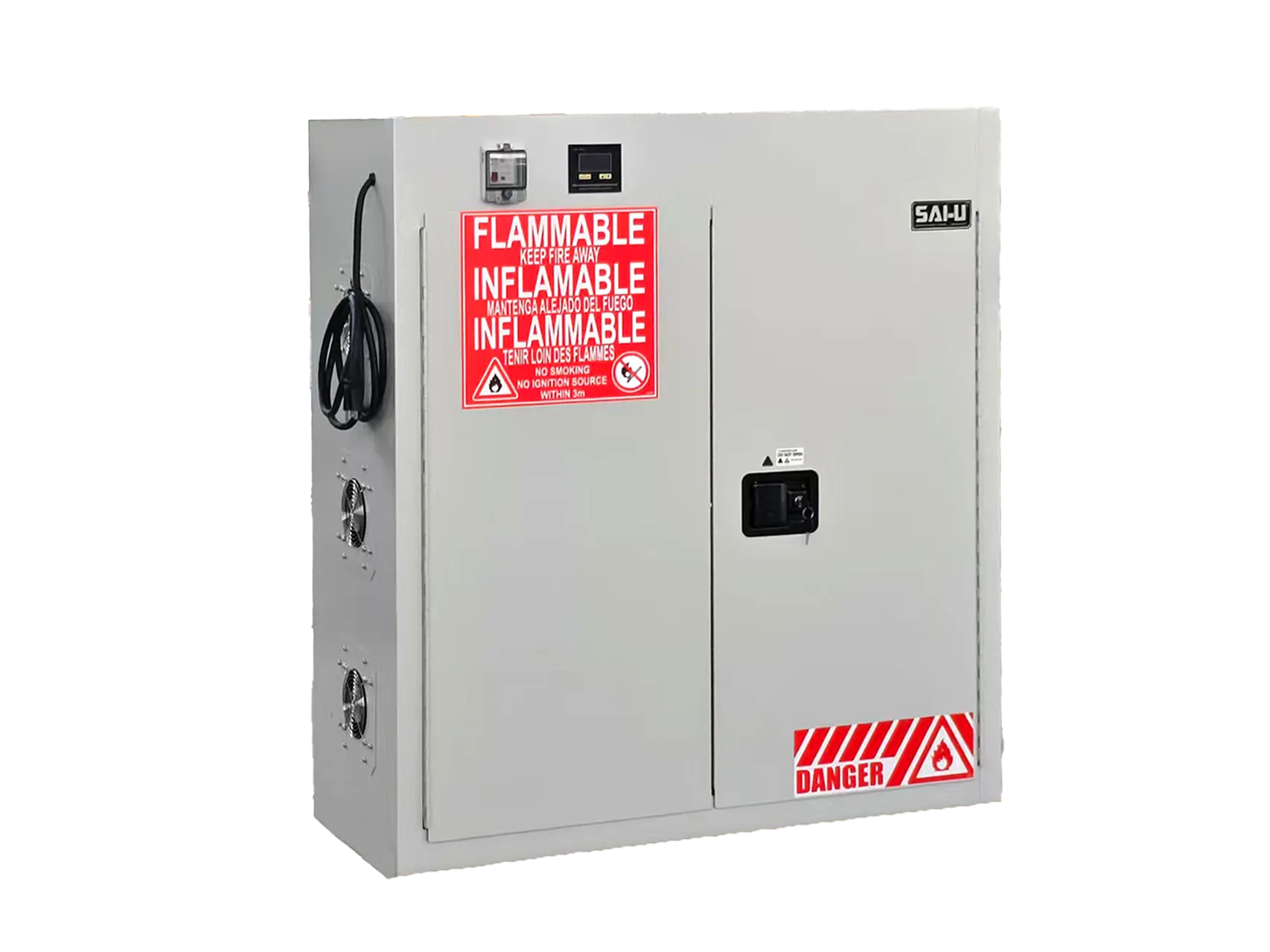
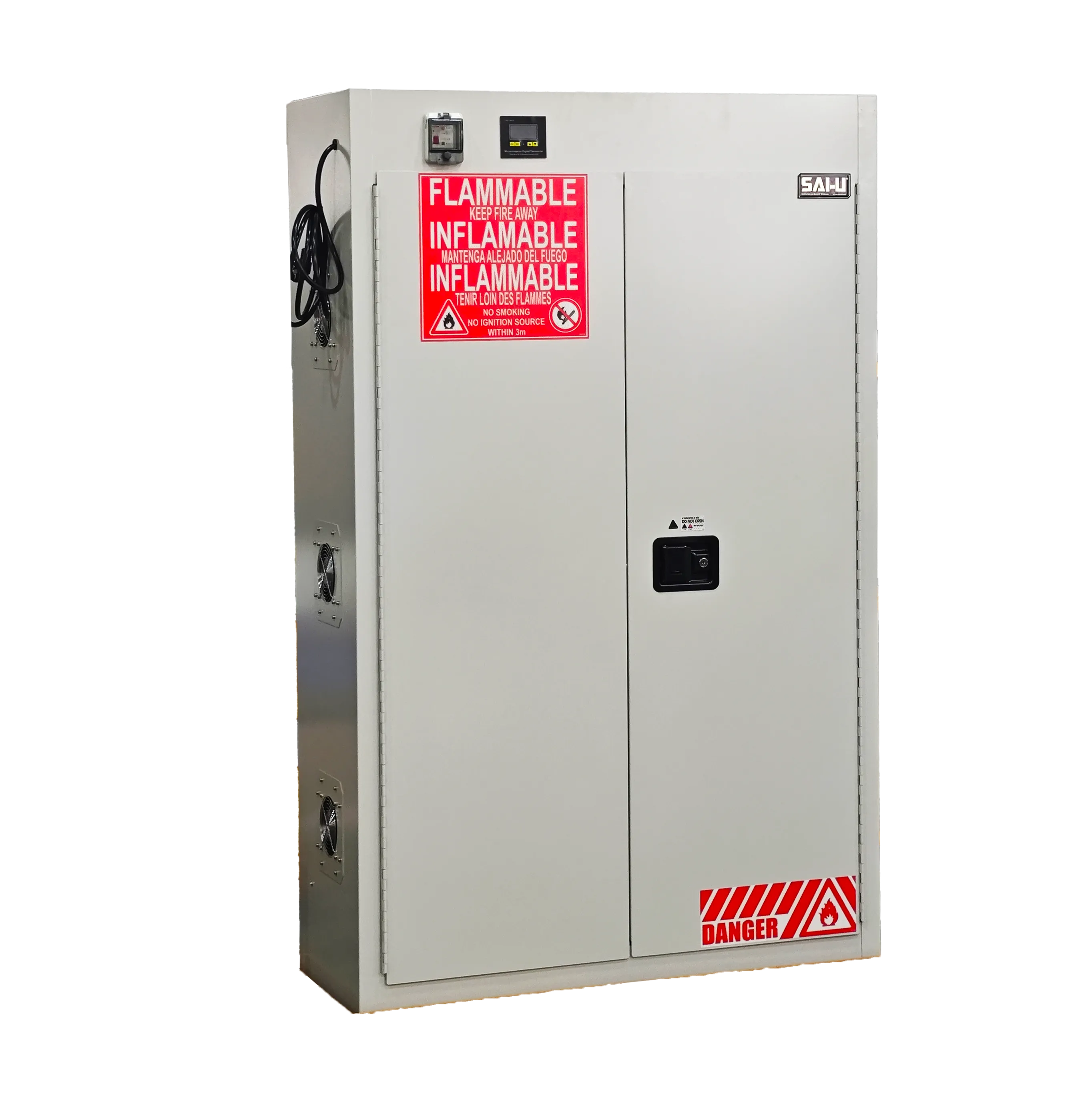
For a larger inventory, the SAI-U corrosive cabinet range includes models such as SC0022B, SC0045B, SC0060B and SC0090B, allowing cabinet capacity to scale with the application.
For stronger corrosive chemicals, SAI-U separately offers a polypropylene cabinet range. Its SCP0045 is specified at 45 gal / 170 L, with 2 adjustable shelves, 40 kg shelf loading, a product dimension of 1650 × 1090 × 460 mm, and an 8 mm polypropylene cabinet body. It also has an optional anti-leakage tray.
These two ranges should not be treated as interchangeable merely because both are marketed for corrosive chemicals.
Which Materials and Cabinet Hardware Should You Specify?
Definition: Corrosive-cabinet material selection is the process of matching the cabinet body, coating, liners, trays and hardware to the chemical inventory and operating conditions.
Corrosion-Resistant Surfaces, Trays, Hinges and Shelves
A cabinet's material must be evaluated against the actual chemicals, concentration and temperature.
SAI-U offers both coated-steel corrosive cabinets and polypropylene strong corrosive storage cabinets. The company states that the selection depends on the chemicals, concentrations, potential vapor exposure and storage requirements.
The SCP0045 uses 8 mm polypropylene panels and adjustable PP shelves. SAI-U identifies it for highly corrosive liquids, while also stating that PP compatibility must be checked against the specific chemical, concentration and temperature.
This distinction is important: a material marketed as “corrosion resistant” should not automatically be assumed to be compatible with every corrosive chemical.
Where material compatibility is uncertain, provide the chemical SDS to the cabinet manufacturer and request confirmation.
Vent Ports and Site-Specific Ventilation Decisions
Ventilation should be treated as a site-specific engineering decision rather than a default cabinet feature.
SAI-U's SCP0045 specification states that ventilation openings can be customized when required.
The need for ventilation depends on the chemical, cabinet design, laboratory setup and applicable requirements. In laboratories covered by OSHA's Chemical Hygiene Plan requirements, engineering controls and exposure-control measures form part of the overall safety program.
Do not install or specify a venting configuration simply because a cabinet is intended for corrosive chemicals. Confirm the requirement with the laboratory's safety procedure and applicable engineering guidance.
How Should You Plan Safe Laboratory Placement and Daily Access?
Definition: Laboratory placement is the selection of a cabinet location that supports controlled chemical storage while maintaining practical access and compatibility with the surrounding work area.
SAI-U recommends locating corrosive storage cabinets in designated chemical-storage areas, away from high-traffic zones, while maintaining a dry and appropriately ventilated storage environment.
Check Door Swing, Worktops, Utilities and Emergency Routes
For a small cabinet, placement is often constrained by the surrounding laboratory furniture rather than the cabinet itself.
Before purchasing, confirm:
| Placement check | What to verify |
|---|
| Door swing | Full opening without blocking nearby equipment |
| Worktop | Cabinet does not interfere with laboratory operations |
| Utilities | No conflict with electrical, plumbing or other fixed services |
| Access | Required personnel can reach the cabinet easily |
| Traffic | Cabinet does not create a recurring obstruction |
| Emergency equipment | Access to eyewash, shower and exits remains unobstructed |
| Environment | Storage conditions are suitable for the chemicals |
OSHA's laboratory standard also requires appropriate attention to engineering controls and other protective measures through the laboratory's Chemical Hygiene Plan.
The cabinet therefore forms part of a larger laboratory safety system rather than functioning as an isolated piece of furniture.
Inspection, Spill Readiness and Inventory Updates
The cabinet should be inspected periodically for damaged containers, leaks, corrosion, damaged shelves, door problems and outdated inventory.
The inspection frequency should follow the site's chemical-management procedure.
A simple monthly inventory review can confirm whether:
The cabinet still has sufficient usable capacity.
Chemical groups remain correctly separated.
Containers remain clearly labeled.
Secondary containment is clean and suitable.
Unused chemicals can be removed or relocated.
This also helps prevent a small cabinet from gradually becoming overfilled.
Small Corrosive Cabinet Buyer Checklist
Definition: A small corrosive cabinet buyer checklist is a pre-purchase specification covering inventory, dimensions, compatibility, containment, placement and required documentation.
Before requesting a quotation, prepare the following:
| Requirement | Buyer should provide |
|---|
| Chemical inventory | Chemical name and quantity |
| SDS | Current SDS for relevant substances |
| Container dimensions | Height, width/diameter and volume |
| Compatibility | Acid/base/oxidizer and other relevant groups |
| Available space | Maximum H × W × D |
| Shelf requirements | Number and approximate load |
| Containment | Tray or secondary-containment requirements |
| Door | Manual or other required configuration |
| Material | Coated steel, PP or other specified option |
| Ventilation | Required / not required / site-specific |
| Placement | Bench-side, under-counter or dedicated storage area |
For general corrosive-liquid storage, buyers can review SAI-U's [corrosive storage cabinet range] SAI-U Corrosive Storage Cabinet Range.
For highly corrosive applications where a polypropylene cabinet may be required, see SAI-U's [strong corrosive storage cabinet range] SAI-U Strong Corrosive Storage Cabinet Range.
For a specific example, the [SAI-U SCP0045 strong corrosive cabinet] SAI-U SCP0045 Product Page provides published dimensions, capacity, shelf specifications and polypropylene construction details.
Request a compatible cabinet recommendation: Send the chemical inventory or SDS, container sizes and available installation dimensions to SAI-U for configuration guidance.
Conclusion: Match Cabinet Size to the Chemical Inventory
A small corrosive cabinet works best when its capacity, material and internal configuration are determined from the actual laboratory inventory.
The selection process should follow a simple sequence: review the SDS, group chemicals by compatibility, measure containers, calculate usable storage space, confirm secondary containment, verify cabinet material and then check the installation location.
For limited inventories, SAI-U's SC0004B provides a compact example at 4 gal / 15 L, with 560 × 430 × 430 mm external dimensions and one adjustable shelf rated for 50 kg.
For stronger corrosive applications, SAI-U's SCP0045 provides a larger 45 gal / 170 L polypropylene configuration with 8 mm PP construction, 2 adjustable shelves and 40 kg shelf loading.
These specifications illustrate why “small corrosive cabinet” should be treated as an application requirement rather than a universal cabinet size.
For a project quotation, provide SAI-U with your chemical inventory or SDS, container dimensions, required quantity and available installation space so the proposed cabinet can be evaluated against the actual laboratory application.
Frequently Asked Questions About Small Corrosive Cabinets
What Is the Best Size for a Small Corrosive Cabinet?
There is no universal size. The cabinet should accommodate the actual chemical inventory, container dimensions and required containment while leaving practical handling space. Measure the available installation area before selecting the model.
Can Acids and Bases Share One Corrosive Cabinet?
They should not be assumed to be compatible simply because both are classified as corrosive. Storage should follow the chemical compatibility information in the SDS and the laboratory's Chemical Hygiene Plan.
How Do I Confirm Material Compatibility?
Start with the chemical's SDS, particularly storage and reactivity information, and provide it to the cabinet manufacturer. Confirm compatibility for the cabinet body, shelves, trays, liners and other surfaces rather than evaluating the cabinet material by name alone.
Is a Polypropylene Cabinet Better for Strong Corrosive Chemicals?
Polypropylene can be suitable for some highly corrosive applications, and SAI-U offers an 8 mm PP cabinet range specifically for strong corrosive storage. However, PP compatibility still depends on the chemical, concentration and temperature, so the actual application must be checked.
Does a Small Corrosive Cabinet Need Ventilation?
Not necessarily. Ventilation should be determined from the chemical properties, laboratory engineering controls, cabinet design and applicable requirements. SAI-U notes that ventilation openings can be customized on SCP0045 where required.
Can I Install a Corrosive Cabinet Under a Laboratory Workbench?
A compact cabinet may be suitable for a bench-side or under-counter application when its dimensions, door swing, chemical compatibility and laboratory procedures permit it. Confirm the full installation clearance and make sure the cabinet does not obstruct emergency equipment, utilities or required access.
 English
  日本語
日本語  한국어
한국어  français
  Deutsch
  Español
  italiano
  русский
  português
  ไทย
ไทย  العربية